Ear pain has a way of taking over everything. It’s sharp, it’s constant, and it makes it hard to think about anything else.
That’s why so many people end up searching for herbal remedies for ear infection in the middle of the night, phone in one hand, the other pressed against their ear.
If that’s you right now, here’s the short version: some herbs can help you feel better while your body fights off an infection or your eardrum heals.
None of them cure a bacterial infection on their own, and a few “natural” tricks people swear by can actually make things worse.
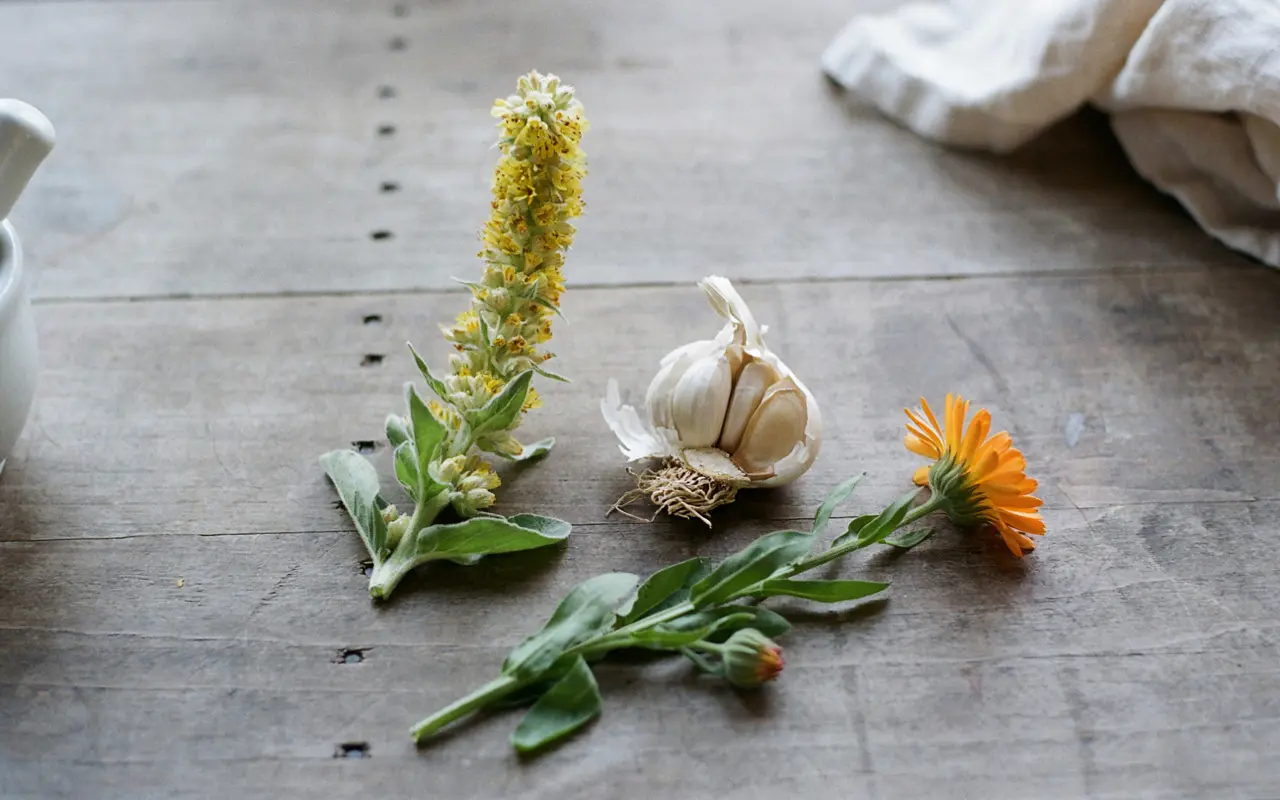
Quick answer: Mullein and garlic oil ear drops have the most direct clinical support for pain relief, performing comparably to anesthetic drops in one controlled trial. Calendula, chamomile, and turmeric may ease inflammation and discomfort when used as compresses or taken orally. None of these treat the underlying infection, and none should go into the ear canal if the eardrum may be perforated.
What Is an Ear Infection?
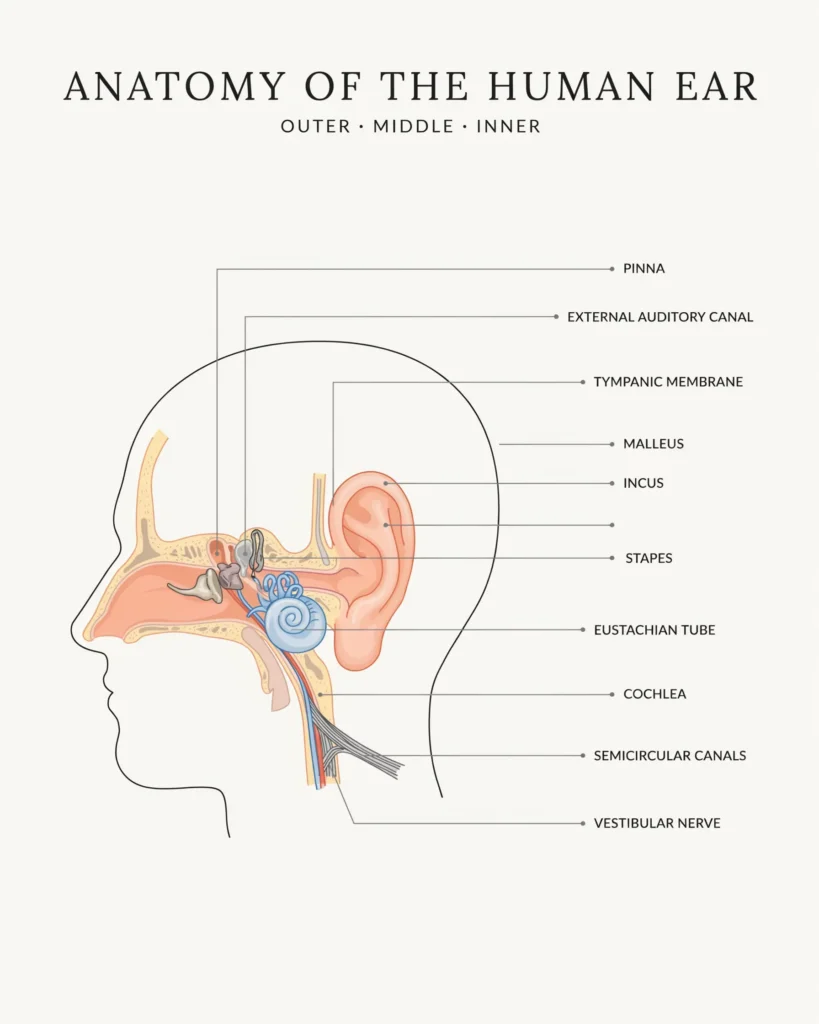
“Ear infection” gets used as a catch-all term, but the ear has three distinct sections, and what’s going wrong in each one calls for different care.
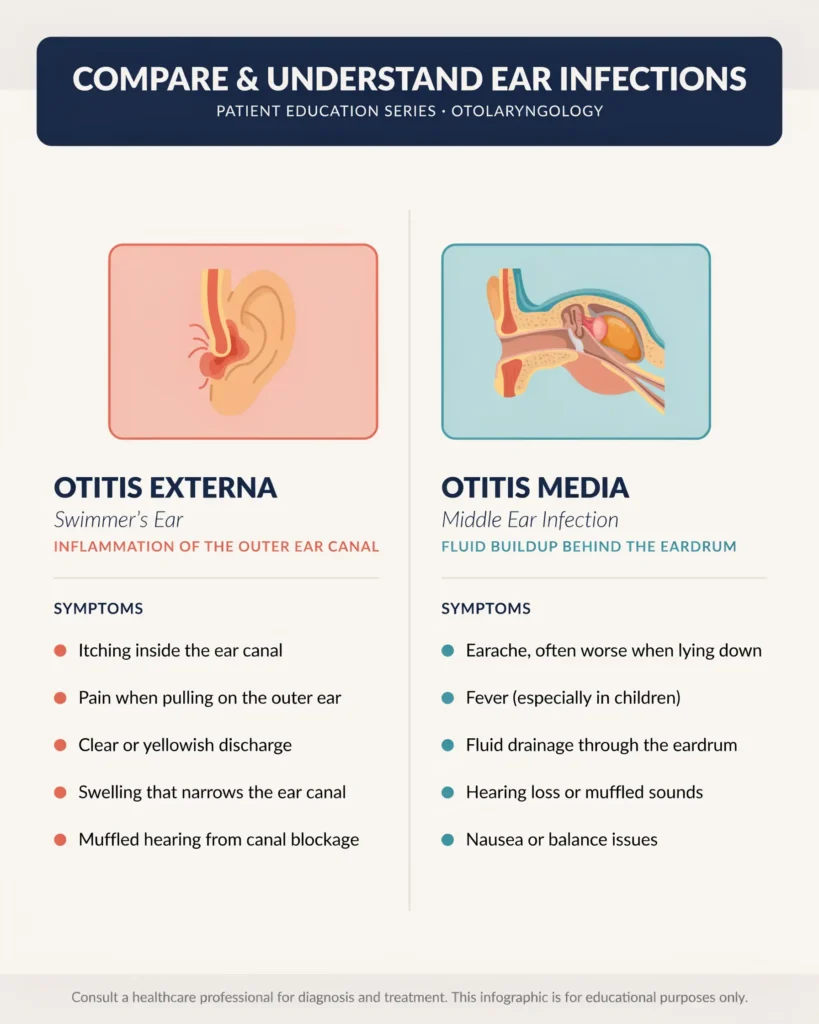
Outer ear infection (otitis externa), commonly called swimmer’s ear, affects the ear canal — the tube running from the outer opening to the eardrum. It usually shows up after water gets trapped in the canal and creates a damp environment where bacteria or fungi thrive. Swimmers, people who use earbuds a lot, and anyone who cleans their ears aggressively with cotton swabs are more prone to it. The pain often gets worse when you tug on the outer ear or push on the little flap in front of it (the tragus).
Middle ear infection (otitis media) is what most people picture when they hear “ear infection.” It happens behind the eardrum, in the small air-filled space that connects to the back of the throat through the eustachian tube. When a cold, sinus infection, or allergy flare-up causes that tube to swell shut, fluid builds up behind the eardrum. If bacteria or viruses get into that trapped fluid, you get acute otitis media, the type responsible for most childhood ear infections and a good chunk of adult ones too.
Inner ear problems are a different category entirely. The inner ear houses the structures responsible for hearing and balance, and true inner ear infections (labyrinthitis or vestibular neuritis) are less common and usually come with dizziness or vertigo rather than the classic earache. This article focuses mainly on outer and middle ear infections, since those are what most herbal remedy discussions are actually about.
Common Causes
- Bacteria — Streptococcus pneumoniae and Haemophilus influenzae are frequent culprits in middle ear infections
- Viruses — colds and upper respiratory infections often trigger the eustachian tube swelling that leads to otitis media
- Allergies — chronic congestion and inflammation can keep the eustachian tube from draining properly
- Fluid buildup — even without an active infection, trapped fluid behind the eardrum (otitis media with effusion) can cause pressure and mild discomfort
- Swimmer’s ear — water exposure, humidity, or skin irritation in the ear canal that lets bacteria or fungi take hold
Symptoms
Ear pain is the headline symptom, but it shows up alongside a cluster of others: a feeling of pressure or fullness, low-grade or occasionally high fever, drainage (which can range from clear fluid to something thicker and less pleasant), and muffled or temporarily reduced hearing.
Kids with middle ear infections often tug at the affected ear, sleep poorly, or seem unusually fussy; verbal symptom reports aren’t really an option at that age, so behavior is the tell.
Can Herbal Remedies Help Ear Infections?
This is where a lot of home-remedy articles get sloppy, so let’s be precise about what “help” actually means here. There are at least four separate things people lump together under that word:
- Pain relief — easing the ache itself
- Inflammation reduction — calming the swelling that’s contributing to pressure and discomfort
- Immune support — giving your body’s own defenses a nudge
- Actual infection treatment — killing or clearing the bacteria or virus causing the problem
Herbal remedies have reasonable evidence for the first two.
The third is plausible but thin. The fourth — actually treating a bacterial infection — is not something any herb has been shown to do reliably, and no reputable health organization recommends herbs as a substitute for antibiotics when antibiotics are genuinely needed.
Here’s the part that surprises people: a substantial share of middle ear infections get better on their own.
According to research summarized by the American Academy of Pediatrics, roughly 80% of acute otitis media cases resolve without antibiotics, which is why the AAP’s clinical guidelines support a period of “watchful waiting” — observing symptoms for 48 to 72 hours before starting antibiotics — for many otherwise-healthy children with mild to moderate symptoms.
That’s not an endorsement of doing nothing. It’s an acknowledgment that the body often handles this fine on its own, and that comfort care during that window matters.
This is exactly where herbal remedies have a real, evidence-supported role: not as a cure, but as symptom management during a recovery process the body is often already handling.
The National Center for Complementary and Integrative Health (NCCIH), a division of the NIH, generally frames herbal and complementary approaches this way across conditions — potentially useful for comfort and quality of life, not established replacements for medical treatment when medical treatment is indicated.
One notable data point: a randomized, double-blind trial published in a peer-reviewed pediatric journal compared a naturopathic herbal ear drop combination (containing mullein, garlic, St. John’s wort, and calendula) against a standard anesthetic ear drop in children with ear pain from acute otitis media. The herbal drops performed comparably to the anesthetic drops for pain relief.
That’s a meaningful finding for symptom control — it says nothing about whether the herbs affected the underlying infection, and the study only enrolled children with intact eardrums, which matters for safety reasons covered later in this guide.
Best Herbal Remedies for Ear Infection
A quick note on how to read the “evidence strength” ratings below:
- Strong means multiple well-designed human trials support the specific use.
- Moderate means at least one solid trial or a consistent body of smaller studies.
- Limited means mostly traditional use, animal studies, or small/lower-quality trials.
- Insufficient means the use is popular but not meaningfully studied.
Mullein
Overview. Mullein (Verbascum thapsus) is a soft-leafed plant that’s been part of European and Native American herbal traditions for centuries, historically used for respiratory complaints and ear discomfort.
Traditional use. Mullein flower oil has long been infused and dropped into the ear canal to soothe earache — it’s probably the single most iconic “herbal ear infection remedy” in folk medicine.
Potential active compounds. Mullein contains saponins, flavonoids, and mucilage, compounds generally associated with anti-inflammatory and soothing properties in plant research.
Scientific evidence. Mullein’s clearest support comes as part of a combination product — the naturopathic herbal ear drop trial mentioned above included mullein alongside garlic, St. John’s wort, and calendula. There isn’t good evidence isolating mullein’s individual contribution.
Possible benefits. May help ease ear pain when used as an infused oil, based on the combination-product trial data.
Limitations. Never studied alone; effects can’t be separated from the other herbs in the blend. No evidence it treats infection.
Safety. Generally well tolerated topically. Allergic skin reactions are possible but uncommon.
Who should avoid it. Anyone with a known or suspected perforated eardrum, active ear drainage, or ear tubes should not use any oil-based drops without a clinician’s sign-off first.
How it may be used safely. Only as a professionally prepared, sterile ear oil, and only when a healthcare provider has confirmed the eardrum is intact. This is not a product to improvise at home with garden-variety mullein leaves and cooking oil.
Evidence strength: Limited (as an isolated remedy); Moderate (as part of the studied combination formula).
Garlic (Oral Use vs. Ear Drops)
Overview. Garlic (Allium sativum) is one of the most researched medicinal plants on earth, credited with antimicrobial and anti-inflammatory properties across a wide range of lab studies.
Traditional use. Garlic oil ear drops are a long-standing folk remedy for earache, and garlic is eaten or taken as a supplement in many cultures specifically to “fight off” colds and infections.
Potential active compounds. Allicin, the compound formed when garlic is crushed, shows antibacterial activity in laboratory settings.
Scientific evidence. Garlic’s antimicrobial effects are well documented in test-tube and animal research. Human evidence for garlic ear drops specifically is limited mostly to the combination-formula trial discussed earlier; garlic wasn’t tested alone. Oral garlic has some human trial support for general immune and cardiovascular effects, but not specifically for treating ear infections.
Possible benefits. May contribute to symptom relief as part of a compounded ear oil; oral garlic may offer general immune support.
Limitations. Lab-dish antibacterial activity doesn’t automatically translate to clinical effectiveness inside a living ear. No trial has tested raw garlic juice or homemade garlic oil specifically.
Safety. Oral garlic is safe for most adults in food amounts and generally safe as a supplement. Garlic applied directly to skin or mucous membranes, including inside the ear, can cause chemical burns — this happens more often than people expect.
Who should avoid it. Anyone on blood thinners should discuss oral garlic supplements with their doctor, since garlic can have mild anticoagulant effects. Raw garlic juice should never go directly into the ear canal, full stop.
How it may be used safely. Oral garlic (food or supplement form) is reasonably low-risk. Garlic in the ear should only ever be a professionally formulated oil product, not homemade juice or crushed cloves.
Evidence strength: Limited (ear drops, isolated); Moderate (as part of a studied combination); Limited (oral, for ear infection specifically).
Calendula
Overview. Calendula (Calendula officinalis), also called pot marigold, is a bright orange-flowered plant used for centuries in wound care and skin soothing.
Traditional use. Calendula-infused oils are a staple in topical herbal preparations for irritated or inflamed skin, and by extension, ear discomfort.
Potential active compounds. Flavonoids and triterpenoids in calendula are linked to anti-inflammatory and wound-healing activity in laboratory and animal studies.
Scientific evidence. Calendula appears as one component in the naturopathic ear drop trial referenced earlier. Separately, calendula has decent evidence for topical wound and skin healing in other contexts, though not specifically for ear infections.
Possible benefits. Gentle anti-inflammatory support, likely contributing to the pain relief seen in the combination ear drop study.
Limitations. Isolated calendula-for-earache evidence is thin; most support is indirect, borrowed from its broader reputation in skin care.
Safety. Generally very well tolerated. Rare allergic reactions can occur, particularly in people sensitive to ragweed and related plants.
Who should avoid it. People with known allergies to plants in the daisy family (ragweed, chrysanthemums, marigolds) should be cautious.
How it may be used safely. As a compounded oil in a professional ear drop formula, or as a warm compress soaked in diluted calendula tea applied to the outside of the ear — never poured into a canal with a possibly perforated eardrum.
Evidence strength: Limited
Chamomile
Overview. Chamomile (Matricaria chamomilla) is one of the most widely used calming herbs, familiar to most people as a bedtime tea.
Traditional use. Used for centuries to relieve mild pain, reduce inflammation, and promote relaxation, chamomile shows up in remedies for everything from upset stomachs to skin irritation.
Potential active compounds. Apigenin and other flavonoids in chamomile have shown mild anti-inflammatory and anti-anxiety effects in research.
Scientific evidence. Chamomile has reasonable evidence for mild anti-inflammatory and calming effects generally, but essentially no direct trials on ear infections specifically.
Possible benefits. A warm chamomile compress may offer comfort similar to any warm compress, plus a mild calming effect if taken as tea — useful given how disruptive ear pain is to sleep.
Limitations. No ear-infection-specific research exists; benefits here are extrapolated from its general anti-inflammatory profile.
Safety. Very well tolerated for most people, orally and topically.
Who should avoid it. People with ragweed or daisy family allergies should be cautious, since chamomile is a related plant. Not recommended in large medicinal doses during pregnancy without medical guidance.
How it may be used safely. As tea for comfort and hydration, or as a warm (not hot) compress applied externally to the ear and surrounding area.
Evidence strength: Insufficient (specific to ear infection); Moderate (for general mild anti-inflammatory and calming use)
Turmeric
Overview. Turmeric (Curcuma longa) is a bright yellow root, a kitchen staple in South Asian cooking, and one of the most heavily studied anti-inflammatory herbs in modern research.
Traditional use. Used in Ayurvedic medicine for thousands of years to address inflammation, pain, and a wide range of infections.
Potential active compounds. Curcumin is turmeric’s star compound, studied extensively for anti-inflammatory and antioxidant activity.
Scientific evidence. Curcumin has a genuinely strong human evidence base for reducing inflammation in conditions like osteoarthritis. There’s no direct clinical trial evidence for turmeric treating ear infections specifically, but the general anti-inflammatory mechanism is well-supported.
Possible benefits. May help calm systemic inflammation and support comfort when taken orally during recovery from any infection.
Limitations. Curcumin is poorly absorbed on its own — it needs black pepper (piperine) or fat to be meaningfully bioavailable. No ear-specific trials exist.
Safety. Safe in food amounts. Higher supplement doses can cause stomach upset in some people and may interact with blood thinners.
Who should avoid it. People on anticoagulant medications, those with gallbladder disease, and pregnant women taking medicinal (non-food) doses should check with a doctor first.
How it may be used safely. As a warm turmeric tea (“golden milk”) or in food, taken orally — never applied inside the ear.
Evidence strength: Moderate (general anti-inflammatory effect); Insufficient (specific to ear infections)
Ginger
Overview. Ginger (Zingiber officinale) is another kitchen-cabinet root with a long medicinal history, best known for settling nausea.
Traditional use. Used across many traditional medicine systems for pain relief, nausea, and as a general anti-inflammatory.
Potential active compounds. Gingerols and shogaols are believed responsible for ginger’s anti-inflammatory and mild analgesic effects.
Scientific evidence. Solid human trial evidence exists for ginger easing nausea and, in some studies, mild pain conditions like menstrual cramps. No direct research on ginger for ear infections.
Possible benefits. May offer mild pain relief and anti-inflammatory support as part of general comfort care, plus help if the ear infection comes with nausea (common in kids, especially with associated vertigo).
Limitations. No ear-specific studies; benefit is inferred from ginger’s broader anti-inflammatory and analgesic evidence.
Safety. Well tolerated in food and typical supplement doses.
Who should avoid it. People on blood-thinning medication should use ginger supplements cautiously. High doses can cause heartburn.
How it may be used safely. As tea, in food, or as a standard supplement — taken orally, never in the ear.
Evidence strength: Moderate (general pain/nausea relief); Insufficient (specific to ear infections)
Echinacea
Overview. Echinacea (Echinacea purpurea and related species) is a purple coneflower long associated with immune support, and one of the best-selling herbal supplements in the United States.
Traditional use. Used by Indigenous peoples of North America and later adopted widely in Western herbalism as a go-to remedy at the first sign of a cold.
Potential active compounds. Alkylamides, polysaccharides, and caffeic acid derivatives are the compounds most often studied for immune-modulating effects.
Scientific evidence. A 2014 Cochrane systematic review — one of the more rigorous evidence summaries available — found that echinacea preparations showed, at best, small and inconsistent effects on preventing or shortening the common cold, with results varying significantly depending on which echinacea species and preparation was tested. The review authors described the evidence for meaningful treatment effects as weak. No research directly tests echinacea for ear infections.
Possible benefits. Possibly a modest reduction in cold duration or severity for some people, which matters because colds are a common trigger for middle ear infections in the first place.
Limitations. Evidence is inconsistent across different echinacea products, since “echinacea” isn’t a single standardized substance. No direct ear infection research exists.
Safety. Generally well tolerated for short-term use.
Who should avoid it. People with autoimmune conditions, those on immunosuppressant medications, and people with known allergies to daisy-family plants should talk to a doctor before use. Not typically recommended for long-term continuous use.
How it may be used safely. As a short course of tea, tincture, or standardized supplement at the first sign of a cold — always taken orally.
Evidence strength: Limited (for cold-related symptoms); Insufficient (specific to ear infections)
Holy Basil (Tulsi)
Overview. Holy basil (Ocimum tenuiflorum), also called tulsi, holds a central place in Ayurvedic medicine as an “adaptogen” believed to help the body handle stress.
Traditional use. Used traditionally for respiratory conditions, general immune support, and stress reduction.
Potential active compounds. Eugenol and ursolic acid are among the compounds studied for anti-inflammatory and antimicrobial properties in preliminary research.
Scientific evidence. Human research on holy basil exists mostly for blood sugar regulation and stress markers. Evidence for infection-fighting or ear-specific benefits in humans is very limited.
Possible benefits. Mostly theoretical for ear infections specifically; may offer general stress and immune support as part of overall wellness during illness.
Limitations. Sparse human trial data overall, and essentially none pointing directly at ear health.
Safety. Generally considered safe in typical culinary and tea amounts.
Who should avoid it. Pregnant women should avoid medicinal doses, since some animal research suggests possible effects on fertility and uterine contractions. People on blood-thinning or blood sugar medications should check with a doctor.
How it may be used safely. As tea, taken orally, as a general wellness practice rather than a targeted ear infection treatment.
Evidence strength: Insufficient
Licorice Root
Overview. Licorice root (Glycyrrhiza glabra) has a long history in both Western and Traditional Chinese Medicine for respiratory and digestive complaints.
Traditional use. Used to soothe sore throats, calm coughs, and, by extension, support the upper respiratory tract during colds — which matters because the throat and ears are connected through the eustachian tube.
Potential active compounds. Glycyrrhizin is licorice’s primary active compound, studied for anti-inflammatory and mild antiviral activity in lab settings.
Scientific evidence. Reasonable evidence supports licorice for soothing throat irritation and cough. No direct evidence for ear infections.
Possible benefits. May help calm associated throat and upper-respiratory inflammation that’s contributing to eustachian tube swelling.
Limitations. Not studied for ear infections directly; benefit is indirect at best.
Safety. This is the one herb on this list that deserves real caution. Regular use of real licorice root (not “licorice-flavored” candy, which usually contains none) can raise blood pressure and lower potassium levels with prolonged use.
Who should avoid it. Anyone with high blood pressure, heart disease, kidney disease, or who is pregnant should avoid licorice root supplements. This is a firm one, not a mild caution.
How it may be used safely. Short-term use as tea (a few days, not weeks), ideally choosing deglycyrrhizinated licorice (DGL) products, which have the concerning compound removed, for anyone with cardiovascular risk factors.
Evidence strength: Insufficient (specific to ear infections)
Oregano
Overview. Oregano (Origanum vulgare) is a culinary herb whose essential oil has developed a reputation online as a powerful natural antimicrobial.
Traditional use. Used in Mediterranean folk medicine for respiratory and digestive complaints.
Potential active compounds. Carvacrol and thymol, the main compounds in oregano essential oil, show notable antimicrobial activity in laboratory dish studies.
Scientific evidence. The antimicrobial effects are almost entirely lab-based (in vitro), meaning they were tested against bacteria in a petri dish, not in a living human ear. That’s a meaningful gap — plenty of substances kill bacteria in a dish while being either ineffective or actively harmful when applied to living tissue.
Possible benefits. Theoretical, based on lab antimicrobial activity; not established in real-world ear infection treatment.
Limitations. No human trials on oregano for ear infections. The jump from “kills bacteria in a dish” to “safe and effective ear treatment” is a big one that hasn’t been tested.
Safety. It’s worth being blunt here: oregano essential oil is potent enough to cause chemical burns on skin and, especially, on the sensitive tissue inside the ear canal. It should never be applied undiluted, and it should not be put in the ear at all without explicit direction from a healthcare provider.
Who should avoid it. Anyone considering ear application should avoid it unless a clinician has specifically prescribed a formulated, properly diluted product. Pregnant women should avoid oregano oil supplements.
How it may be used safely. As a culinary herb, or as a properly diluted oral supplement following label directions. Not recommended as a DIY ear treatment under any circumstances.
Evidence strength: Insufficient (for ear infection specifically; lab-only antimicrobial data does not equal clinical evidence)
Comparison Table: Herbal Remedies for Ear Infection
| Herb | Potential Benefits | Evidence Level | Safety Notes |
|---|---|---|---|
| Mullein | Ear pain relief (as part of a compound oil) | Limited (alone); Moderate (in combination) | Only as a professional sterile oil; avoid with suspected perforated eardrum |
| Garlic | Ear pain relief (combination oil); general antimicrobial properties | Limited (ear drops); Moderate (in combination) | Never apply raw garlic juice in the ear — risk of chemical burn |
| Calendula | Anti-inflammatory, soothing to skin and mucous membranes | Limited | Avoid if allergic to ragweed/daisy family |
| Chamomile | Mild anti-inflammatory, calming, sleep support | Insufficient (ear-specific); Moderate (general) | Avoid with ragweed allergy |
| Turmeric | General anti-inflammatory support | Moderate (general); Insufficient (ear-specific) | May interact with blood thinners |
| Ginger | Mild pain relief, anti-nausea | Moderate (general); Insufficient (ear-specific) | Caution with blood-thinning medication |
| Echinacea | May shorten cold duration/severity | Limited (colds); Insufficient (ear-specific) | Avoid with autoimmune conditions or immunosuppressants |
| Holy Basil | General immune and stress support | Insufficient | Avoid medicinal doses in pregnancy |
| Licorice Root | Throat and upper-respiratory soothing | Insufficient (ear-specific) | Avoid with high blood pressure, heart, or kidney disease |
| Oregano | Antimicrobial in lab studies only | Insufficient (no human ear trials) | Never apply undiluted oil in the ear — burn risk |
Natural Home Remedies That May Help
Herbs aren’t the only supportive tools worth having. A few low-risk basics do a lot of the heavy lifting for comfort.
Warm compress. A washcloth soaked in warm (not hot) water and held against the outer ear for 10 to 15 minutes at a time can ease pain and pressure for many people. This is one of the better-supported, lower-risk home comfort measures available, and it pairs well with any of the herbal teas mentioned above.
Rest. Basic, unglamorous, and still true — your immune system does its best work when you’re not running on four hours of sleep and back-to-back meetings.
Hydration. Staying well hydrated helps thin mucus and supports overall eustachian tube drainage, particularly when a cold or congestion is part of the picture.
Sleeping position. Elevating the head slightly, or sleeping with the affected ear facing up rather than pressed into a pillow, can reduce pressure and improve drainage overnight.
Humidifier. Adding moisture to dry indoor air can ease congestion and soothe irritated nasal and throat passages, indirectly helping the eustachian tube do its job.
Saline nasal rinse. When congestion or sinus involvement is contributing to eustachian tube blockage, a saline rinse can help clear nasal passages and reduce the pressure buildup that’s making ear symptoms worse.
Pain management. Over-the-counter options like acetaminophen or ibuprofen, used according to label directions, remain a reasonable and well-studied way to manage ear pain while the underlying issue resolves — and there’s no reason herbal approaches and appropriate OTC pain relief can’t be used together.
Remedies to Avoid
Some of the most commonly repeated ear infection “hacks” online are genuinely risky, especially if there’s any chance the eardrum is perforated. A perforated eardrum from infection is common enough that you often can’t rule it out just by looking, which is exactly why the following should be off-limits without a clinician’s explicit go-ahead:
- Undiluted essential oils in the ear. Oils like oregano, tea tree, or peppermint applied directly and undiluted can chemically burn the delicate skin of the ear canal.
- Hydrogen peroxide without medical advice. It’s sometimes used under professional supervision for earwax softening, but self-directed use can irritate tissue and, if the eardrum is perforated, cause real damage to the middle ear.
- Alcohol. Rubbing alcohol poured into the ear can sting intensely and is inappropriate if there’s any drainage or suspected perforation.
- Cotton swabs. These push wax deeper, irritate the canal lining, and are a common cause of accidental eardrum injury. Ears are largely self-cleaning; swabs mostly just get in the way.
- Garlic juice directly into the ear. Raw, undiluted garlic juice is caustic enough to burn ear canal tissue, even though garlic itself has a reasonable safety profile when eaten.
- Random DIY ear drops of any kind. Blog-recipe ear drops mixing whatever oils are in the pantry skip the two things that make the studied naturopathic formula reasonably safe: professional preparation and sterility.
The unifying rule here isn’t “herbs are dangerous.” It’s that the ear canal is thin-skinned, close to important structures, and a bad place to improvise.
Lifestyle Tips to Support Recovery
Nutrition. A diet with adequate protein, vitamin C, zinc, and overall balanced nutrition supports normal immune function — nothing exotic required, just consistent basics during recovery.
Sleep. Immune function and inflammation regulation are both tied closely to sleep quality, so prioritizing rest isn’t just a nice-to-have during an active infection.
Stress reduction. Chronic stress measurably affects immune response over time. This matters more for prevention and general resilience than for treating an active infection, but it’s part of the bigger picture.
Immune support. Beyond specific herbs, the basics — adequate sleep, hydration, and nutrition — do more for immune function than most supplement aisles combined.
Smoking avoidance. Secondhand and firsthand smoke exposure is a well-documented risk factor for both getting ear infections and having them recur, particularly in children.
Allergy management. Since chronic allergy-driven congestion is a common contributor to eustachian tube dysfunction, keeping allergies under control — through appropriate medication, allergen avoidance, or both — can reduce how often ear infections happen in the first place.
When to See a Doctor Immediately
Herbal and home remedies are for supportive comfort care, not for managing the situations below. Any of the following warrant prompt medical evaluation rather than a wait-and-see approach:
- High fever, particularly above 102°F (38.9°C), or fever in an infant under 3 months
- Ear drainage, especially if it’s thick, foul-smelling, or bloody
- Severe swelling around or behind the ear
- Hearing loss, sudden or significant
- Symptoms lasting more than 48 to 72 hours without improvement, which is the same window the AAP uses for watchful waiting decisions
- Young children, especially infants, where ear infections can progress faster and are harder to assess based on symptoms alone
- Diabetes, which raises the risk of more serious ear infections, including a rare but dangerous complication called malignant otitis externa
- Immunocompromised adults, who need a lower threshold for medical evaluation with any infection
- Suspected ruptured eardrum — sudden pain relief followed by drainage can actually indicate the eardrum has ruptured, which needs medical confirmation and follow-up
Symptoms Requiring Medical Attention
| Symptom | Possible Concern | Urgency |
|---|---|---|
| Fever above 102°F | Systemic infection, possible complication | Same-day evaluation |
| Ear drainage (pus, blood) | Ruptured eardrum, infection spread | Same-day evaluation |
| Severe swelling behind ear | Mastoiditis (rare but serious complication) | Emergency evaluation |
| Sudden hearing loss | Possible perforation, fluid buildup, or nerve involvement | Prompt evaluation |
| Symptoms beyond 48–72 hours | Infection not resolving on its own | Schedule an appointment |
| Ear infection in infant under 3 months | Higher risk of rapid progression | Same-day/urgent evaluation |
| Vertigo or balance problems | Possible inner ear involvement | Prompt evaluation |
| Facial drooping or weakness | Rare nerve complication | Emergency evaluation |
Conclusion
Herbal remedies for ear infection have a real, if modest, role to play — mostly in easing pain and calming inflammation while your body (often with help from watchful waiting, sometimes with antibiotics) handles the actual infection.
The evidence is strongest for the mullein-garlic-calendula combination as a professionally prepared ear oil, and reasonably solid for herbs like turmeric and ginger as general anti-inflammatory support taken by mouth.
It’s thin to nonexistent for a lot of the other claims floating around online, and a few popular DIY tricks are worth actively avoiding.
None of this replaces a doctor’s evaluation when symptoms are severe, persistent, or affecting a young child. Used thoughtfully, and alongside — not instead of — appropriate medical care, herbal support can make an uncomfortable few days more bearable.
Medical Disclaimer: This article is intended for educational purposes only and should not be considered medical advice. Always consult a qualified healthcare professional before using herbal remedies, especially if symptoms are severe, persistent, or involve children, pregnancy, chronic illnesses, or suspected eardrum injury.