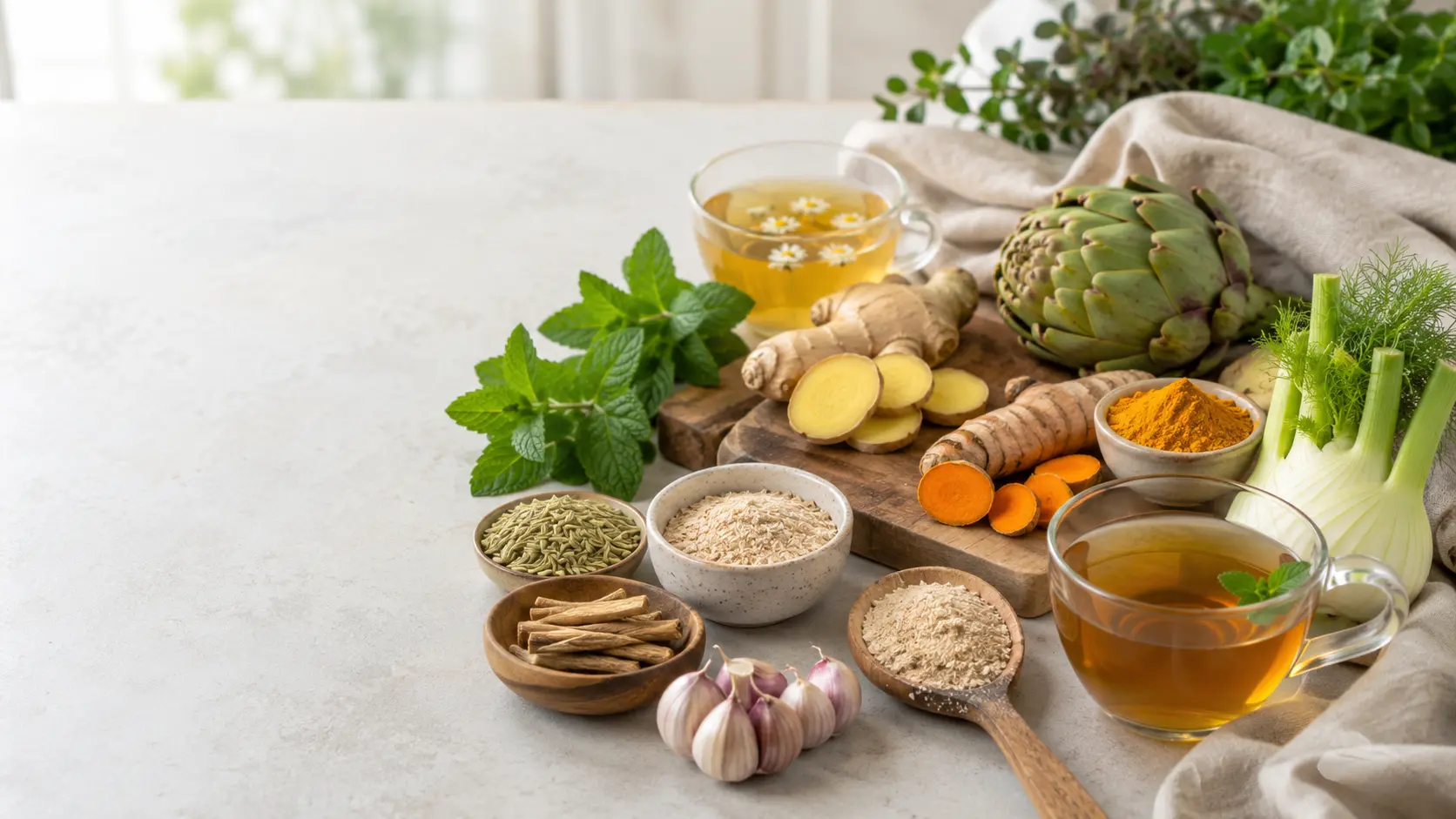
Your spice rack may contain more gut-friendly ingredients than your supplement cabinet.
Peppermint, ginger, fennel, turmeric, and other herbs have long been used to manage digestive complaints.
Some may help ease nausea, bloating, abdominal cramping, constipation, or discomfort after eating. Others contain plant compounds that may support a balanced diet and a healthy gut environment.
However, the phrase “gut healing” needs to be used carefully.
No herb has been proven to repair every digestive problem, restore the intestinal lining overnight, or cure conditions such as irritable bowel syndrome, inflammatory bowel disease, ulcers, or acid reflux.
The most effective approach is to match a specific herb with a specific symptom.
For example, enteric-coated peppermint oil has evidence supporting its use for certain IBS symptoms, while ginger is better known for helping with nausea. Herbal products can also cause side effects and interact with medications, so natural does not automatically mean harmless.
This guide explores 10 commonly used herbs and plant-based products for digestive health, including what they may help with, how people typically use them, and the precautions worth knowing.
Important: This article is for general education and is not a substitute for medical diagnosis or treatment. Talk with a qualified healthcare professional before using concentrated herbal supplements, especially if you are pregnant, breastfeeding, preparing for surgery, managing a chronic condition, or taking medication.
What Does “Gut Healing” Actually Mean?
“Gut healing” is a popular wellness term rather than a precise medical diagnosis. Depending on the person using it, the phrase may refer to improving digestion, reducing uncomfortable symptoms, supporting the intestinal barrier, or encouraging a healthier gut microbiome.
Understanding these differences can help you avoid exaggerated claims and choose remedies more realistically.
Supporting comfortable digestion
Digestive discomfort can include:
- Gas and bloating
- Abdominal cramping
- Nausea
- Indigestion
- Constipation
- Diarrhea
- Feeling unusually full after eating
- Irregular bowel movements
An herb may help one of these problems while making another worse.
Peppermint, for example, may relieve intestinal spasms in some people with IBS but can aggravate heartburn in people who are sensitive to reflux.
Supporting the intestinal barrier
The intestinal lining serves as a selective barrier. It allows nutrients and water to pass into the body while helping limit the entry of harmful substances.
Many online products claim to “seal,” “repair,” or “rebuild” the gut lining. These promises often go beyond the available human evidence.
Certain plant compounds are being studied for anti-inflammatory, antioxidant, or mucilage-forming properties, but that does not prove that an herb can independently repair intestinal damage.
Actual injury or inflammation in the digestive tract may be associated with conditions that require professional evaluation and medical treatment.
Supporting the gut microbiome
The gut microbiome is the community of microorganisms living in the digestive system. Diet, medications, illness, stress, sleep, environment, and many other factors can influence its composition.
Herbs and spices contain compounds such as polyphenols, fibers, and organosulfur compounds that may interact with intestinal microbes.
However, a measurable microbiome change is not automatically a clinical benefit. Researchers still need to determine which changes matter, how long they last, and whether they reliably improve health outcomes.
Reducing symptoms is not the same as curing disease
A tea that temporarily reduces bloating is not necessarily treating the cause of the bloating.
Similarly, improving bowel regularity does not prove that an underlying gastrointestinal condition has been resolved.
Persistent digestive symptoms may be connected to:
- Irritable bowel syndrome
- Gastroesophageal reflux disease
- Celiac disease
- Inflammatory bowel disease
- Food intolerances
- Gallbladder disorders
- Medication side effects
- Infection
- Pelvic-floor dysfunction
- Other gastrointestinal conditions
Herbs are best viewed as possible supportive tools, not replacements for an appropriate diagnosis.
Which Herb May Fit Your Digestive Concern?
| Herb or plant product | Commonly used for | Typical form | Important caution |
|---|---|---|---|
| Peppermint | IBS-related cramping, bloating, and abdominal discomfort | Tea or enteric-coated oil | May worsen reflux |
| Ginger | Nausea and digestive sluggishness | Fresh root, tea, food, or capsules | May interact with medications |
| Fennel | Gas and post-meal bloating | Seeds or tea | Allergy and medication concerns |
| Turmeric | General dietary and anti-inflammatory support | Food or concentrated extracts | Supplements may affect bleeding or gallbladder conditions |
| Chamomile | Mild digestive tension and relaxation | Tea | Possible ragweed-family allergy |
| Psyllium | Constipation and stool consistency | Husk or powder | Must be taken with adequate fluid |
| Artichoke leaf | Fullness and indigestion | Extract | Not appropriate for some bile-duct problems |
| Licorice or DGL | Traditionally used for upper-digestive discomfort | Extract or chewable tablet | Regular licorice may raise blood pressure |
| Slippery elm | Traditional soothing support | Powder, tea, or lozenge | Clinical evidence remains limited |
| Garlic | Culinary diversity and possible microbiome effects | Whole food or infused oil | Whole garlic may trigger IBS symptoms |
1. Peppermint
Peppermint is one of the most extensively studied herbal options for irritable bowel syndrome.
Its oil contains menthol and other compounds that may relax smooth muscle in the gastrointestinal tract.
How peppermint may support digestion
Peppermint oil appears to act as an antispasmodic. In practical terms, this means it may reduce involuntary intestinal contractions that contribute to cramping and pain.
Research summarized by the National Center for Complementary and Integrative Health indicates that enteric-coated peppermint oil may improve global IBS symptoms and abdominal pain in some adults.
A large comparative review cited by NCCIH ranked peppermint oil highly among several commonly used IBS interventions, although the evidence came from a limited number of trials.
Mayo Clinic also notes that specially coated peppermint-oil capsules may relieve symptoms such as bloating, urgency, abdominal pain, and pain during bowel movements in certain people with IBS.
Peppermint tea versus peppermint-oil capsules
Peppermint tea can be a pleasant option for mild, occasional digestive discomfort, but it is not equivalent to the standardized, enteric-coated preparations used in many clinical studies.
Enteric coating helps the capsule pass through the stomach before releasing the oil in the intestine.
This may reduce direct exposure in the upper digestive tract, although heartburn can still occur.
Who should be cautious
Peppermint may relax the lower esophageal sphincter and worsen reflux in some people.
Non-enteric-coated peppermint oil is particularly associated with heartburn.
Use extra caution when you have:
- Frequent acid reflux or GERD
- A hiatal hernia
- Gallstones or another gallbladder disorder
- A known allergy to mint
- Ongoing prescription treatment
Best known for: IBS-related cramping, abdominal discomfort, and bloating.
2. Ginger
Ginger is widely used as a culinary spice and as a traditional remedy for nausea. Of the herbs on this list, it is one of the most practical to incorporate into everyday meals.
How ginger may support the gut
Ginger contains biologically active compounds, including gingerols and shogaols.
Its most established digestive role is related to nausea, although the response can vary according to the cause of the nausea and the preparation used.
Ginger may also influence gastric motility, which refers to the movement of food through the stomach.
This is one reason it is sometimes used when digestion feels slow or when fullness persists after a meal. It should not, however, be considered a treatment for medically diagnosed delayed gastric emptying without professional supervision.
Ways to use ginger
Common options include:
- Steeping thin slices of fresh ginger in hot water
- Grating ginger into soups or stir-fries
- Adding it to oatmeal or smoothies
- Using dried ginger in cooking
- Taking a standardized product under professional guidance
A simple ginger tea can be made by simmering fresh slices in water for approximately 5 to 10 minutes.
Start with a mild preparation because strong ginger drinks can cause burning or stomach irritation in sensitive individuals.
Safety considerations
Food-level amounts are generally less concentrated than capsules or extracts.
Supplemental ginger may not be suitable for everyone, particularly people taking medications that affect blood clotting or those preparing for surgery.
Best known for: Nausea, queasiness, and a sensation of sluggish digestion.
3. Fennel
Fennel seeds have a mildly sweet, licorice-like flavor. They are traditionally used as a carminative, meaning a substance taken to help reduce gas or digestive spasms.
Why fennel is used for bloating
Fennel is commonly consumed after meals in several food traditions. Its aromatic compounds may help relax portions of the gastrointestinal tract, which could explain its traditional use for gas and post-meal discomfort.
Evidence for fennel by itself is less developed than the clinical evidence for enteric-coated peppermint oil. It is therefore better presented as a traditional, symptom-focused option rather than a proven gut-healing treatment.
How to use fennel seeds
Fennel can be used by:
- Lightly crushing the seeds and steeping them as tea
- Chewing a small amount after a meal
- Adding the seeds to roasted vegetables
- Using fresh fennel bulb in salads, soups, or baked dishes
Introduce it cautiously if you are unfamiliar with the flavor or have a history of plant allergies.
Who should use caution
Fennel may not be appropriate for people with certain allergies, hormone-sensitive conditions, or medication regimens. Concentrated fennel essential oil should not be consumed casually.
Best known for: Gas and bloating after meals.
4. Turmeric
Turmeric is the golden-yellow spice commonly used in curries and other dishes. Its most studied constituent is curcumin, although turmeric contains many other compounds.
Turmeric, curcumin, and inflammation
Curcumin is widely studied for possible anti-inflammatory and antioxidant effects.
However, many findings come from laboratory work, animal research, or concentrated formulations that are not equivalent to adding a spoonful of turmeric to dinner.
Curcumin is also poorly absorbed on its own. Supplement manufacturers may combine it with other ingredients or use specialized delivery systems, making products difficult to compare.
The available evidence does not justify describing turmeric as a universal remedy for gut inflammation. It is more accurate to consider culinary turmeric part of a plant-rich eating pattern, while concentrated curcumin remains a supplement requiring individualized safety consideration.
Food and supplements are not interchangeable
Using turmeric as a spice usually provides a lower amount than a concentrated extract.
Culinary uses include:
- Adding turmeric to soups
- Mixing it into rice
- Using it in lentil or bean dishes
- Seasoning roasted vegetables
- Including it in marinades
A high-dose capsule may have a much stronger biological effect and a greater risk of side effects or drug interactions.
Important cautions
Concentrated turmeric or curcumin products may be unsuitable for people with:
- Gallbladder or bile-duct disorders
- Bleeding problems
- Upcoming surgery
- Certain medication regimens
- A history of adverse reactions to supplements
Best known for: General dietary support rather than rapid relief from digestive symptoms.
5. Chamomile
Chamomile tea is commonly associated with relaxation, but it is also traditionally used for mild digestive tension, cramping, and stomach discomfort.
A gentle option for digestive discomfort
Chamomile contains plant compounds that have been studied for anti-inflammatory and smooth-muscle effects.
However, the evidence for treating specific gastrointestinal diseases remains limited.
Its practical value may come from combining a warm beverage with a calming routine. This can be relevant because the digestive tract and nervous system communicate through the gut–brain axis.
The connection between stress and digestion
Stress does not mean digestive symptoms are imaginary. It can influence gastrointestinal movement, visceral sensitivity, appetite, and symptom perception.
For someone whose stomach feels unsettled during periods of tension, an unsweetened chamomile tea may be a reasonable evening ritual. It should not be used to dismiss persistent symptoms as “just stress.”
Allergy and interaction warning
Chamomile may trigger allergic reactions, especially in people who react to related plants such as ragweed, chrysanthemums, marigolds, or daisies.
NCCIH also notes that herb-related side effects and interactions can occur, even when a product is widely perceived as gentle.
Best known for: A calming evening drink when stress and digestion seem connected.
6. Psyllium Husk
Psyllium is a fiber produced from the husks of seeds from plants in the Plantago genus.
Although it is not a culinary herb in the usual sense, it is highly relevant to people searching for natural digestive support.
How psyllium supports bowel regularity
Psyllium is a viscous, soluble fiber. When mixed with water, it forms a gel-like substance that can increase stool bulk and alter stool consistency.
This mechanism can make it useful for constipation. Soluble fiber may also be better tolerated than rapidly adding large quantities of coarse dietary fiber for some people with IBS, although individual responses vary.
Mayo Clinic recommends increasing fiber gradually because sudden increases can worsen gas and cramping. It also notes that a fiber supplement may cause less bloating for some people than certain high-fiber foods.
How to take psyllium safely
Basic principles include:
- Begin with a small amount.
- Follow the product instructions.
- Mix it with the recommended amount of water.
- Drink it promptly before it thickens excessively.
- Maintain adequate fluid intake during the day.
- Increase gradually rather than starting with a large dose.
Common mistakes
The most common problems include:
- Taking too much at once
- Failing to drink enough water
- Increasing fiber during a severe symptom flare without guidance
- Taking it too close to medications
- Expecting immediate results from one serving
Because psyllium can alter the absorption of some medicines, the timing may need to be separated from prescription drugs.
Best known for: Constipation and improved stool consistency.
7. Artichoke Leaf
Artichoke leaf extract is different from the artichoke hearts commonly eaten as food.
Extracts are made from other portions of the plant and are marketed for indigestion, fullness, and bile-related digestive support.
Potential benefits for indigestion
Artichoke leaf is traditionally used for dyspepsia, a term covering symptoms such as upper-abdominal discomfort, early fullness, nausea, and post-meal heaviness.
Some preparations have been investigated for functional dyspepsia, but results from one formulation should not automatically be applied to every artichoke supplement.
Food versus leaf extract
Eating artichoke hearts contributes fiber and plant nutrients to the diet. A standardized leaf extract is more concentrated and may affect the body differently.
This distinction matters because consumers often assume a supplement is simply a stronger version of the food. In reality, it may contain different proportions of active compounds.
Safety considerations
Artichoke leaf products may stimulate bile flow. They may not be appropriate for people with bile-duct obstruction, certain gallbladder conditions, or allergies to plants in the daisy family.
Best known for: Fullness, indigestion, and discomfort after eating.
8. Licorice Root and DGL
Licorice requires particular caution because regular licorice root and deglycyrrhizinated licorice, or DGL, are not the same product.
Regular licorice versus DGL
Regular licorice may contain glycyrrhizin, a compound that can affect blood pressure, potassium levels, fluid balance, and heart rhythm.
DGL has most of the glycyrrhizin removed. It is often marketed for upper-digestive discomfort and as a soothing product for the stomach or esophagus.
Removing most glycyrrhizin may reduce certain risks, but it does not prove that DGL treats ulcers, reflux, gastritis, or intestinal damage.
Why the distinction matters
NCCIH warns that consuming large amounts of glycyrrhizin for an extended period can cause serious adverse effects.
Even relatively modest amounts may be dangerous for susceptible people.
NCCIH notes that oral products without glycyrrhizin may be safer for limited periods, although supporting evidence for digestive conditions is not conclusive.
Who should avoid regular licorice
Regular licorice may be unsafe for people with:
- High blood pressure
- Heart disease
- Kidney disease
- Low potassium
- Fluid-retention problems
- Pregnancy
- Medications that interact with licorice
Do not assume that licorice-flavored candy contains therapeutic licorice root. Conversely, do not assume an herbal licorice product is safe simply because it is sold without a prescription.
Most important rule: Confirm whether a product contains glycyrrhizin. Regular licorice and DGL are not interchangeable.
9. Slippery Elm
Slippery elm comes from the inner bark of the Ulmus rubra tree. When mixed with liquid, its mucilage forms a thick, slippery texture.
Why slippery elm is described as soothing
Mucilage can coat tissues temporarily, which has led to traditional use for throat and digestive irritation. Slippery elm is available as powder, capsules, lozenges, and tea blends.
Although its texture may feel soothing, this should not be confused with proven repair of an ulcerated or inflamed digestive tract.
What the evidence does not establish
High-quality clinical evidence for slippery elm as a stand-alone gastrointestinal treatment remains limited. Claims that it permanently “seals a leaky gut” or rebuilds damaged intestinal tissue are not well supported.
It may be reasonable to discuss slippery elm as a traditional soothing product, provided the limitations are made clear.
Medication timing
Because mucilage forms a gel, it may theoretically interfere with how quickly other substances are absorbed. People taking medication should ask a pharmacist or clinician whether doses need to be separated.
Best known for: Traditional soothing use, with limited clinical confirmation.
10. Garlic
Garlic is rich in flavor and contains organosulfur compounds and other plant components. It is often included in lists of foods that may support microbial diversity.
However, garlic illustrates an important point: a food can be nutritious and still trigger digestive symptoms in a sensitive individual.
Garlic and the gut microbiome
As part of a varied diet, garlic supplies plant compounds that may interact with gut microorganisms. That does not mean eating more garlic will improve every person’s microbiome or reduce symptoms.
The effects of food on the microbiome depend on the broader dietary pattern, existing microbial community, dose, tolerance, and many other factors.
Why garlic may worsen IBS symptoms
Garlic contains fructans, a group of fermentable carbohydrates included under the FODMAP classification. For some people with IBS, fructans can increase gas, bloating, abdominal pain, or changes in bowel habits.
Monash University identifies garlic and onion as high-fructan foods that are generally restricted during the initial stage of a professionally managed low-FODMAP diet.
A low-FODMAP diet is not intended to be a permanent blanket restriction. It usually involves temporary restriction followed by systematic reintroduction to identify individual triggers.
A flavorful alternative: garlic-infused oil
Fructans dissolve in water but not in oil. This makes garlic-infused oil a useful flavoring alternative for many people following a low-FODMAP approach.
The garlic solids must be removed rather than eaten. Commercially prepared infused oils may also be convenient, provided the ingredient list does not contain garlic pieces or high-FODMAP additives.
Gut-health paradox: A food may be valuable in a balanced diet yet still cause symptoms in someone with a particular intolerance.
How to Choose the Right Herb for Your Symptoms
The most popular herb is not necessarily the most appropriate one. Begin with the symptom you are trying to address.
For nausea
Ginger is the most relevant starting option on this list. It can be used in food or as a mild tea before considering a concentrated supplement.
Persistent or severe nausea requires evaluation, especially when accompanied by vomiting, dehydration, abdominal pain, headache, neurological symptoms, or pregnancy complications.
For IBS-related cramping
Enteric-coated peppermint oil has better clinical support than peppermint tea for global IBS symptoms and abdominal pain.
However, it may be unsuitable when reflux is also present.
For gas and bloating
Fennel or peppermint tea may provide mild relief for some people. The underlying cause also matters.
Bloating can result from:
- Constipation
- Swallowed air
- Carbonated drinks
- Large meals
- Lactose intolerance
- Fructan or other FODMAP sensitivity
- Celiac disease
- IBS
- Medication
- Other gastrointestinal disorders
Repeatedly masking the symptom without investigating the pattern may delay appropriate treatment.
For constipation
Psyllium is generally more relevant than most herbal teas. Increase it slowly and take it with adequate water.
Constipation accompanied by vomiting, severe pain, significant abdominal swelling, inability to pass gas, or rectal bleeding requires prompt medical attention.
For post-meal fullness
Ginger and artichoke leaf are commonly considered for post-meal heaviness or indigestion. Persistent early fullness may warrant evaluation because it can have causes that herbs will not resolve.
For acid reflux
Peppermint is usually not the best choice because it can worsen heartburn. Licorice products should not be used casually as substitutes for appropriate reflux treatment.
Frequent reflux can irritate or damage the esophagus and should be discussed with a healthcare professional.
Tea, Food, or Supplements: Which Form Is Best?
The form of an herb matters.
A spice used in dinner, an herbal tea, an essential oil, and a concentrated capsule may differ dramatically in dose and safety.
Culinary herbs and spices
Food-level use is often the most accessible option.
Advantages include:
- Lower concentrations
- Easier incorporation into daily meals
- Contribution to flavor and dietary variety
- Lower risk than many concentrated extracts
Examples include fresh ginger, turmeric, fennel seed, and garlic when tolerated.
Herbal teas
Tea can be useful for mild, occasional symptoms and for establishing a calming digestive routine.
Tea strength is variable, however. The amount extracted depends on:
- The quantity of herb
- Water temperature
- Steeping time
- Plant quality
- Whether the herb is fresh, dried, crushed, or powdered
Tea should not be assumed to deliver the same dose used in a clinical trial.
Capsules and extracts
Supplements may provide concentrated amounts that would be difficult to obtain from food. This can increase both potential effects and potential risks.
Before choosing a supplement, evaluate:
- The exact botanical name
- The plant part used
- The amount per serving
- Whether the extract is standardized
- Additional active ingredients
- Allergen statements
- Third-party quality testing
- Contraindications
- Medication interactions
Herbal supplements are not automatically proven effective simply because they are available for sale. Product quality and composition can vary.
A Simple Gut-Friendly Herbal Routine
A routine should be simple enough that you can identify what is helping and what is causing problems.
Morning
Try a mild ginger tea with breakfast when occasional nausea or digestive sluggishness is the main concern.
Avoid introducing ginger, turmeric, peppermint oil, and several other products on the same morning. Multiple simultaneous changes make reactions difficult to interpret.
With lunch
Use culinary herbs and spices to add variety:
- Turmeric in rice or soup
- Ginger in a stir-fry
- Fennel seed with roasted vegetables
- Fresh herbs in salads
- Garlic-infused oil when whole garlic triggers symptoms
Herbs work best as part of an overall eating pattern that provides adequate nutrients, fiber, protein, and fluids.
After a meal
A cup of fennel or peppermint tea may be tried for occasional gas or bloating. Choose fennel over peppermint when heartburn is a recurring problem.
Evening
Chamomile tea can be included as part of a relaxing routine, provided you do not have a related plant allergy or a known interaction.
When using fiber
Take psyllium separately according to its directions and drink sufficient water. Do not casually stir a large amount into a multi-herb beverage.
Practical rule: Introduce one product at a time. Keep a simple symptom log for several days before adding another.
Record:
- What you used
- The amount
- The time taken
- Meals consumed
- Digestive symptoms
- Bowel movements
- Any side effects
This approach is more informative than continually switching between supplements.
Herbs and Products That May Make Gut Symptoms Worse
Not every natural product is gut-friendly for every person.
Peppermint may aggravate reflux
Peppermint may help intestinal cramping while making upper-digestive symptoms worse. Heartburn is a recognized adverse effect, particularly with non-enteric-coated peppermint oil.
Garlic may increase bloating
People who are sensitive to fructans may react to whole garlic or garlic powder. Garlic-infused oil offers flavor without the same fructan load when it is prepared correctly.
Licorice may affect blood pressure and potassium
Regular licorice containing glycyrrhizin can produce clinically significant adverse effects. It should not be treated as a harmless digestive candy or daily wellness tea.
High-dose turmeric may not be appropriate for everyone
A turmeric-containing meal is not equivalent to a concentrated curcumin supplement. People with bleeding risks, gallbladder problems, or interacting medications should obtain individual guidance.
Excessive fiber can intensify symptoms
Fiber can support bowel regularity, but a sudden increase may produce gas, cramping, and bloating. Increase fiber gradually rather than treating it as a rapid cleanse.
Essential oils can be dangerous when swallowed
A plant’s essential oil is far more concentrated than its tea or culinary form. Do not ingest peppermint, fennel, or another essential oil unless it is specifically formulated for internal use and recommended by an appropriately qualified professional.
“Detox” and parasite-cleanse blends deserve caution
Multi-herb cleanses may contain stimulant laxatives, diuretics, concentrated essential oils, or ingredients that interact with medications.
Diarrhea caused by a cleanse is not evidence that toxins or parasites are leaving the body. Repeated laxative use can cause dehydration and electrolyte problems.
When to See a Doctor Instead of Self-Treating
Occasional mild gas or indigestion is common. Certain symptoms, however, should not be managed only with herbs.
Seek medical care for:
- Blood in the stool
- Black or tarry stool
- Vomiting blood
- Persistent vomiting
- Severe or worsening abdominal pain
- A hard or markedly swollen abdomen
- Inability to pass stool or gas
- Unexplained weight loss
- Fever with digestive symptoms
- Difficulty or pain when swallowing
- Persistent diarrhea
- Constipation that does not improve
- Repeated nighttime symptoms
- Signs of dehydration
- New digestive symptoms during pregnancy
- Symptoms lasting several weeks
- A major change in bowel habits
Prompt medical attention is especially important when symptoms begin suddenly, become progressively worse, or occur alongside fainting, confusion, chest pain, shortness of breath, or severe weakness.
The Bottom Line
Herbs may provide useful support for specific digestive symptoms, but none can universally “heal the gut.”
Peppermint oil has meaningful evidence for some people with IBS, while ginger is a practical option for nausea.
Psyllium may support bowel regularity, fennel is traditionally used for gas, and chamomile may suit people whose digestive discomfort overlaps with stress.
Other products require greater caution.
Regular licorice can produce serious side effects, peppermint can worsen reflux, garlic can trigger symptoms in people sensitive to fructans, and concentrated turmeric is not equivalent to culinary turmeric.
The safest strategy is straightforward:
- Identify the symptom you want to address.
- Choose one relevant herb or plant product.
- Start with the least concentrated suitable form.
- Introduce only one new product at a time.
- Check for medication interactions and medical contraindications.
- Seek professional evaluation when symptoms are persistent, severe, or accompanied by warning signs.
A healthy gut is rarely built by one supplement.
It is more often supported by a consistent combination of appropriate medical care, a varied diet, sufficient fiber and fluids, regular movement, adequate sleep, stress management, and treatments matched to the actual cause of the symptoms.