When urination suddenly becomes painful, urgent, or unusually frequent, it is understandable to look for something you can do at home.
Herbal teas, cranberry products, garlic, and urinary “cleanses” are widely promoted as natural solutions for urinary tract infections.
Some natural products may have a role in supporting urinary health or reducing the risk of repeated infections.
However, no herb has been proven to reliably cure an active urinary tract infection, or UTI.
Cranberry, the best-studied natural option, may modestly reduce recurrent UTIs in certain people, but it is not recommended as treatment once an infection has developed.
This distinction matters because an infection that begins in the bladder can sometimes travel to the kidneys. Herbs may offer comfort or preventive support, but they should never be used to delay appropriate medical care.
What Is a Urinary Tract Infection?
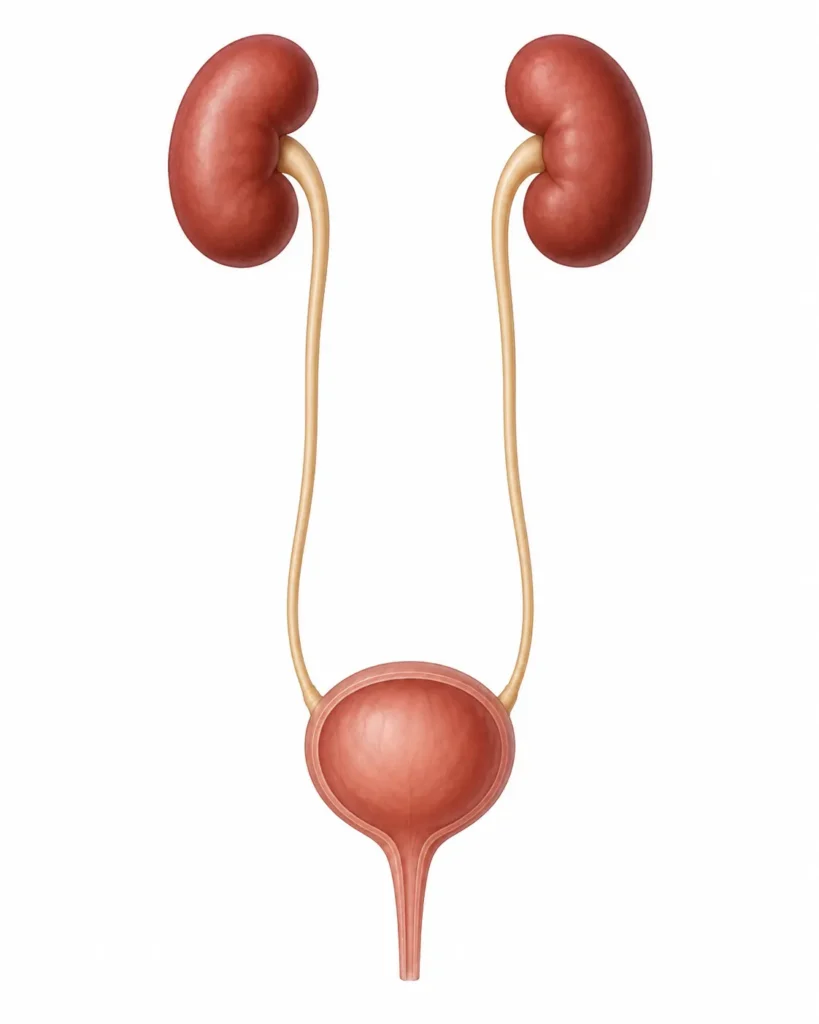
The urinary tract includes the kidneys, ureters, bladder, and urethra.
The kidneys produce urine, the ureters carry it to the bladder, the bladder stores it, and the urethra allows it to leave the body.
A UTI develops when bacteria or, less commonly, other microorganisms infect part of this system.
Most uncomplicated UTIs affect the lower urinary tract, particularly the bladder and urethra.
Common symptoms of a bladder infection include:
- Burning or pain while urinating
- Needing to urinate more frequently
- A strong urge to urinate even when the bladder is nearly empty
- Pressure or cramping in the lower abdomen
- Blood in the urine
Urine may also appear cloudy or smell stronger than usual. However, odor or cloudiness by itself does not prove that an infection is present.
A kidney infection is more serious. Possible warning signs include fever, chills, nausea, vomiting, and pain in the lower back or side beneath the ribs.
These symptoms require prompt medical evaluation.
Can Herbs Cure a UTI?
At present, there is no herbal product that can be recommended as a dependable stand-alone cure for an active UTI.
Many plants contain compounds that slow bacterial growth in laboratory experiments.
Green tea catechins, garlic compounds, essential oils, and extracts from various medicinal plants have all shown some antimicrobial activity under controlled laboratory conditions.
That does not mean taking those products will clear bacteria from a person’s bladder.
A laboratory study can expose bacteria directly to a concentrated plant compound. In the human body, that compound must be digested, absorbed, metabolized, distributed, and excreted at a concentration that is both effective and safe.
Most herbs promoted for UTIs have not met that standard in well-designed clinical trials.
Recent reviews continue to describe plant compounds as promising areas of research, but clinical evidence remains too limited and inconsistent to replace established medical treatment.
For a suspected active UTI, herbs should therefore be viewed as possible complementary support—not infection-clearing treatment.
Cranberry: The Best-Studied Natural Option

Cranberry is technically a fruit rather than an herb, but it is the most extensively studied natural product connected with urinary health.
What cranberry may help with
Cranberry contains compounds called proanthocyanidins. These may make it more difficult for certain bacteria, particularly some strains of Escherichia coli, to attach to urinary tract tissue.
Because bacterial attachment is an early step in many UTIs, regularly consuming an appropriate cranberry product may help reduce recurrent infections in some people.
According to the National Center for Complementary and Integrative Health, cranberry products may reduce the overall risk of symptomatic recurrent UTIs in women who have previously experienced them.
Results have not been consistent across every study or population, however.
What cranberry cannot do
Cranberry has not been shown to cure an existing UTI.
It does not reliably kill bacteria already established in the bladder, and it should not be used as a reason to postpone medical evaluation when symptoms are present.
Think of cranberry as a possible preventive measure for selected people—not as an herbal antibiotic.
Juice, capsules, or tablets?
Cranberry is available as:
- Unsweetened juice
- Sweetened cranberry juice drinks
- Capsules
- Tablets
- Concentrated extracts
Research products vary considerably in their amount of active compounds, so there is no single consumer dose that applies to every juice or supplement.
Unsweetened juice may be suitable for some people, but it can be tart and may cause stomach discomfort.
Many cranberry juice cocktails contain substantial added sugar, which may be undesirable for people managing diabetes or trying to limit sugar intake.
Capsules can provide a more concentrated product without the sugar, but supplement quality and composition are not uniform.
Cranberry safety
Cranberry is generally well tolerated in ordinary food amounts. Larger amounts may cause:
- Stomach discomfort
- Loose stools or diarrhea
- Increased sugar intake from sweetened drinks
People with a history of kidney stones should discuss concentrated cranberry products with a healthcare professional.
Anyone taking warfarin or another anticoagulant should also consult a clinician or pharmacist before using cranberry regularly because potential interactions have been reported and individual risk may vary.
Uva Ursi, or Bearberry
Uva ursi is one of the herbs most commonly marketed for bladder infections. It comes from the leaves of Arctostaphylos uva-ursi, also known as bearberry.
The leaves contain arbutin, which the body can convert into hydroquinone-related compounds.
This history of use has led to uva ursi being described as a traditional urinary antiseptic.
What the research shows
Clinical studies have investigated whether uva ursi could reduce antibiotic use in women with uncomplicated UTIs. The results do not establish it as an equivalent or safer replacement for antibiotics.
In one randomized clinical trial, initial uva ursi treatment reduced antibiotic use, but participants experienced a greater symptom burden and more safety concerns than those receiving fosfomycin, an antibiotic used for some uncomplicated UTIs.
That finding is important: reducing antibiotic use is not automatically beneficial if symptoms last longer or complications become more likely.
Why uva ursi requires caution
Uva ursi is not suitable as an everyday urinary-health supplement or a long-term preventive remedy. Potential concerns include:
- Nausea and digestive upset
- Possible liver toxicity
- Risks associated with prolonged hydroquinone exposure
- Uncertain dosing across products
- Inadequate safety evidence for repeated use
It should generally be avoided during breastfeeding because there are no reliable data showing that it is safe for a nursing infant, and its components may have toxic effects.
Pregnant people, children, and people with kidney or liver disease should not self-treat with uva ursi.
Because its risk-benefit profile is uncertain, it is best used only under the direction of a qualified healthcare professional—if used at all.
Green Tea
Green tea is sometimes described as a natural UTI remedy because its catechins have demonstrated antibacterial activity against certain urinary pathogens in laboratory research.
However, drinking green tea has not been shown to clear bacteria from the bladder or cure an active infection. The evidence is primarily experimental rather than clinical.
For most adults, a cup of brewed green tea can be part of a normal diet. It may contribute to daily fluid intake, but it should be viewed as a beverage rather than UTI treatment.
Green tea may not be appropriate for everyone. Considerations include:
- Caffeine can worsen urgency in some people.
- It may cause sleep problems, jitteriness, or stomach irritation.
- Tea can reduce the absorption of non-heme iron when consumed with meals.
- Concentrated green tea extracts carry different risks from traditionally brewed tea and have been associated with liver injury in some circumstances.
- Green tea products may interact with certain medications.
Someone experiencing urinary urgency may feel worse after a highly caffeinated tea, even though the tea itself did not cause the infection.
Garlic
Garlic contains sulfur-based compounds with demonstrated antimicrobial effects in laboratory studies.
This has encouraged claims that raw garlic, garlic water, or concentrated supplements can treat UTIs.
There is not enough clinical evidence to show that eating garlic or taking a garlic supplement eliminates an active urinary infection.
Garlic is safe for many people when used in normal food amounts. Concentrated supplements are more likely to cause:
- Heartburn
- Nausea
- Abdominal discomfort
- Body or breath odor
- Increased bleeding risk
People taking anticoagulant or antiplatelet medication should ask a healthcare professional before using high-dose garlic supplements.
Concentrated garlic may also be inappropriate before surgery because of its potential effect on bleeding.
Eating garlic as part of a balanced meal is reasonable. Relying on it to cure a UTI is not.
Oregano Oil, Thyme Oil, and Tea Tree Oil
Essential oils such as oregano, thyme, and tea tree oil frequently show antibacterial effects in test tubes. These findings do not provide instructions for safe home treatment.
Essential oils are highly concentrated. They should never be inserted into the urethra or vagina, and undiluted oils can cause chemical irritation or burns on sensitive genital tissue.
Tea tree oil should not be swallowed. Oral ingestion can cause serious symptoms, including confusion, loss of coordination, inability to walk, and coma.
Do not attempt to treat urinary symptoms by:
- Adding essential oils to drinking water
- Placing them on a tampon
- Applying them to the urethral opening
- Using them as a vaginal rinse or douche
- Mixing several oils into a “natural antibiotic” formula
These practices can cause injury without reaching bacteria in the bladder at a medically useful concentration.
Goldenseal, Juniper, Buchu, and “Kidney Cleanse” Blends
Goldenseal, juniper, buchu, horsetail, dandelion, and various proprietary blends are commonly marketed for urinary cleansing.
Evidence that these products cure UTIs is weak or absent.
Some are described as diuretics because they may increase urine production.
Urinating more frequently is not the same as eliminating an infection. A bacterial UTI can remain present even when urine output increases.
Multi-ingredient urinary blends create additional problems:
- The exact amount of each herb may be unclear.
- Several ingredients may have overlapping side effects.
- Diuretic herbs may contribute to dehydration or electrolyte problems.
- Some products may interact with prescription medicines.
- Kidney or liver conditions can increase the risk of adverse effects.
- Pregnancy safety may be unknown.
The word “cleanse” is a marketing term, not evidence that a product removes bacteria, toxins, or infection from the urinary tract.
Soothing Herbal Teas for Urinary Discomfort
Marshmallow root, corn silk, and similar herbs are traditionally used in teas intended to soothe irritated tissue.
Some people may find a warm, noncaffeinated drink comforting. These herbs may also encourage ordinary hydration.
However, clinical evidence for UTI symptom relief is limited, and they have not been proven to eradicate urinary bacteria.
A soothing tea cannot prevent an untreated bladder infection from spreading to the kidneys.
Someone who chooses to drink an herbal tea while arranging appropriate care should:
- Select a simple product with clearly listed ingredients.
- Follow the manufacturer’s directions rather than making a highly concentrated preparation.
- Avoid products labeled as detoxes, flushes, or antibiotic replacements.
- Stop using the tea if it causes nausea, rash, swelling, diarrhea, or worsening discomfort.
- Ask a healthcare professional about safety during pregnancy or breastfeeding, or when taking medication.
- Avoid herbs that conflict with kidney disease, heart failure, fluid restrictions, or other chronic conditions.
Supportive Measures That May Help
Supportive care may make a person more comfortable while they seek medical guidance or wait for prescribed treatment to take effect.
These measures do not cure the infection itself.
Drink a reasonable amount of fluid
Normal hydration can help prevent highly concentrated urine, which may feel more irritating during urination.
Do not force excessive amounts of water.
Drinking several large containers in a short period will not sterilize the bladder and can, in extreme cases, dangerously lower the sodium level in the blood.
People with heart failure, advanced kidney disease, or a medically prescribed fluid restriction should follow their clinician’s instructions rather than increasing fluid intake independently.
Temporarily limit bladder irritants
Some foods and drinks may worsen burning, urgency, or frequency in sensitive people. Possible triggers include:
- Alcohol
- Coffee
- Energy drinks
- Strong caffeinated tea
- Highly acidic beverages
- Very spicy foods
These items do not necessarily cause a bacterial UTI. Avoiding them briefly may simply reduce discomfort.
Take prescribed medication correctly
When a clinician prescribes an antibiotic:
- Take it exactly as directed.
- Do not share it with another person.
- Do not use old antibiotics left over from a previous illness.
- Do not stop early unless the prescriber changes the plan.
- Report significant or unexpected side effects.
- Seek reassessment if symptoms worsen or fail to improve as expected.
The appropriate antibiotic depends on factors such as the bacteria involved, local resistance patterns, allergies, pregnancy status, kidney function, previous infections, and whether the infection is complicated.
Common Home-Treatment Mistakes

Waiting too long while testing remedies
Trying cranberry juice, herbal tea, garlic, and supplements for several days can allow an infection to worsen.
Contact a healthcare professional promptly when classic symptoms such as burning, urgency, and frequency develop.
Treating every urinary symptom as a UTI
Burning urination can have other causes, including:
- Vaginal irritation
- Yeast infection
- Sexually transmitted infection
- Kidney stones
- Interstitial cystitis or bladder pain syndrome
- Prostate conditions
- Irritation from soaps or personal-care products
Repeatedly self-treating without confirming the cause can delay the correct diagnosis.
Using baking soda
Some online remedies recommend drinking baking soda to change urine acidity.
This can supply a large dose of sodium and may cause serious electrolyte or acid-base disturbances. It should not be used as a UTI treatment unless a clinician has prescribed a sodium bicarbonate product for a specific medical reason.
Applying oils or herbs to genital tissue
The urethral and vaginal areas are highly sensitive.
Essential oils, garlic, vinegar, and concentrated herbal mixtures can cause burns, inflammation, or disruption of normal tissue.
Stacking several supplements
Taking multiple antimicrobial or diuretic herbs together does not make them function like a stronger antibiotic.
It mainly makes side effects and interactions harder to predict.
Who Should Not Rely on Home Remedies?
Some people have a higher risk of complications or require different evaluation and treatment.
Prompt medical guidance is especially important for:
- Pregnant people
- Children
- Men with possible UTI symptoms
- Older or medically frail adults
- People with diabetes
- People with kidney disease
- Anyone with a urinary catheter
- People with kidney stones or urinary obstruction
- People with a weakened immune system
- Anyone who has recently undergone a urinary procedure
- People with repeated or rapidly recurring infections
A UTI during pregnancy requires professional care because infection can affect both the pregnant person and the pregnancy.
Men and children are also more likely to need investigation for contributing factors rather than repeated home treatment.
When to Seek Medical Care
Contact a healthcare professional promptly for:
- Pain or burning during urination
- Urinary urgency or frequency
- Blood in the urine
- Significant lower abdominal pain
- Symptoms that are worsening
- Symptoms that return soon after treatment
- Repeated suspected UTIs
Seek urgent care for possible kidney involvement
Obtain prompt medical evaluation when urinary symptoms occur with:
- Fever
- Chills
- Pain in the side or back beneath the ribs
- Nausea
- Vomiting
- Marked weakness or illness
- Difficulty keeping fluids or medication down
These can be signs that the infection has reached the kidneys.
Seek emergency help for severe illness
Emergency symptoms may include:
- Fainting
- Severe confusion
- Difficulty breathing
- Very rapid breathing or heartbeat
- Cold, clammy, or mottled skin
- Rapid deterioration
- Inability to stay awake
These signs can occur with sepsis, a life-threatening response to infection.
A Better Approach to Recurrent UTIs
When infections keep returning, the goal should be to understand the pattern rather than repeatedly experimenting with new remedies.
A clinician may recommend:
- Confirming infections with urine testing or cultures
- Reviewing whether symptoms could have another cause
- Identifying sexual, hormonal, anatomical, or behavioral triggers
- Reviewing bladder-emptying habits
- Managing kidney stones or urinary obstruction
- Considering cranberry for an appropriate patient
- Discussing prescribed vaginal estrogen after menopause
- Considering targeted preventive antibiotics in selected cases
- Reviewing other non-antibiotic preventive options when appropriate
Clinician-guided prevention may include a single antibiotic dose after sexual activity, a short course kept available for carefully selected patients, or a low-dose preventive regimen.
These strategies are individualized and should not be attempted with leftover medication.
The Bottom Line
Cranberry has the strongest evidence among natural products associated with urinary health.
It may modestly reduce recurrent symptomatic UTIs in some people, but it does not treat an infection that is already present.
Uva ursi has been studied, but it has not proved to be a safer or equally effective substitute for antibiotics.
Green tea, garlic, essential oils, and many other herbs show interesting laboratory activity, but clinical evidence is insufficient to recommend them as UTI treatments.
Herbal teas may provide comfort, and sensible hydration may make urination less irritating. Neither can be relied upon to eliminate bacteria.
Because a lower UTI can spread to the kidneys, the safest approach is to use natural products only as carefully chosen complementary measures—not as reasons to delay diagnosis or proven treatment.