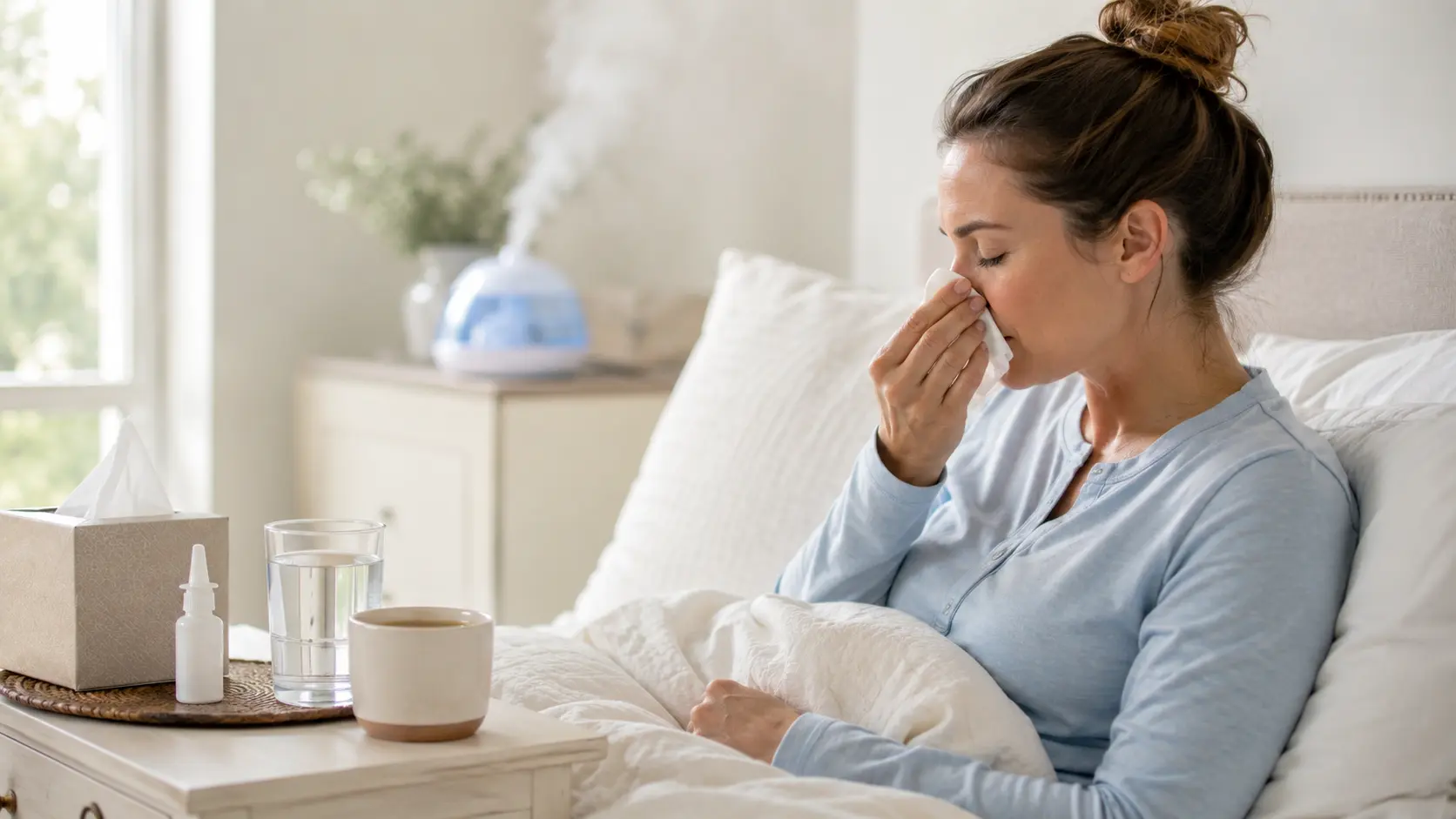
That constant feeling of mucus sitting in the back of your throat can be surprisingly irritating.
You may find yourself clearing your throat every few minutes, coughing when you lie down, or waking up with a scratchy throat.
These symptoms are often described as post-nasal drip.
The term generally refers to mucus accumulating or draining toward the back of the nose and throat.
It can occur for many reasons, including allergies, respiratory infections, sinus inflammation, dry air, environmental irritants, and some forms of rhinitis.
Because there are many possible causes, there is no single home remedy that works for everyone.
Fortunately, several simple measures may make mucus easier to clear, calm irritated nasal and throat tissues, and reduce some common triggers.
The goal of home treatment is symptom relief, not a guaranteed cure.
Persistent, severe, or repeatedly recurring post-nasal drip may require evaluation to identify and treat the underlying cause.
What Causes Post-Nasal Drip?
Your nose and sinuses normally produce mucus. Most of the time, you swallow it without noticing.
When mucus production increases, becomes thicker, or simply becomes more noticeable as it moves toward the throat, you may experience symptoms such as throat clearing, coughing, nasal congestion, a runny nose, or irritation in the throat.
Several conditions can contribute.
Allergies and Environmental Triggers
Allergic rhinitis can cause a runny or congested nose, sneezing, itching, and post-nasal drainage. Common triggers include pollen, mold, dust, and pets.
Nonallergic rhinitis can produce similar congestion and drainage without an allergic reaction. Temperature changes, humidity, chemical smells, and other irritants may trigger symptoms in some people.
Smoke is another potential irritant.
The CDC notes that smoke exposure can contribute to symptoms including coughing, a scratchy throat, runny nose, and irritated sinuses.
Colds and Other Respiratory Infections
Viral respiratory infections commonly cause a stuffy or runny nose, cough, sneezing, and sore throat.
These symptoms can increase the sensation of mucus draining into the throat.
Sinus Inflammation
Inflammation inside the nasal passages and sinuses can interfere with normal mucus drainage and contribute to congestion, pressure, and post-nasal drainage.
Not every episode of sinus symptoms is a bacterial infection, however.
Antibiotics are not automatically appropriate for congestion or drainage, especially when symptoms are caused by viruses.
Dry Air
Dry indoor air can irritate tissues in the nose and throat, making mucus and throat discomfort more noticeable.
MedlinePlus notes that humidification can help reduce irritation associated with excessively dry air.
Other Causes
Post-nasal drainage can also be associated with nonallergic rhinitis, certain medications, structural nasal problems, and other conditions.
ENT specialists emphasize that treatment varies according to the cause, which is why persistent symptoms sometimes require professional evaluation.
6 Home Remedies That May Help Post-Nasal Drip
1. Use a Saline Nasal Spray
For many people, plain saline is one of the simplest places to start.
Saline nasal sprays add moisture to the nasal passages and may help loosen or remove mucus.
MedlinePlus includes gentle saline sprays among the measures that can help with nasal congestion and mucus.
Unlike medicated decongestant sprays, plain saline does not work by constricting blood vessels.
Its main role is mechanical: moisturizing and helping clear material from the nose.
To use it:
- Gently blow your nose first if necessary.
- Keep your head in a comfortable upright position.
- Spray the saline according to the product directions.
- Allow excess solution and loosened mucus to drain naturally.
- Clean the spray tip according to the manufacturer’s directions.
Depending on the product, gentle saline spray may be used several times during the day. Follow the label instructions.
What to expect: Saline may make your nose feel less dry and make mucus easier to clear. It will not cure an allergy, viral infection, chronic sinus condition, or another underlying cause of post-nasal drip.
2. Try a Saline Nasal Rinse, Using Safe Water
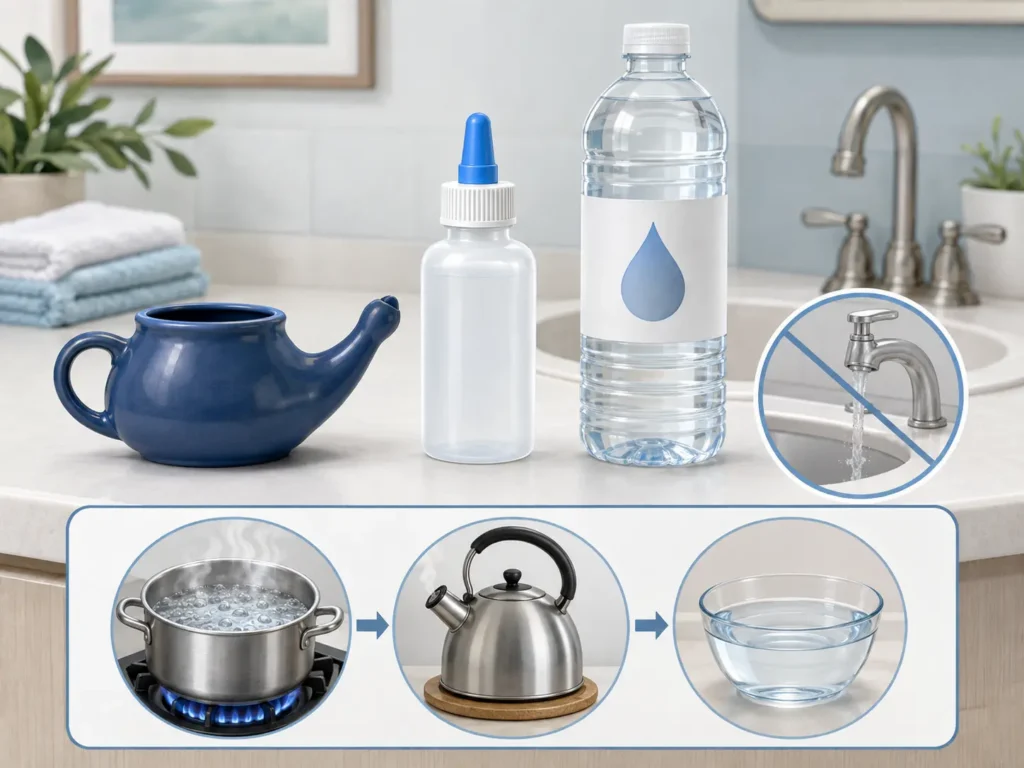
A more thorough saline rinse can flush mucus and debris from the nasal passages. Neti pots, squeeze bottles, and other nasal-irrigation systems are commonly used for this purpose.
MedlinePlus notes that saline nasal washes can help remove excess mucus while adding moisture to nasal passages.
Typical technique involves leaning over a sink, tilting the head slightly, and allowing saline solution to flow through one nostril and out the other.
Follow the instructions supplied with your specific device rather than forcing the rinse.
The most important rule: never use untreated tap water
This is an important safety issue.
The FDA and CDC advise using distilled water, sterile water, or tap water that has been properly boiled and cooled for sinus or nasal rinsing.
Ordinary tap water is not considered safe for this purpose because microorganisms that are generally harmless when swallowed can cause rare but potentially severe infections if introduced into the nasal passages.
Also:
- Wash and maintain your irrigation device according to its instructions.
- Allow it to dry properly between uses.
- Do not share it with another person.
- Stop if rinsing causes significant pain, bleeding, or persistent ear pressure.
If you have had recent nasal or sinus surgery, have significant immune suppression, or have another medical condition affecting your nose or sinuses, ask your healthcare professional whether irrigation is appropriate for you.
3. Drink Enough Fluids
Staying adequately hydrated is a simple supportive measure when post-nasal drip accompanies a cold, congestion, or throat irritation.
Water, broth, and other nonirritating fluids can help maintain normal hydration. MedlinePlus also recommends adequate fluids as part of supportive care for respiratory illnesses.
Good options can include:
- Water
- Warm broth
- Caffeine-free tea
- Other beverages that do not irritate your throat
You do not need to force excessive amounts of water. The objective is normal hydration.
If you have heart failure, kidney disease, or another condition for which a clinician has placed you on a fluid restriction, continue following that medical guidance rather than deliberately increasing your fluid intake.
4. Soothe Your Throat With Warm Liquids
Post-nasal drip can make your throat feel scratchy, raw, or constantly in need of clearing.
Warm liquids will not stop mucus production, but they may make an irritated throat feel more comfortable.
You might try:
- Warm water
- Herbal or caffeine-free tea
- Broth
- Warm water with a small amount of honey
Honey should be viewed as a soothing food rather than a treatment for the cause of post-nasal drip.
Important: Never give honey to a baby younger than 12 months. The CDC warns that honey can expose infants to bacteria associated with infant botulism.
Adults with diabetes may also need to account for honey’s sugar content.
5. Add Moisture When Your Indoor Air Is Dry
If your symptoms become noticeably worse in a heated, air-conditioned, or particularly dry environment, increasing indoor humidity may provide some comfort.
A cool-mist humidifier can add moisture to dry indoor air. MedlinePlus notes that humidifiers may reduce irritation caused by dry air in the nose and throat.
The machine must be kept clean. Dirty humidifiers can accumulate microorganisms or contaminants, so follow the manufacturer’s instructions for cleaning, water changes, and maintenance.
MedlinePlus similarly advises following humidifier cleaning instructions when using one for respiratory symptom relief.
More humidity is not always better. Excessively damp rooms can promote mold growth, which could worsen symptoms in people with mold allergies.
What about steam?
A warm shower or comfortably humid bathroom may temporarily feel soothing when you are congested. MedlinePlus includes bathroom steam among supportive approaches used for sinus symptoms.
Avoid leaning over pots or bowls of boiling water. Hot-water steam remedies introduce an unnecessary burn and scald risk, especially around children.
6. Elevate Your Head at Night

Post-nasal drip can feel worse after you lie down because mucus may become more noticeable at the back of your throat.
MedlinePlus notes that nasal congestion often worsens while lying down and suggests remaining upright or keeping the head elevated.
You might:
- Raise your upper body slightly while sleeping.
- Use a comfortable wedge pillow.
- Adjust your sleeping position if lying completely flat consistently worsens symptoms.
Avoid stacking numerous pillows in a way that sharply bends your neck.
If nighttime throat clearing or coughing occurs repeatedly alongside symptoms such as frequent heartburn or sour-tasting fluid, speak with a healthcare professional.
Another condition may be contributing, and simply sleeping upright may not address the cause.
Reduce the Triggers That Keep the Drip Going

Home remedies tend to work better when you also reduce whatever is aggravating your nose.
If Allergies Appear to Be Involved
If you already know that pollen, dust, pets, or another allergen triggers your symptoms, limiting exposure may help reduce irritation.
Practical measures can include:
- Changing clothes after spending substantial time outdoors during high-pollen periods.
- Showering before bed after heavy outdoor exposure.
- Keeping your sleeping area reasonably clean and free of accumulated dust.
- Avoiding known allergens when practical.
- Using saline to gently clear particles and mucus from your nasal passages.
If symptoms are frequent enough to interfere with sleep or everyday activities, professional allergy evaluation may be more helpful than repeatedly experimenting with home remedies.
Avoid Smoke and Strong Irritants
Try to minimize exposure to anything that noticeably irritates your nose or throat, including:
- Cigarette or cigar smoke
- Secondhand smoke
- Vaping aerosols
- Strong perfumes
- Harsh cleaning fumes
- Other chemical odors
Smoke exposure is associated with nasal, sinus, throat, and respiratory irritation.
Pay Attention to Patterns
A simple symptom pattern can sometimes give you useful clues.
Notice whether drainage tends to appear:
- During a particular pollen season
- After cleaning dusty areas
- Around certain pets
- During a cold
- In dry indoor environments
- After exposure to smoke or fragrances
- Mostly at night
These observations cannot diagnose the cause, but they can provide useful information if you eventually discuss the problem with a doctor, allergist, or ear, nose, and throat specialist.
Common Home-Remedy Mistakes to Avoid
Some popular approaches are either ineffective, unnecessarily irritating, or potentially unsafe.
Using Tap Water in a Neti Pot
This is the most important mistake to avoid.
Do not fill a neti pot or sinus-rinse bottle directly with untreated tap water.
Use distilled, sterile, or appropriately boiled and cooled water, as recommended by the FDA and CDC.
Assuming You Need Antibiotics
Post-nasal drip alone does not mean you have a bacterial sinus infection.
Many respiratory and sinus symptoms occur because of viral infections and will not benefit from antibiotics.
Current CDC guidance considers factors such as symptom duration, worsening after initial improvement, fever, nasal discharge, and facial pain when bacterial rhinosinusitis is being evaluated.
Antibiotics should only be used when medically appropriate and prescribed.
Treating Every Case Like an Allergy
Antihistamine-focused strategies may make sense when allergies are actually causing the symptoms, but post-nasal drainage can occur with both allergic and nonallergic conditions.
If your symptoms persist despite avoiding allergens or using appropriate allergy treatment, another explanation may need to be considered.
Putting Irritating DIY Ingredients in Your Nose
Avoid placing undiluted essential oils, hydrogen peroxide, vinegar, concentrated salt preparations, or other harsh homemade mixtures inside your nostrils.
Nasal tissues are delicate.
Irritating substances can cause burning and inflammation, potentially making symptoms worse rather than better.
Plain saline used appropriately is a safer starting point.
Constantly Clearing Your Throat
Throat clearing can become a cycle: drainage creates irritation, you clear your throat, and repeated mechanical irritation makes the throat feel as though it needs to be cleared again.
When possible, try sipping water or swallowing gently instead of aggressively clearing your throat every few seconds.
What If Home Remedies Aren’t Enough?
Persistent post-nasal drip may need treatment aimed at the underlying condition.
For example, allergic rhinitis and some forms of nonallergic rhinitis may be treated with medications rather than home remedies alone.
MedlinePlus notes that nasal corticosteroid sprays such as fluticasone are used for certain allergic and nonallergic rhinitis symptoms.
That does not mean everyone with post-nasal drip should start a medicated nasal spray.
The appropriate treatment depends on factors such as:
- Whether allergies are involved
- How long symptoms have lasted
- Whether there is significant sinus inflammation
- Other medications you take
- Your age
- Pregnancy or breastfeeding
- Chronic medical conditions
- Whether another nasal or throat condition is present
If you are uncertain, a pharmacist or healthcare professional can help you choose an appropriate over-the-counter option or determine whether an examination is needed.
Never stop a prescribed medication simply because a home remedy seems to be helping.
Safety Considerations
Most of the remedies discussed here are relatively simple, but a few precautions matter.
For nasal irrigation: use only distilled, sterile, or properly boiled and cooled water. Keep the device clean and follow its instructions.
For humidifiers: clean the unit as directed. If your room becomes persistently damp or you see mold or excessive condensation, reduce the humidity.
For honey: never give honey to an infant younger than 12 months.
For herbal products: remember that “natural” does not automatically mean risk-free. Herbs can cause allergic reactions or interact with medications. Pregnant or breastfeeding people and those with chronic illnesses should be particularly cautious about concentrated herbal products.
For chronic conditions: follow existing medical instructions regarding fluid intake and medications.
And regardless of the remedy, discontinue anything that produces significant burning, bleeding, breathing difficulty, or worsening symptoms.
When to Seek Medical Care
Most mild post-nasal drip associated with a simple respiratory illness or temporary irritation can be managed conservatively.
Certain symptoms deserve medical attention.
The CDC recommends healthcare evaluation for sinus-related symptoms that include severe headache or facial pain, symptoms that improve and then become worse, symptoms lasting more than 10 days without improvement, fever lasting longer than three to four days, or repeated sinus infections.
Seek medical care if you develop:
- Severe or worsening facial pain
- A severe headache
- Symptoms lasting more than 10 days without improving
- Symptoms that improve and then become substantially worse
- Fever lasting more than three to four days
- Repeated sinus infections
- Difficulty breathing
- Difficulty swallowing
- Blood in saliva or phlegm
- Signs of dehydration
- A persistent unexplained cough or post-nasal drip that keeps returning
Difficulty breathing or swallowing, blood in saliva or phlegm, and dehydration are among the warning signs the CDC advises having evaluated when throat symptoms are present.
A Special Warning After Nasal Rinsing
Serious infections associated with unsafe nasal-rinsing water are rare, but they can be extremely dangerous.
CDC guidance states that anyone who develops symptoms such as headache, fever, confusion, or vomiting after rinsing the sinuses or nasal passages should seek medical attention immediately and tell the healthcare professional about the recent nasal rinsing.
This is another reason never to use untreated tap water in a nasal-rinsing device.
A Simple At-Home Routine for Mild Post-Nasal Drip
You do not need an elaborate collection of remedies.
A straightforward routine is often easier to follow.
Morning
Use a gentle saline nasal spray or, if appropriate for you, a properly prepared saline rinse.
Drink some water with breakfast and continue your normal hydration throughout the day.
During the Day
Pay attention to triggers.
Avoid smoke and other substances that noticeably irritate your nose or throat.
Sip water as needed, and use a comfortably warm drink if your throat feels scratchy.
If allergy exposure seems to be involved, change clothes or wash up after spending substantial time around pollen or other known triggers.
Evening
Use saline again if your nasal passages feel dry or congested and the product directions permit repeated use.
If your home is very dry, consider running a properly cleaned cool-mist humidifier.
Bedtime
If drainage becomes more noticeable when you lie down, gently elevate your upper body rather than sleeping completely flat.
The routine should make you more comfortable, not create additional symptoms.
Stop any measure that causes significant pain, persistent burning, bleeding, or ear pressure.
The Bottom Line
Post-nasal drip is a symptom, not a single disease.
Allergies, respiratory infections, sinus inflammation, dry air, irritants, and other conditions can all contribute, so the best long-term solution depends on the underlying cause.
For mild symptoms, a few low-risk strategies are worth considering: plain saline nasal care, adequate hydration, warm liquids for throat comfort, appropriate indoor humidity, avoiding irritants, and slight head elevation at night.
Among these approaches, saline nasal care can be particularly practical, but nasal irrigation must always be performed with distilled, sterile, or properly boiled and cooled water.
Home remedies should make symptoms easier to tolerate while your body recovers or while triggers are addressed.
They should not delay medical evaluation when symptoms are severe, persistent, worsening, or repeatedly returning.