A circular, itchy rash can make you wonder whether you have ringworm—and whether something in your bathroom or kitchen can make it disappear.
Despite its name, ringworm is not caused by a worm. It is a contagious fungal infection of the skin, medically known as tinea.
A typical infection may appear as a scaly patch that gradually expands, sometimes developing a raised border and partial clearing in the center.
However, ringworm does not always form a perfect circle, and its color can vary depending on skin tone.
Many small, uncomplicated ringworm infections on ordinary body skin can be treated at home.
The most dependable treatment, however, is not vinegar, garlic, coconut oil, or another household remedy. It is an antifungal medication approved for use on the skin.
The Centers for Disease Control and Prevention recommends treating skin ringworm with antifungal medication and using it exactly as directed for the full treatment period.
This guide explains how to treat a mild infection safely, prevent it from spreading, avoid common mistakes, and recognize when home treatment is not enough.
First, Make Sure Home Treatment Is Appropriate
Before reaching for an antifungal cream, consider whether the rash is reasonably consistent with ringworm and whether its location and severity make self-care appropriate.
What Ringworm May Look and Feel Like
Ringworm on the body may cause:
- An itchy, dry, or scaly patch
- A round, oval, or irregularly shaped rash
- A raised or more noticeable outer border
- Partial clearing toward the center
- Small bumps or scaling around the edge
- Gradual outward expansion
- One patch or several separate patches
On lighter skin, the rash may look pink or red. On darker skin, it may look red, brown, gray, purple, or darker than the surrounding area.
The classic ring shape may be less obvious in some people.
MedlinePlus describes body ringworm as a rash that may slowly become ring-shaped, with a raised, scaly border and a clearer center.
These features can suggest ringworm, but they cannot confirm it. A healthcare professional may examine a skin scraping under a microscope or order other testing when the diagnosis is uncertain.
Other Conditions Can Resemble Ringworm
Several skin problems may produce circular, itchy, or scaly patches, including:
- Eczema
- Contact dermatitis
- Psoriasis
- Pityriasis rosea
- Granuloma annulare
- Nummular eczema
- Bacterial skin infections
- Other fungal or yeast infections
Using the wrong treatment can worsen some of these conditions or delay an accurate diagnosis.
Consider a medical evaluation when the rash looks unusual, is painful rather than merely itchy, or does not respond as expected to antifungal treatment.
When Initial Home Treatment May Be Reasonable
Treating the rash at home may be reasonable when:
- It affects a small area of ordinary body skin
- It is not on the scalp, beard, nails, eyelids, or close to the eyes
- It is not spreading rapidly
- The skin is not badly swollen, blistered, open, or draining
- You do not have fever or significant pain
- You are otherwise healthy
- You can follow the medication label consistently
Children, pregnant people, individuals with weakened immune systems, and people with diabetes or poor circulation may need individualized guidance before self-treatment.
The Most Reliable Home Treatment: An OTC Antifungal
For a small, uncomplicated patch on the body, an over-the-counter antifungal cream, lotion, spray, or powder is usually the evidence-based starting point.
The specific formulation depends on the body area. Creams and lotions are often practical for dry body patches, while powders or sprays may be useful in damp areas or inside footwear.
Always choose a product labeled for the location and condition you are treating.
Choose an Antifungal, Not Just an Anti-Itch Cream
Common nonprescription antifungal ingredients include:
- Terbinafine
- Clotrimazole
- Miconazole
- Butenafine
- Tolnaftate
Different products have different dosing schedules and treatment durations. Some are applied once daily, while others may require twice-daily use.
Depending on the medication and infection, treatment may continue for approximately one to four weeks.
Do not assume that instructions for one product apply to another. Read the Drug Facts label and follow it exactly.
The American Academy of Dermatology notes that antifungal creams or ointments often clear skin ringworm and that many products are used for two to four weeks.
How to Apply Antifungal Cream Correctly
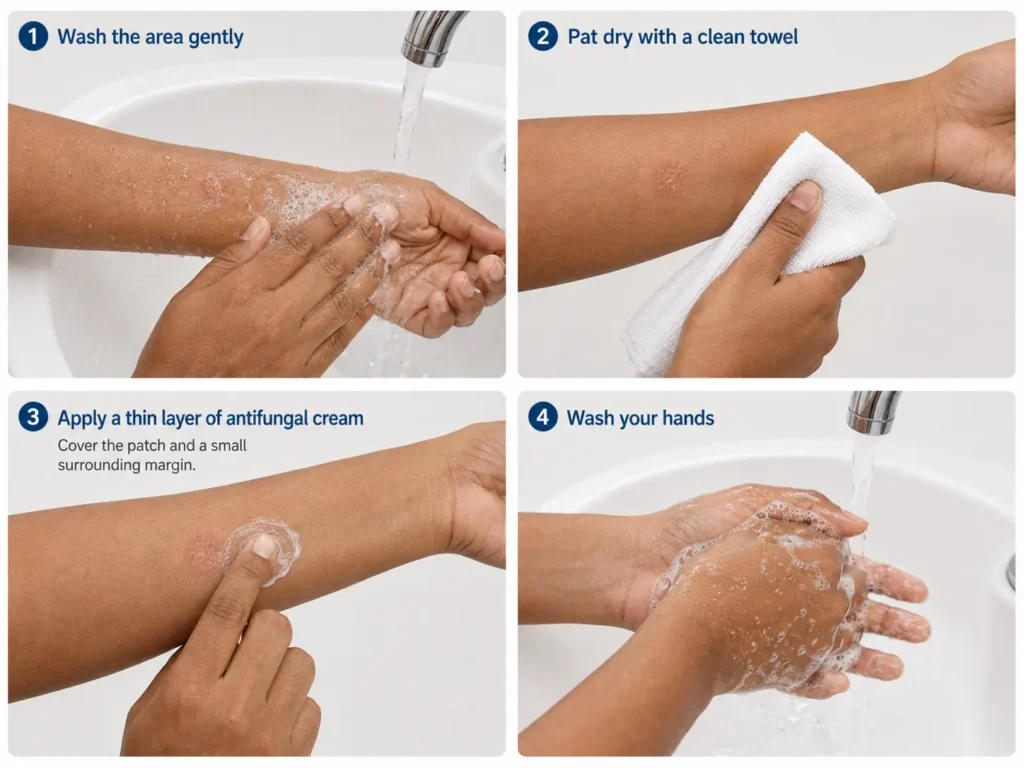
Use the medication according to its package directions.
A typical routine looks like this:
- Wash your hands.
Clean hands reduce the chance of transferring the fungus to another body area. - Gently clean the affected skin.
Use mild soap and water. Aggressive scrubbing can irritate the rash. - Dry the area thoroughly.
Pat rather than rub. Fungi thrive in warm, damp environments. - Apply a thin layer of medication.
Cover the visible rash and the small margin of surrounding skin specified on the label. The fungus may extend slightly beyond what you can see. - Wash your hands again.
Skip this step only when the hands themselves are being treated, and follow the product instructions in that situation. - Repeat on schedule.
Apply the product at the frequency stated on the package. - Complete the full treatment course.
Continue for as long as directed, even if the itching and redness improve sooner.
Stopping too early may allow the infection to persist or return.
The CDC advises using antifungal medicine exactly as directed and for the entire recommended treatment period.
What Improvement Should Look Like
Ringworm usually does not disappear overnight.
During successful treatment, you may notice:
- Less itching
- A flatter or less scaly border
- No new patches
- Less outward expansion
- Gradual fading of redness or discoloration
Itching may improve before the infection has fully cleared.
Conversely, temporary discoloration may remain after the active infection is gone, especially in darker skin tones.
Contact a healthcare professional when the rash continues spreading, becomes more inflamed, or shows no clear improvement after you have used the medication correctly for the period stated on the label.
Avoid Trapping Moisture Over the Rash
Unless a clinician tells you otherwise, avoid covering the area with a thick, airtight bandage. Occlusion can trap heat and moisture and may also increase skin irritation from the medication.
Breathable clothing is generally preferable. When the rash must be covered to reduce direct contact, use clean, loose clothing or follow medical guidance about an appropriate dressing.
Supportive Home-Care Steps
Hygiene measures can support recovery and reduce transmission, but they do not replace antifungal medication.
Keep the Skin Clean and Dry
Helpful habits include:
- Gently washing the area daily
- Drying it thoroughly after bathing
- Changing out of sweaty clothes promptly
- Wearing loose, breathable fabrics
- Changing socks and underwear every day
- Using a clean towel
- Allowing shoes and athletic equipment to dry between uses
The CDC recommends keeping skin clean and dry and changing socks and underwear daily to help prevent ringworm.
Avoid repeatedly washing the rash with alcohol, hydrogen peroxide, strong antiseptics, or harsh soap.
These products can damage the skin barrier, increase burning, and make it harder to tell whether the infection is improving.
Try Not to Scratch
Ringworm can be intensely itchy, but scratching may:
- Move fungal material to another body area
- Cause breaks in the skin
- Increase irritation
- Create an opportunity for bacterial infection
Keep your fingernails short and wash your hands after touching the rash. A clean, cool compress may provide temporary relief from itching.
Do not place ice directly on the skin, and do not use the compress as a substitute for antifungal medication.
Treat Athlete’s Foot When It Is Also Present
Fungal infections can spread from one part of your body to another.
For example, fungus on the feet may be transferred to the groin or other skin through hands, towels, socks, underwear, or clothing.
Signs of athlete’s foot may include:
- Scaling between the toes
- Itching or burning
- Cracked skin
- Dry scaling on the soles
- Small blisters
When athlete’s foot and body ringworm are both present, each area may need appropriate treatment. Follow the label for the specific body site.
Putting socks on before underwear may help reduce the chance of transferring fungus from the feet to the groin.
How to Prevent Ringworm From Spreading

Ringworm can spread through direct skin contact, contaminated personal items, shared surfaces, and infected animals.
Treatment helps reduce transmission, but practical precautions remain important while the infection is active.
Do Not Share Personal Items
Avoid sharing:
- Towels
- Washcloths
- Clothing
- Hats
- Bedding
- Combs and brushes
- Razors
- Sports equipment
- Protective pads or helmets
Wash recently used clothing, towels, and bedding regularly. Follow fabric-care directions and dry items thoroughly.
Clean shared athletic equipment according to the manufacturer’s instructions. Shower after exercise and change out of damp clothing as soon as practical.
Limit Direct Contact With the Rash
Avoid direct skin-to-skin contact involving the affected area. This is especially important during:
- Wrestling
- Martial arts
- Football
- Intimate contact
- Shared sleeping arrangements
- Close caregiving activities
Follow the return-to-play or attendance policies of your school, childcare facility, workplace, gym, or sports organization.
Requirements may differ depending on the location of the infection and the type of activity.
Check Pets for Possible Ringworm
Dogs, cats, and other animals can develop and transmit ringworm. Possible signs include:
- Circular areas of hair loss
- Scaly or crusty skin
- Broken hairs
- Redness
- Repeated scratching
Some infected animals have subtle signs or no obvious rash. Contact a veterinarian when you suspect a pet may be involved.
Do not put human antifungal medication, vinegar, bleach, or essential oils on an animal unless a veterinarian specifically recommends the product.
Some substances that people use on their own skin can be dangerous to pets.
The CDC advises taking pets to a veterinarian when they have a suspicious rash and limiting contact with affected areas.
Natural Ringworm Remedies: What the Evidence Shows
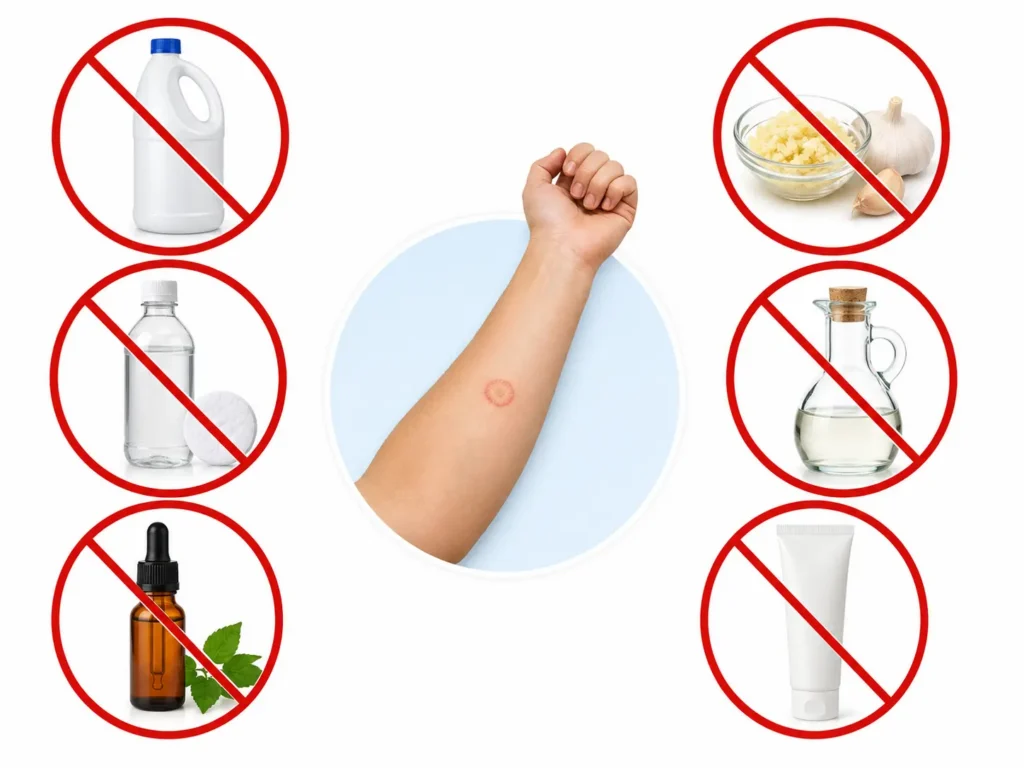
Natural does not automatically mean safe, gentle, or effective.
A substance may inhibit fungi in a laboratory dish but still fail as a treatment on human skin.
A useful medication must reach the organism at an effective concentration without causing unacceptable irritation or injury.
For this reason, household remedies should not replace an antifungal medication with established effectiveness.
Tea Tree Oil
Tea tree oil is frequently promoted for fungal skin problems.
Some laboratory research suggests antifungal activity, and small studies have investigated it for certain conditions such as athlete’s foot.
However, evidence is not strong enough to recommend tea tree oil as a dependable stand-alone treatment for body ringworm.
Commercial products also vary in concentration and quality.
Tea tree oil may cause:
- Redness
- Burning
- Irritation
- Allergic contact dermatitis
Oxidized or improperly stored oil may be more likely to trigger a skin reaction.
Tea tree oil must never be swallowed because oral exposure can cause serious toxicity.
Undiluted tea tree oil should not be applied directly to an inflamed rash. It may also pose a toxicity risk to pets.
Coconut Oil
Coconut oil has moisturizing properties and has demonstrated activity against certain microorganisms in laboratory research.
That does not establish it as a reliable treatment for dermatophytes—the fungi that commonly cause ringworm.
There is insufficient clinical evidence that coconut oil alone can clear ringworm. It may also trap moisture when applied heavily, particularly in skin folds.
Using a small amount as a moisturizer on unaffected dry skin is different from treating an active fungal infection. Do not use coconut oil in place of an antifungal medication.
Apple Cider Vinegar
Apple cider vinegar is acidic, which is why it is often promoted as an antifungal remedy.
However, there is no strong clinical evidence that applying it to the skin reliably cures ringworm.
Undiluted vinegar or repeated applications may cause:
- Stinging
- Irritation
- Skin peeling
- Chemical burns
The risk may be greater when vinegar is placed on broken skin or covered with a bandage. Avoid using it on raw, scratched, blistered, or sensitive skin.
Garlic, Oregano Oil, and Concentrated Essential Oils
Garlic and essential oils may show antimicrobial activity under laboratory conditions, but direct application can injure human skin.
Possible reactions include:
- Burning
- Blistering
- Swelling
- Allergic dermatitis
- Worsening redness
- Post-inflammatory discoloration
Applying several concentrated remedies at once can make the rash harder to assess and may delay effective treatment.
Never Use Bleach or Household Disinfectants on Skin
Bleach, cleaning sprays, rubbing alcohol, and surface disinfectants are not skin treatments.
They may cause chemical burns, tissue injury, and severe irritation.
These products should be used only for their intended environmental purposes and according to label directions.
Avoid the Steroid-Cream Mistake
One of the most important ringworm safety rules is to avoid treating a suspected fungal rash with a steroid cream unless a healthcare professional has specifically directed you to use it.
Steroids such as hydrocortisone may temporarily reduce redness and itching. That apparent improvement can be misleading.
The steroid suppresses local inflammation but does not kill the fungus.
As a result, the infection may:
- Spread more widely
- Become less ring-shaped
- Develop unusual borders
- Become more difficult to recognize
- Persist longer
- Require stronger treatment
This altered presentation is sometimes called tinea incognito.
The CDC explicitly advises against using steroid creams or ointments on ringworm or on a rash that might be ringworm because steroids can worsen the infection.
Be Careful With Combination Creams
Some products contain both an antifungal and a corticosteroid. Others may combine an antifungal with an antibiotic, numbing medicine, or anti-itch ingredient.
Read the active-ingredient panel carefully. Ask a pharmacist or clinician before using a combination product for a rash that has not been professionally diagnosed.
The CDC recommends using antifungals without topical steroids whenever possible and notes that common antifungal-steroid combinations may contain a high-potency corticosteroid.
Do not abruptly stop a prescription medication without speaking with the prescriber. When a clinician prescribed a steroid-containing cream, contact that clinician to discuss the diagnosis and treatment plan.
Ringworm That Usually Needs More Than a Cream
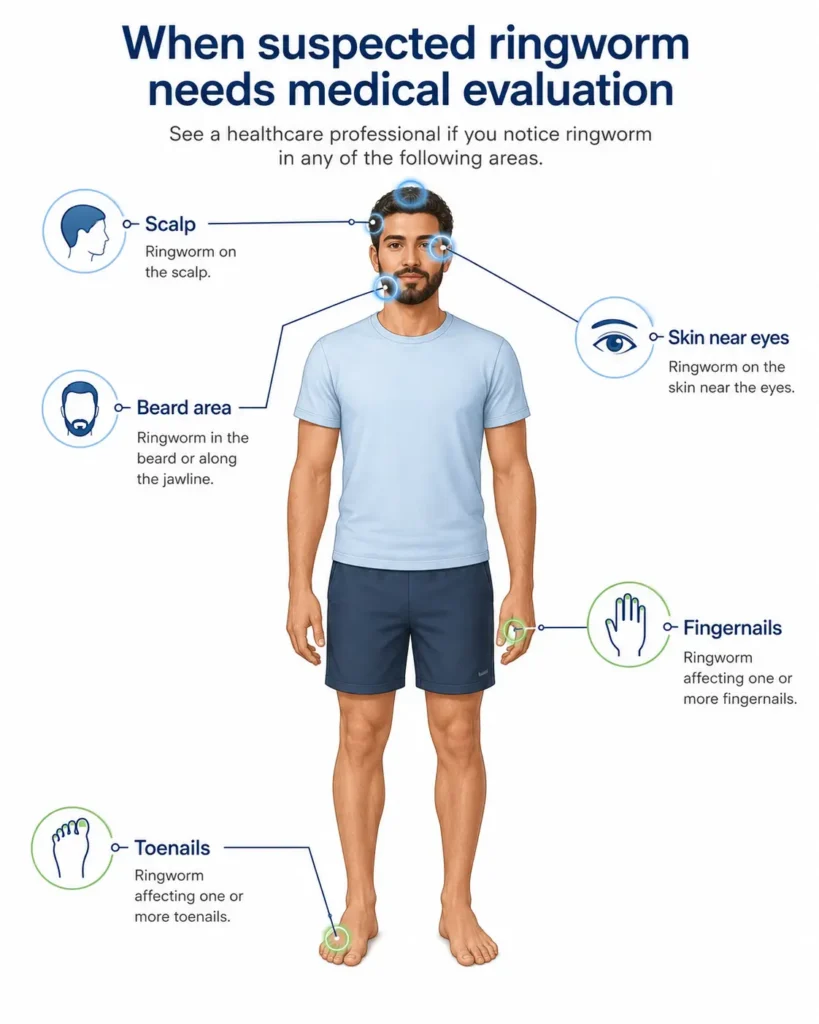
The term “ringworm” covers fungal infections in several body locations.
Treatment that works on ordinary body skin may not work on hair follicles or nails.
Scalp Ringworm
Scalp ringworm, or tinea capitis, usually requires prescription antifungal medicine taken by mouth. Creams cannot reliably reach fungal infection within the hair shaft and follicles.
Possible signs include:
- Scaly scalp patches
- Broken hairs
- Round areas of hair loss
- Black dots where hairs have broken
- Itching
- Tenderness
- Crusting
- Swollen lymph nodes
- A swollen, boggy, painful area called a kerion
Medicated shampoo may help reduce the spread of spores, but it does not eliminate scalp ringworm on its own.
MedlinePlus states that oral antifungal medication is required and that shampoo serves only as a supportive measure.
Scalp ringworm is especially common in children. Prompt care matters because severe inflammation can occasionally lead to scarring and permanent hair loss.
Beard-Area Ringworm
Ringworm involving coarse facial hair is called tinea barbae. It may cause:
- Inflamed bumps around hairs
- Tender swelling
- Crusting
- Pus-filled areas
- Broken hairs
- Patchy beard loss
Because the infection involves hair follicles, oral prescription treatment may be necessary. A clinician should also distinguish it from bacterial folliculitis and other conditions.
Nail Ringworm
Fungal nail infection, or onychomycosis, can produce:
- Yellow, white, or brown discoloration
- Thickening
- Crumbling
- Distortion
- Separation of the nail from the nail bed
- Debris beneath the nail
Ordinary ringworm cream generally cannot penetrate the nail deeply enough to cure an established infection.
Treatment may involve prescription topical nail medication, oral antifungal medication, or both.
Not every thick or discolored nail is fungal, so testing may be helpful before beginning a long treatment course.
Widespread or Treatment-Resistant Ringworm
Seek medical care rather than repeatedly changing home remedies when the rash:
- Covers a large area
- Produces many overlapping patches
- Is intensely inflamed
- Returns repeatedly
- Continues spreading despite correct treatment
- Appeared after travel or close contact with someone with a severe rash
- Does not respond to an appropriate antifungal
Certain emerging dermatophytes can cause unusually extensive or difficult-to-treat infections. Some strains have reduced susceptibility or resistance to commonly used antifungals, including terbinafine.
These infections may require laboratory testing and prescription oral medication. Do not apply stronger steroid creams in an attempt to control the inflammation.
Safety Considerations Before Self-Treating
Children and Infants
Before treating a child:
- Check the product’s minimum age
- Read the full label
- Use only the recommended amount
- Keep the medication away from the mouth and eyes
- Store it out of reach
- Ask a pediatrician or pharmacist when uncertain
An infant with a suspected fungal rash should generally be evaluated before treatment, especially when the diaper area, face, or scalp is involved.
Scalp ringworm in a child requires medical care because topical cream alone will not cure it.
Pregnancy and Breastfeeding
Pregnancy does not prevent all antifungal treatment, but product choice, application area, treatment duration, and skin absorption should be considered.
Ask an obstetric clinician or pharmacist before using:
- An antifungal over a large area
- A combination medication
- An essential oil
- A concentrated botanical product
- Medication on or near the breast
Do not apply medicine to the nipple or areola unless a qualified healthcare professional specifically recommends it.
Follow instructions about cleaning the area before nursing.
Diabetes, Poor Circulation, or a Weakened Immune System
People with diabetes, impaired circulation, immune-suppressing conditions, or immune-suppressing medication may have:
- A greater risk of complications
- Slower healing
- More extensive infection
- An atypical rash
- A higher risk of secondary bacterial infection
Earlier medical guidance is preferable to prolonged self-treatment, especially when the feet are involved or the skin is cracked.
Irritation and Allergic Reactions
Mild temporary stinging can occur with some topical products, but severe or worsening symptoms require attention.
Stop using a nonprescription product and obtain medical advice if you develop:
- Severe burning
- Blistering
- Marked swelling
- Hives
- Rapidly worsening redness
- Significant skin peeling
- A new widespread rash
Seek emergency help for difficulty breathing, swelling of the face or throat, faintness, or other signs of a serious allergic reaction.
When to Contact a Healthcare Professional
Arrange an evaluation when:
- You are not sure the rash is ringworm.
- It affects the scalp, beard, nails, eyelids, or skin near the eyes.
- It is on the genitals or involves a sensitive mucosal area.
- Multiple or large areas are affected.
- The rash is rapidly spreading.
- It returns repeatedly.
- It continues spreading during appropriate treatment.
- It does not clearly improve after the recommended treatment course.
- You are pregnant and unsure which treatment is appropriate.
- The affected person is an infant.
- You have diabetes, poor circulation, or a weakened immune system.
- Several household members are developing similar rashes.
- You suspect a pet is repeatedly transmitting the infection.
- The rash began after close-contact sports, intimate contact, or recent travel and appears unusually severe.
Warning Signs That Need Prompt Care
Seek prompt medical attention for:
- Fever
- Severe pain
- Rapid swelling
- Pus or foul-smelling drainage
- Honey-colored crusting
- Red streaks
- Significant warmth or tenderness
- Rapidly expanding redness
- A swollen, painful scalp lesion
- Extensive blistering
- Eye pain, eyelid involvement, or vision symptoms
These signs may indicate a secondary bacterial infection, a strong inflammatory response, or a condition other than uncomplicated ringworm.
Common Ringworm Treatment Mistakes
Even an effective antifungal may fail when it is used incorrectly.
Avoid these common errors:
- Applying hydrocortisone because the rash itches
- Using an antifungal-steroid combination without medical advice
- Stopping treatment when the rash first looks better
- Applying medication only to the center of the patch
- Skipping applications
- Keeping the rash continuously damp or tightly covered
- Sharing towels or clothing
- Scratching and then touching another body area
- Treating the body rash but ignoring athlete’s foot
- Treating yourself while overlooking an infected pet
- Applying several irritating home remedies at once
- Assuming every circular rash is fungal
- Continuing unsuccessful self-treatment for weeks
Consistency is usually more useful than switching from one product to another every few days.
A Simple At-Home Treatment Routine
The following routine can make treatment easier to follow. Adjust it according to the directions on your specific antifungal product.
Morning
- Wash your hands.
- Gently clean the affected skin.
- Pat it completely dry.
- Apply a thin layer of antifungal medication as directed.
- Wash your hands again.
- Put on clean, loose, breathable clothing.
During the Day
- Keep the area dry.
- Change sweaty clothing promptly.
- Avoid scratching.
- Do not share personal items.
- Wash your hands after touching the rash.
- Clean shared sports equipment after use.
- Avoid direct skin contact involving the affected area.
Evening
- Clean and dry the area if needed.
- Apply another dose only if the label calls for it.
- Change damp socks, underwear, sleepwear, or towels.
- Check for new patches, drainage, swelling, or rapid expansion.
Check Your Progress
Every few days, consider whether:
- The border is becoming flatter
- Scaling is decreasing
- Itching is improving
- The rash has stopped expanding
- New patches are appearing
- You have missed applications
- The medication is irritating your skin
Taking a dated photograph for your own reference may help you recognize whether the rash is actually shrinking.
Use consistent lighting and do not rely on a photo alone to diagnose the condition.
The Bottom Line
A small ringworm infection on ordinary body skin can often be treated at home, but the most reliable approach is an appropriately labeled antifungal medication—not an unproven household remedy.
Apply the medication correctly, complete the full course, keep the skin dry, and take steps to avoid spreading the fungus through towels, clothing, sports gear, other body areas, or pets.
Avoid steroid creams unless a healthcare professional has specifically prescribed one as part of a confirmed treatment plan. Steroids can disguise ringworm and allow it to worsen.
Scalp, beard, and nail infections usually require medical evaluation. You should also seek care for a widespread, painful, draining, rapidly spreading, recurrent, or treatment-resistant rash.
Home treatment should make a mild problem steadily better.
When it does not, the safest next step is an accurate diagnosis—not a stronger DIY remedy.