
A heavy feeling across your forehead, pressure behind your eyes, and aching cheeks can make even ordinary tasks difficult.
When those symptoms come with a stuffy or runny nose, it is easy to assume you have a sinus headache.
Sometimes sinus inflammation really is part of the problem.
Acute sinusitis can cause nasal congestion along with pain, tenderness, or pressure around the eyes, cheeks, nose, and forehead. That discomfort may feel worse when you bend forward.
However, there is an important catch: many headaches that people describe as “sinus headaches” are actually migraine.
Migraine can also cause facial pressure and nasal symptoms, making the two conditions surprisingly easy to confuse.
If your discomfort appears to be connected with mild nasal congestion from a cold, allergies, or sinus inflammation, several simple home measures may make you more comfortable.
These remedies are intended to relieve symptoms such as congestion, dryness, thick mucus, and facial pressure.
They are not guaranteed cures for sinus infections, migraine, or other causes of headache.
Is It Really a Sinus Headache?
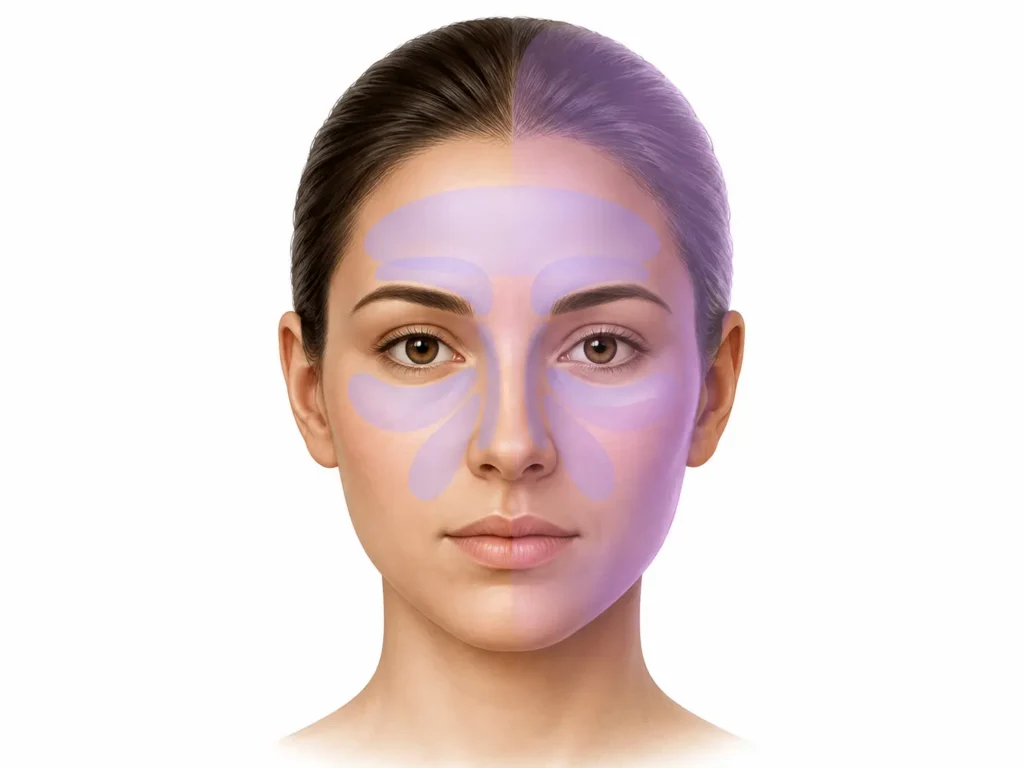
Before reaching for a home remedy, it helps to consider what may actually be causing the pain.
Sinusitis can cause symptoms including nasal congestion, postnasal drainage, fatigue, cough, facial pressure, and sometimes headache or fever.
Pain or pressure may occur around the cheeks, forehead, nose, or eyes.
Some people also notice aching in their upper teeth because the roots of the upper back teeth are located close to the maxillary sinuses.
But facial pressure does not automatically mean sinusitis.
Why Migraine Is Often Mistaken for Sinus Trouble
Migraine and sinus-related discomfort can overlap considerably. Migraine may produce facial pressure, congestion, or clear nasal drainage, and bending forward can aggravate either type of discomfort.
Symptoms such as nausea, vomiting, and sensitivity to bright light or sound are more characteristic of migraine than a typical sinus infection.
If you repeatedly experience what you think are sinus headaches, particularly when there is little evidence of an infection or significant nasal congestion, consider discussing the pattern with a healthcare professional rather than repeatedly treating it as a sinus problem.
1. Try Saline Nasal Irrigation

Saline irrigation is one of the more practical non-drug approaches for nasal congestion.
A saline rinse passes a saltwater solution through the nasal passages. This may help remove excess mucus, pollen, dust, and other debris while adding moisture to irritated nasal tissues.
Saline nasal irrigation is also recommended as a symptom-management option in professional guidance for chronic rhinosinusitis.
How to Use a Saline Rinse
You can use a neti pot, squeeze bottle, or another nasal-irrigation device designed for this purpose.
A basic routine is:
- Prepare the saline solution according to the device or product instructions.
- Lean over a sink and tilt your head as directed by the device manufacturer.
- Gently allow the saline solution to pass through one nasal passage.
- Repeat on the other side if instructed.
- Clean the irrigation device thoroughly and allow it to air-dry afterward.
Do not forcefully rinse completely blocked nasal passages.
Never Use Untreated Tap Water in a Nasal Rinse
This safety rule matters.
Use distilled or sterile water for sinus rinsing rather than ordinary tap water.
NCCIH specifically recommends sterile or distilled water because using contaminated water for nasal irrigation can result in infection.
Follow the device manufacturer’s instructions regarding water preparation and cleaning.
Saline irrigation can make congestion more manageable, but it should not be expected to instantly eliminate a headache or cure an infection.
2. Use a Warm Compress for Facial Pressure

A warm compress is simple, inexpensive, and often soothing when facial pressure accompanies congestion.
MedlinePlus recommends applying a warm, moist washcloth to the face as one self-care measure for sinusitis and nasal congestion.
How to Do It
Soak a clean washcloth in comfortably warm water and wring out the excess. Place it over the forehead, bridge of the nose, or cheeks for several minutes.
Repeat when needed for comfort.
The temperature should feel pleasantly warm rather than hot. This is especially important for people with reduced skin sensation or circulation problems, since they may not recognize excessive heat as quickly.
A warm compress may ease the sensation of pressure, but it does not treat bacterial infection or another underlying cause of headache.
3. Keep Nasal Passages Moist With Saline Spray
If a full nasal rinse feels inconvenient, a simple saline nasal spray is another option.
Saline sprays add moisture to dry nasal passages and may help make thick nasal secretions easier to clear. MedlinePlus includes nasal saline among recommended self-care approaches for sinusitis symptoms.
Commercially prepared saline sprays are widely available without a prescription.
Use the product according to its label instructions. Unlike medicated decongestant nasal sprays, plain saline does not work by shrinking nasal blood vessels.
A spray may be particularly useful when nasal dryness is contributing to irritation or when you want something simpler than a neti pot or squeeze-bottle rinse.
4. Drink Enough Fluids
Hydration is not a cure for sinusitis, but getting enough fluid may help prevent nasal mucus from becoming excessively thick.
MedlinePlus recommends drinking plenty of clear fluids as part of sinusitis self-care because thinner mucus may drain more easily.
Good choices can include:
- Water
- Warm broth
- Decaffeinated tea
- Other nonalcoholic beverages
Warm liquids may also feel comforting when congestion accompanies a cold.
There is no need to force yourself to drink extreme amounts of water. More is not necessarily better, and excessive water intake can itself be harmful. The goal is simply to stay normally hydrated.
Hydration may make mucus easier to manage, but it will not “flush out” a sinus infection.
5. Add Moisture to Dry Indoor Air
Dry indoor air can irritate the tissues lining the nose and throat. A humidifier adds moisture to the air and may make nasal dryness and congestion more comfortable.
MedlinePlus lists humidification as a home-care measure for sinus symptoms and notes that humidifiers can reduce irritation caused by dry air.
However, humidifiers need proper maintenance.
Follow the manufacturer’s cleaning instructions, change the water regularly, and avoid allowing the machine to become dirty. A poorly maintained humidifier can become a source of unwanted microorganisms or particles.
You also do not need to turn your bedroom into a tropical environment. Excessive indoor humidity can encourage mold and other allergens, which may make respiratory symptoms worse for some people.
Think of a humidifier as a way to prevent uncomfortable dryness, not as a treatment that kills an infection.
6. Use Gentle Steam, Not Scalding Steam

Warm, humid air may temporarily make a congested nose feel easier to manage.
One of the safest ways to try it is simply to take a comfortably warm shower or sit in the bathroom while a warm shower is running.
MedlinePlus includes steam exposure among self-care measures for sinus symptoms but specifically advises against breathing excessively hot steam.
Skip the Bowl of Boiling Water
A traditional steam remedy involves placing the face over a bowl or pot of very hot water, sometimes with a towel draped over the head.
That approach is unnecessary and introduces a preventable burn risk if the container tips over or the steam is too hot.
A warm shower or gently steamy bathroom can provide humidity without placing your face directly over boiling water.
Steam may temporarily improve comfort, but it should not be expected to shorten an infection or reliably eliminate a headache.
7. Rest and Reduce Nasal Irritants
Sometimes the most helpful strategy is giving irritated airways fewer things to react to.
If congestion accompanies a respiratory illness, adequate rest can support normal recovery. Meanwhile, limiting exposure to nasal and respiratory irritants may reduce additional discomfort.
Common triggers include:
- Cigarette smoke
- Wildfire smoke
- Dust
- Strong fragrances
- Cleaning fumes
- Allergens that you already know trigger nasal symptoms
For someone whose congestion is largely allergy-related, reducing exposure to the relevant allergen may matter as much as any individual home remedy.
Rest is also valuable simply because pain, congestion, coughing, and poor sleep can reinforce one another. Improving your sleep environment and giving yourself sufficient recovery time may make the overall experience easier to tolerate.
Popular Natural Remedies That Need More Caution
“Natural” does not automatically mean effective or harmless.
Some frequently recommended sinus remedies have limited evidence, and others can cause problems when used incorrectly.
Essential Oils
Peppermint, eucalyptus, tea tree, and other essential oils often appear in home-remedy recommendations for sinus congestion.
Their strong aromas may create a temporary cooling or open-airway sensation, but that sensation should not be confused with curing sinusitis or eliminating the cause of a headache.
Essential oils can also irritate the skin, eyes, and respiratory tract in sensitive people.
If you choose to use an aromatic product, avoid putting concentrated essential oil directly inside your nostrils or near your eyes. Do not assume that an oil is safe to swallow simply because it is plant-derived.
Extra caution is appropriate for young children, pregnant people, people with asthma or fragrance sensitivity, and households with pets, since essential-oil safety varies greatly by product and route of exposure.
Herbal Remedies and Supplements
Herbs and supplements are sometimes marketed for sinus or immune health, but their evidence, doses, purity, interactions, and risks vary.
A supplement can interact with medications or be inappropriate during pregnancy, breastfeeding, before surgery, or for people with certain medical conditions.
Rather than relying on a long list of herbal products with uncertain benefit, focus first on lower-risk supportive measures such as saline, comfortable humidity, hydration, and rest.
If you are considering a supplement, discuss it with a healthcare professional or pharmacist, especially if you regularly take medication.
Avoid Intranasal Zinc
Zinc is sometimes promoted for cold symptoms, but products containing zinc should not be used inside the nose.
NCCIH warns that intranasal zinc has been associated with anosmia, or loss of the sense of smell, which can potentially be long-lasting or permanent.
That risk makes intranasal zinc an inappropriate sinus-headache remedy.
Common Mistakes That Can Make Things Worse
Most sinus self-care is straightforward, but several common mistakes can create unnecessary risk.
Assuming Every Facial Headache Comes From Your Sinuses
This is one of the biggest misconceptions.
Migraine can cause pain around the forehead, eyes, and face along with congestion or watery nasal drainage.
If your headaches keep returning, treating each episode as sinus trouble without obtaining a diagnosis may delay more appropriate treatment.
Using Untreated Tap Water in a Neti Pot
Nasal irrigation requires appropriate water safety. Stick to sterile or distilled water as recommended for sinus rinsing.
Making Steam Dangerously Hot
More heat does not mean more relief. Steam should be comfortably warm, not scalding. MedlinePlus specifically cautions against inhaling hot steam.
Putting Concentrated Oils Inside the Nose
Strong essential oils can irritate delicate nasal tissue. An aromatic sensation is not evidence that a substance is reducing sinus inflammation or treating infection.
Expecting Home Remedies to Cure an Infection
Warm compresses, hydration, saline, and humidity may make you more comfortable, but symptom relief and treatment are not the same thing.
Some cases of sinusitis require professional evaluation, and headache may have an entirely different cause.
When Home Remedies May Not Be Enough
Home care is most reasonable for mild, uncomplicated congestion or pressure, particularly when symptoms accompany an ordinary cold or known allergies and are gradually improving.
Persistent or worsening symptoms deserve more attention.
Sinusitis can have viral, bacterial, inflammatory, allergic, or other causes. Chronic sinus disease may also require a different treatment strategy than a short-lived respiratory infection.
Professional adult-sinusitis guidance supports saline irrigation for symptom relief in certain forms of rhinosinusitis, but medical treatment may also involve other therapies depending on the diagnosis.
Do not stop prescribed medicine in favor of a natural remedy without discussing the change with your healthcare professional.
And if your “sinus headache” repeatedly returns without clear signs of sinus disease, consider the possibility that you may be dealing with migraine or another headache condition instead.
When to Seek Medical Care
A mild headache with ordinary nasal congestion may resolve with time and supportive care.
Some symptoms, however, should not simply be managed at home.
Seek prompt medical evaluation for symptoms such as:
- A severe or rapidly worsening headache
- Significant swelling or redness around an eye
- New vision problems
- Confusion or unusual drowsiness
- A stiff neck
- Significant facial swelling
- A high or persistent fever
- Symptoms that become substantially worse after initially improving
- Persistent sinus symptoms that are not gradually getting better
- Repeated episodes of presumed sinusitis
- Frequent recurring “sinus headaches”
- A headache that is substantially different from your usual pattern
A sudden, extremely severe headache or headache associated with serious neurologic symptoms requires urgent medical assessment because headaches can occasionally signal conditions unrelated to the sinuses.
It is also reasonable to seek medical guidance sooner if you are pregnant, immunocompromised, managing a serious chronic illness, or caring for a young child.
A Simple At-Home Sinus-Relief Routine
You do not need a cabinet full of supplements or elaborate remedies. A straightforward routine is often more practical.
Morning
Start with a saline spray or properly performed saline rinse if nasal congestion is bothersome.
Drink some water with breakfast and consider a warm shower. The moisture may make thick nasal secretions temporarily easier to clear.
During the Day
Continue drinking normally throughout the day.
If facial pressure becomes uncomfortable, apply a comfortably warm, moist washcloth to your forehead or cheeks for several minutes.
Avoid cigarette smoke, strong fragrances, dust, and other irritants when possible.
Evening
Use saline again if needed. If your bedroom air is noticeably dry, a properly maintained humidifier may improve comfort.
Give yourself sufficient time for sleep and recovery.
This routine is designed to help relieve congestion, dryness, and pressure.
It cannot guarantee that a headache will disappear, and it is not a substitute for appropriate medical treatment when symptoms are severe, unusual, or persistent.
The Bottom Line
The most useful natural approaches for mild sinus-related pressure are usually the simplest ones.
Properly performed saline nasal irrigation can help clear excess mucus and debris. Saline spray can moisturize nasal passages.
A warm compress may soothe facial pressure, while adequate fluids, comfortable indoor humidity, gentle steam, rest, and avoidance of respiratory irritants may improve overall comfort.
Just keep expectations realistic. These measures primarily provide symptom relief; they do not guarantee a cure for sinusitis or another medical condition.
Most importantly, do not assume that every headache around the forehead, eyes, or cheeks comes from your sinuses.
Migraine frequently overlaps with symptoms people associate with sinus headaches.
If the pain keeps returning, becomes severe, or does not fit the pattern of ordinary congestion, a medical evaluation can help identify the actual cause.