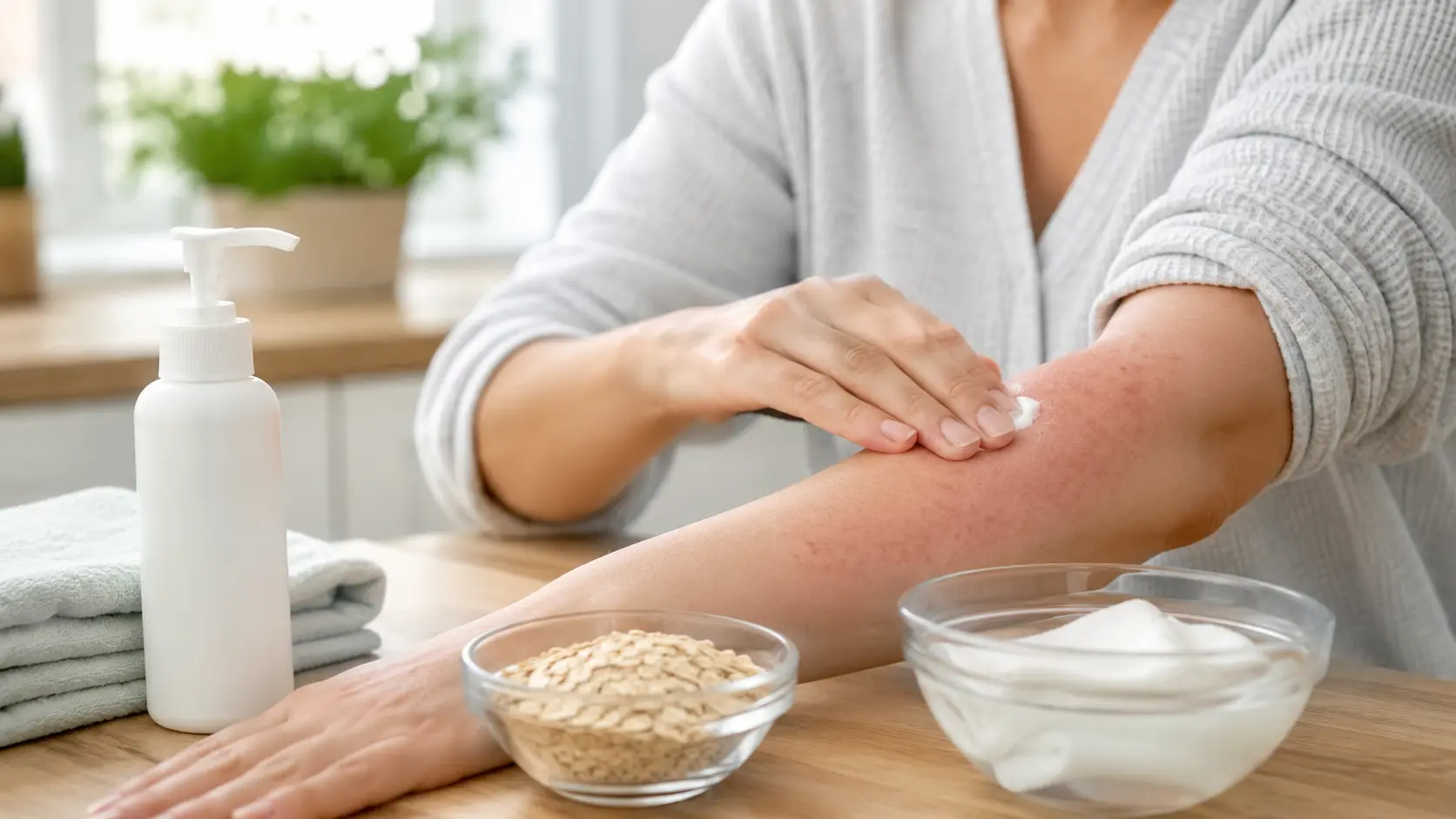
A rash can appear when you least expect it. One day your skin feels normal, and the next you notice an itchy, red, bumpy, or irritated patch that will not leave you alone.
Maybe you recently changed laundry detergent.
Perhaps you spent a hot afternoon outdoors, brushed against a plant, tried a new skin-care product, or wore tight clothing while exercising.
In many cases, a mild rash can be managed with simple home care.
However, a rash is not a specific diagnosis. It is a general term for a visible change in the skin, and different rashes require different treatments.
Some are caused by irritation or dry skin, while others may result from allergies, infections, medications, or underlying medical conditions.
The safest approach is to soothe the skin, remove possible triggers, and watch closely for signs that professional treatment is needed.
What Might Be Causing Your Rash?
Before applying anything to your skin, think about what happened shortly before the rash appeared.
Identifying and removing the trigger may be more helpful than trying multiple remedies.
Common causes include:
Contact Dermatitis
Contact dermatitis develops when the skin reacts to an irritating substance or allergen.
Possible triggers include:
- Soap and body wash
- Laundry detergent
- Fragrance
- Cosmetics
- Jewelry or metal fasteners
- Adhesives
- Cleaning products
- Poison ivy, poison oak, or poison sumac
The reaction usually appears on the part of the skin that came into contact with the substance.
Heat, Sweat, and Friction
Hot weather, heavy sweating, tight clothing, and skin-to-skin friction can lead to heat rash or general irritation.
These rashes commonly affect areas where sweat becomes trapped, such as the neck, chest, back, groin, or skin folds.
Dry or Sensitive Skin
Cold weather, low humidity, frequent handwashing, long hot showers, and harsh cleansers can damage the skin barrier.
The skin may become rough, itchy, flaky, or inflamed.
Allergic Reactions
Hives or other rash-like reactions can be triggered by foods, insect bites, medications, latex, plants, or personal-care products.
Mild reactions may cause localized itching or raised welts, while serious allergic reactions can affect breathing and require emergency care.
Eczema and Other Recurring Conditions
Eczema can cause dry, itchy, inflamed patches that flare repeatedly.
Environmental conditions, fragrances, stress, sweat, and certain fabrics may contribute to flare-ups.
Skin Infections
Some rashes are caused by fungal, bacterial, or viral infections. These usually require treatment directed at the specific infection.
A general anti-itch remedy may temporarily reduce discomfort without treating the underlying cause.
1. Apply a Cool Compress
A cool compress is one of the simplest ways to calm itchy, warm, or irritated skin.
Wet a clean washcloth with cool water, wring it out, and hold it gently against the affected area for about 10 to 15 minutes. Repeat several times during the day if necessary.
Cool temperatures may temporarily reduce itching and inflammation.
The American Academy of Dermatology recommends cool, damp compresses as a self-care measure for several itchy skin conditions, including hives, contact dermatitis, eczema, and poison ivy reactions.
Do not apply ice directly to the skin. Direct contact can damage the skin and make irritation worse.
2. Take a Short, Lukewarm Bath or Shower
When your skin is itchy, a very hot shower may feel comforting for a moment.
Unfortunately, hot water can strip away natural oils, increase dryness, and intensify itching.
Choose lukewarm water instead. Keep the bath or shower brief, and avoid scrubbing the rash with a washcloth, loofah, or exfoliating product.
After bathing, gently pat the skin dry with a soft towel. Leaving the skin slightly damp before applying moisturizer can help retain moisture.
3. Try a Colloidal Oatmeal Bath
Colloidal oatmeal is finely ground oatmeal formulated to disperse in bathwater. It is widely used to soothe dry, itchy, and irritated skin.
Add a commercially prepared colloidal oatmeal product to lukewarm bathwater and follow the soaking instructions on the package.
Avoid using very hot water, which may worsen irritation.
Dermatology guidance includes colloidal oatmeal baths among the home-care options for conditions such as hives, eczema, pityriasis rosea, and poison ivy.
Use caution when getting in and out of the tub because oatmeal products can make the surface extremely slippery. Do not use this remedy if you have a known sensitivity to oats.
4. Apply a Fragrance-Free Moisturizer
A damaged skin barrier can allow moisture to escape and irritants to enter more easily. A simple moisturizer can help protect the skin and reduce dryness-related itching.
Choose a thick cream or ointment labeled fragrance-free.
“Unscented” does not always mean fragrance-free because some unscented products contain ingredients designed to mask odors.
Apply moisturizer immediately after bathing while the skin is still slightly damp. Reapply whenever the skin begins to feel dry.
Petroleum jelly is another straightforward option for dry, irritated skin. Ointments and thick creams generally provide a stronger moisture barrier than thin lotions.
Dermatologists commonly recommend fragrance-free ointments or creams for sensitive and itchy skin.
Avoid applying a new moisturizer to a large area immediately. Test it on a small patch first, especially if your skin reacts easily.
5. Use Pure Aloe Vera Gel Carefully
Aloe vera gel can have a cooling effect and may feel soothing on mildly irritated skin.
However, aloe products frequently contain fragrances, dyes, alcohol, or preservatives that can aggravate sensitive skin.
Look for a product with a short ingredient list and no added fragrance. Apply a small amount to an unaffected area first and wait to see whether irritation develops.
Stop using it immediately if you notice increased redness, burning, swelling, or itching. Aloe vera should not be considered a treatment for an infected, blistering, or unexplained severe rash.
6. Apply Calamine Lotion
Calamine lotion may help reduce itching and discomfort from minor skin irritation, insect bites, or certain plant-related reactions.
Apply a thin layer according to the product label and allow it to dry. Do not use it inside the mouth, near the eyes, or on deep wounds.
The American Academy of Dermatology lists calamine as one possible itch-relief measure for certain conditions, including contact dermatitis and pityriasis rosea.
Calamine can be drying, so it may not be the best option for every rash, particularly one caused mainly by severely dry skin.
7. Consider Over-the-Counter 1% Hydrocortisone
Over-the-counter 1% hydrocortisone may temporarily relieve itching and inflammation from certain minor skin irritations, eczema, insect bites, or contact reactions.
Apply it only as directed on the Drug Facts label. More is not necessarily better, and prolonged or inappropriate use can cause side effects.
Avoid applying hydrocortisone to:
- Open or broken skin
- The eyes or eyelids
- The genital area unless directed by a clinician
- A large area of the body
- A suspected fungal or bacterial infection
- An unexplained facial rash
- A young child without medical guidance
Hydrocortisone can worsen or conceal some conditions.
For example, applying it to perioral dermatitis around the mouth may cause the rash to become worse when the medication is stopped.
Follow the product label carefully and consult a pharmacist or health-care professional if you are uncertain whether hydrocortisone is appropriate.
FDA guidance emphasizes using over-the-counter medicines according to the Drug Facts label and seeking professional advice when needed.
8. Wear Loose, Breathable Clothing
Tight or rough clothing can rub against the rash, trap sweat, and increase irritation.
Wear loose, lightweight clothing made from soft, breathable fabric. Cotton is often comfortable, although individual sensitivities vary.
Temporarily avoid:
- Wool
- Rough synthetic material
- Tight waistbands
- Compression garments
- Damp workout clothing
- Clothing washed with heavily fragranced detergent
Change out of sweaty clothes as soon as possible. If friction is contributing to the rash, reducing pressure and allowing airflow may help the skin recover.
9. Stop Using Recently Introduced Products
A new product is a common but easily overlooked cause of skin irritation.
Think about anything you began using shortly before the rash developed, including:
- Shampoo or conditioner
- Body wash
- Facial products
- Sunscreen
- Deodorant
- Perfume
- Laundry detergent
- Fabric softener
- Household cleaners
- Jewelry
- Adhesive bandages
Stop using nonessential new products and return to a minimal routine with a mild, fragrance-free cleanser and moisturizer.
Do not test several new remedies at the same time.
Using multiple products makes it difficult to identify which ingredient is helping and which one may be worsening the reaction.
10. Keep the Skin Clean and Dry
Sweat, dirt, and moisture can aggravate some rashes, particularly in skin folds or areas affected by friction.
Clean the area gently with lukewarm water and a mild fragrance-free cleanser. Do not scrub it. Pat the skin dry instead of rubbing it with a towel.
Although keeping the area dry is useful for sweat-related irritation, excessively washing the skin can damage its protective barrier.
Clean it as needed, but do not repeatedly wash it in an attempt to make the rash disappear.
11. Reduce Scratching
Scratching may provide temporary relief, but it can injure the skin, increase inflammation, and create an opening for infection.
To limit scratching:
- Keep your fingernails short and smooth
- Apply a cool compress when itching intensifies
- Press or gently tap the skin instead of scratching
- Wear soft cotton gloves while sleeping
- Keep the bedroom cool at night
- Cover the area loosely if necessary
Pay attention to unconscious scratching during sleep. Broken, bleeding, or crusted skin may need medical attention, especially if it becomes increasingly painful or begins draining fluid.
12. Protect the Rash From Heat and Sun
Heat can intensify itching and inflammation.
Stay in a cool environment and temporarily avoid hot showers, saunas, steam rooms, and strenuous activity that causes heavy sweating.
Sun exposure may also irritate inflamed skin. Cover the area with loose clothing when outdoors. Be cautious with sunscreen on an active rash because some formulas may sting or trigger contact dermatitis.
Certain medications can increase sensitivity to sunlight.
The FDA advises checking medication labels and speaking with a health professional about sun-related reactions associated with medicines.
“Natural” Rash Remedies That May Make Things Worse
Many popular online remedies are described as natural, but natural substances can still irritate or injure the skin.
Apple Cider Vinegar
Apple cider vinegar is acidic and may cause significant stinging when applied to inflamed, cracked, or sensitive skin.
Undiluted vinegar can cause chemical burns and should not be applied directly to a rash.
Essential Oils
Tea tree, peppermint, lavender, citrus, and other essential oils may trigger allergic contact dermatitis.
Applying an undiluted essential oil to irritated skin can make redness and burning worse.
Lemon Juice
Lemon juice is highly acidic. It may irritate the skin and, when combined with sunlight, can contribute to a more serious skin reaction.
Baking Soda Paste
A concentrated baking soda paste may dry and disrupt the skin barrier, particularly when left on the skin for a long period.
Rubbing Alcohol and Hydrogen Peroxide
These products can dry and damage irritated skin. They are not appropriate general treatments for an unexplained rash and may delay healing.
Toothpaste
Toothpaste contains detergents, flavorings, whitening agents, and other ingredients designed for teeth—not inflamed skin.
Applying it to a rash may cause additional irritation.
A Simple 24-Hour Rash-Relief Routine
For a mild rash without warning signs, a basic routine may help you avoid over-treating the skin.
Morning
Rinse the area gently with lukewarm water. Pat it dry and apply a fragrance-free moisturizer. Wear loose clothing and avoid any suspected trigger.
During the Day
Use a cool compress when itching becomes uncomfortable. Keep the area cool and avoid scratching.
Take a clear photograph of the rash in good lighting. This can help you determine whether it is spreading, changing color, or developing new symptoms.
A photograph may also be useful if you later consult a medical professional.
Evening
Take a short lukewarm bath or shower. A colloidal oatmeal bath may be appropriate for dry, itchy skin.
Pat the skin dry and apply moisturizer. Use calamine or hydrocortisone only when appropriate and according to the product instructions.
Sleep in lightweight, breathable clothing and keep the room comfortably cool.
How to Tell Whether Home Treatment Is Helping
Signs of improvement may include:
- Less itching
- Reduced redness, warmth, or swelling
- No new areas of rash
- Less scratching
- Better sleep
- Gradual fading or flattening of the affected area
- No blisters, drainage, or increasing pain
Stop using any remedy that causes burning, swelling, increased redness, or a rapidly worsening reaction.
Remember that appearance alone does not always reveal the cause.
Redness may also be less noticeable on brown or Black skin, so pay attention to warmth, swelling, tenderness, texture changes, and discoloration.
When to Contact a Doctor
Home remedies are not appropriate for every rash. Contact a health-care professional when:
- The rash is spreading quickly
- It becomes painful, hot, swollen, or extremely tender
- It develops pus, yellow crusts, drainage, or an unpleasant odor
- Red streaks extend from the affected area
- You have fever, chills, a sore throat, swollen lymph nodes, or joint pain
- It affects the eyes, mouth, face, or genital area
- It appeared after starting a new medication
- It developed after a tick bite
- It repeatedly returns
- You are pregnant, immunocompromised, or receiving cancer treatment
- The person with the rash is an infant
- The rash is not improving or continues to worsen
Signs such as fever, pus, crusting, tenderness, warmth, or spreading discoloration may indicate infection or another condition requiring medical treatment.
A painful, blistering rash on one side of the body may be shingles. A rash near the eye needs urgent evaluation because shingles affecting the eye can threaten vision.
When a Rash Is an Emergency
Call 911 or seek emergency care immediately when a rash occurs with:
- Trouble breathing
- Wheezing or throat tightness
- Difficulty swallowing
- Swelling of the lips, tongue, face, mouth, or throat
- Dizziness, confusion, or fainting
- A racing heartbeat with allergic symptoms
- Widespread blistering or peeling
- Painful sores in the mouth, eyes, or genital area
- High fever or severe illness
- Purple or blood-colored spots that do not fade when pressed
- Severe headache or neck stiffness
- A widespread rash after starting a medication
Hives accompanied by airway swelling or breathing difficulty may indicate a severe allergic reaction.
Blistering, painful, or peeling skin after taking medication can be a sign of a rare but potentially life-threatening reaction such as Stevens-Johnson syndrome.
Do not wait to see whether these symptoms improve on their own.
The Bottom Line
Many mild rashes improve when the suspected trigger is removed and the skin is kept cool, moisturized, and protected.
The safest home remedies are usually the simplest:
- A cool compress
- A brief lukewarm bath
- Colloidal oatmeal
- Fragrance-free moisturizer
- Loose, breathable clothing
- Protection from heat and scratching
Avoid harsh DIY treatments such as undiluted vinegar, essential oils, lemon juice, rubbing alcohol, hydrogen peroxide, or toothpaste. These substances can damage the skin barrier and make inflammation worse.
Most importantly, monitor the rash instead of treating it blindly.
A rash that spreads, becomes painful, shows signs of infection, follows a new medication, or appears with fever, facial swelling, or breathing problems requires professional medical care.
Rash relief rule: Cool it, moisturize it, remove the suspected trigger, and never ignore swelling or breathing problems.
Medical disclaimer: This article is for general educational purposes and is not a substitute for diagnosis or treatment by a qualified health-care professional.