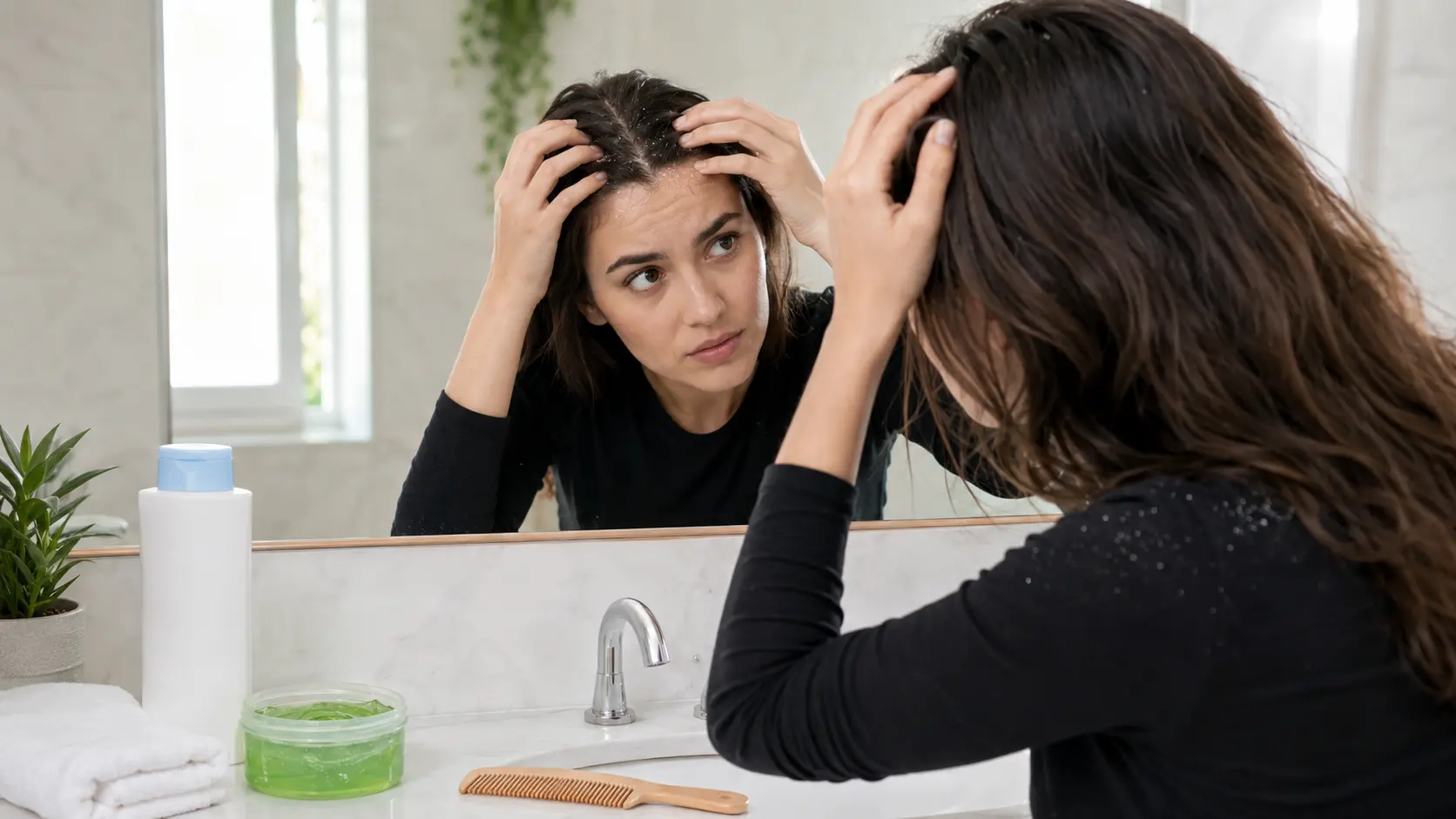
You put on a dark shirt, check your reflection, and notice white flakes scattered across your shoulders. Your scalp feels itchy, and no matter how often you brush the flakes away, they seem to return.
That frustrating experience sends many people searching for a DIY dandruff treatment they can try at home.
Unfortunately, social media is filled with aggressive scalp hacks involving lemon juice, baking soda, undiluted vinegar, and concentrated essential oils. Some of these remedies can leave the scalp more irritated than it was before.
The good news is that mild dandruff can often be managed at home
The safest approach, however, usually involves consistent scalp cleansing, properly used dandruff shampoo, gentle hair-care habits, and avoiding ingredients that damage the skin barrier.
Here is how to create an effective at-home dandruff routine without turning your scalp into a science experiment.
Before you pour vinegar, lemon juice, or essential oils onto your scalp, read this.
What Causes Dandruff in the First Place?
Dandruff is a common scalp condition that causes visible flakes and, in some cases, itching.
It is not contagious, and it does not automatically mean that someone has poor hygiene.
Several factors may contribute to dandruff, including:
- Excess oil on the scalp
- Sensitivity to normal scalp yeast
- Irritated or inflamed skin
- Infrequent or ineffective scalp cleansing
- Reactions to hair-care products
- Stress, weather changes, and individual skin conditions
Dandruff may also be related to a mild form of seborrheic dermatitis, a condition that can affect oily areas of the body, including the scalp, eyebrows, sides of the nose, ears, and chest.
Although dandruff can usually be controlled, it may return after treatment stops. That means the goal is often long-term management rather than a permanent one-time cure.
Dandruff vs. Dry Scalp: Know the Difference
Dandruff and dry scalp can both cause flaking, but they are not necessarily the same problem.
| Feature | Dandruff | Dry Scalp |
|---|---|---|
| Flakes | May be larger, oily, or yellowish | Usually smaller and drier |
| Scalp feeling | Itchy, oily, or irritated | Tight, dry, or rough |
| Common cause | Oil, irritation, and seborrheic dermatitis | Loss of moisture or harsh products |
| Typical approach | Medicated dandruff shampoo | Gentle shampoo and reduced irritation |
A dry scalp may improve after switching to a mild, non-medicated shampoo, while dandruff is more likely to respond to an anti-dandruff shampoo.
If your scalp is very red, painful, crusted, swollen, or losing hair, do not assume that ordinary dandruff is the cause.
Psoriasis, eczema, contact dermatitis, fungal infections, and other scalp disorders can produce similar symptoms.
Before Trying a DIY Dandruff Treatment
“DIY” should mean managing your scalp safely at home—not mixing the strongest ingredients in your kitchen.
Follow these basic precautions:
- Patch-test unfamiliar products before placing them across your scalp.
- Never apply concentrated essential oils directly to the skin.
- Avoid putting acids, scrubs, or fragranced products on broken or scratched skin.
- Stop using any treatment that causes burning, swelling, pain, or worsening redness.
- Follow the directions on medicated shampoo labels instead of assuming that using more will work faster.
Home treatment is most appropriate for mild flaking and itching. Severe or persistent symptoms deserve professional evaluation.
1. Wash Your Scalp More Consistently
One of the simplest dandruff treatments is also one of the most overlooked: washing the scalp thoroughly and consistently.
Gentle shampooing helps remove excess oil, loose skin cells, sweat, and product residue. Mayo Clinic recommends starting mild dandruff treatment by washing more frequently with a gentle shampoo.
How often you wash should depend on your scalp and hair type. Someone with a very oily scalp and straight hair may need to shampoo more frequently than someone with curly, coily, or highly textured hair.
When washing:
- Apply shampoo to the scalp rather than only coating the hair.
- Massage gently with the pads of your fingers.
- Avoid scratching with your fingernails.
- Rinse thoroughly so shampoo does not remain on the skin.
- Apply conditioner mainly to the mid-lengths and ends if your scalp becomes oily easily.
Product residue can contribute to itching and irritation, particularly when shampoo is not rinsed out completely.
Remember: Treat the scalp, not just the hair.
2. Use an Over-the-Counter Dandruff Shampoo Correctly
A medicated dandruff shampoo is not a glamorous social-media remedy, but it is one of the most reliable at-home options.
Common active ingredients include:
- Ketoconazole
- Selenium sulfide
- Salicylic acid
- Coal tar
- Zinc-based anti-dandruff ingredients
Different ingredients work in different ways. Some reduce yeast, some help loosen scales, and others slow excessive skin-cell shedding.
The NHS recommends looking for products containing ingredients such as selenium sulfide, ketoconazole, or coal tar combined with salicylic acid.
It also notes that you may need to try more than one type before finding the shampoo that works best for you.
How to use dandruff shampoo
- Wet your hair and scalp completely.
- Apply the product directly to the scalp.
- Massage it gently until it lathers.
- Leave it on for the amount of time stated on the label.
- Rinse thoroughly.
- Repeat at the frequency recommended by the manufacturer.
Some dandruff shampoos need to remain on the scalp for approximately five to ten minutes before rinsing, depending on the formula.
Do not rinse the product off immediately unless the label tells you to do so. Without adequate contact time, the active ingredient may not have enough time to work.
People with curly, coily, or textured hair may need to use medicated shampoo less frequently to avoid excessive dryness.
3. Try Pure Aloe Vera Gel for Scalp Comfort
Aloe vera is commonly used to soothe irritated skin.
It may help the scalp feel cooler or more comfortable, but it should not be treated as a proven replacement for medicated dandruff treatment.
Choose a simple aloe vera gel that is:
- Fragrance-free
- Alcohol-free
- Free from unnecessary dyes
- Intended for topical skin use
Apply a thin layer to a small section of the scalp first. If no irritation develops, you may apply a light amount before shampooing and leave it on briefly.
Avoid thick coatings, especially if your scalp is already oily. Aloe residue can contribute to buildup if it is not washed out thoroughly.
Most importantly, stop using it if it causes stinging, increased itching, or redness.
4. Use Coconut Oil Sparingly—Only When Dryness Is the Problem
Coconut oil is frequently promoted as a natural dandruff cure.
In reality, it may be more useful for moisturizing dry hair or relieving a tight, dry scalp than for treating true dandruff.
Scalp oiling does not work equally well for everyone. Cleveland Clinic notes that applying oil directly to the scalp may not suit all hair and scalp types.
For a genuinely dry scalp, try this limited approach:
- Warm a very small amount of coconut oil between your hands.
- Apply it lightly to dry areas of the scalp.
- Leave it on for 15 to 30 minutes.
- Shampoo thoroughly.
- Stop if your scalp becomes greasier, itchier, or more flaky.
Avoid saturating the scalp or leaving heavy oil treatments on overnight.
Oily buildup can make some cases of dandruff or seborrheic dermatitis more difficult to manage.
5. Choose a Formulated Tea Tree Oil Shampoo
Tea tree oil appears in many scalp-care products, but concentrated tea tree essential oil should not be poured directly onto the scalp.
Pure essential oils can cause irritation or allergic contact dermatitis, particularly when they are used undiluted or on scratched skin.
A safer choice is a commercially formulated shampoo containing tea tree oil at a controlled concentration. Follow the product instructions and patch-test it if you have sensitive skin.
Never apply concentrated tea tree oil directly to your scalp.
A tea tree shampoo may feel refreshing, but it should not replace a proven medicated shampoo when dandruff is persistent or severe.
6. Loosen Flakes With Gentle Scalp Massage
A gentle massage during shampooing can help loosen flakes and distribute the cleanser across the scalp.
Use your fingertips and make small circular movements for approximately one to two minutes. Keep the pressure light.
Do not use:
- Fingernails
- Hard scalp brushes
- Salt scrubs
- Sugar scrubs
- Baking-soda paste
- Rough exfoliating tools
Aggressive scrubbing can create tiny injuries, increase inflammation, and trigger more itching. Scratching may also raise the risk of infection when the skin breaks.
If scales feel firmly attached or painful to remove, do not force them off. Thick or stubborn plaques may indicate something other than ordinary dandruff.
7. Reduce Everyday Dandruff Triggers
The products and habits surrounding your routine matter almost as much as the shampoo itself.
Try these practical changes:
- Rinse shampoo and conditioner completely.
- Reduce heavy pomades, waxes, oils, and styling creams if they increase buildup.
- Wash your scalp after intense sweating when practical.
- Clean combs and brushes regularly.
- Wash pillowcases, hats, bonnets, scarves, and helmet liners.
- Avoid repeatedly scratching itchy areas.
- Introduce only one new scalp product at a time.
- Stop using products that cause immediate burning or rash.
Stress may also contribute to flare-ups in some people.
While stress management will not remove dandruff overnight, regular sleep, exercise, and adequate recovery can support overall skin health.
Popular DIY Dandruff Remedies to Approach With Caution
The internet is full of scalp hacks that look convincing in short videos. Many lack strong evidence, and some can irritate the scalp.
Apple Cider Vinegar
Apple cider vinegar is acidic.
Although diluted vinegar is frequently promoted as an antimicrobial scalp rinse, home remedies for scalp yeast and flaking have not been researched as thoroughly as established treatments.
Cleveland Clinic advises speaking with a healthcare provider before relying on home remedies for a suspected scalp yeast condition.
Undiluted vinegar can sting, dry, or irritate the scalp. Never use it on scratched, inflamed, or broken skin.
Lemon Juice
Lemon juice is highly acidic and can cause burning, irritation, and increased dryness. It may also make the skin more sensitive to sunlight.
There is no compelling reason to place fresh lemon juice on an already irritated scalp. Skip this remedy.
Baking Soda
Baking soda is alkaline and abrasive. It may leave the scalp feeling temporarily “clean,” but repeated use can dry the skin, disturb its natural barrier, and increase irritation.
Natural does not automatically mean safe or gentle.
Undiluted Essential Oils
Tea tree, peppermint, eucalyptus, and rosemary oils are highly concentrated. Applying them directly can cause burning, rash, or allergic reactions.
Choose properly formulated scalp products instead of making concentrated homemade mixtures.
Heavy Overnight Oil Treatments
Oil may soften dry skin, but coating an oily or inflamed scalp overnight can create additional buildup.
People with seborrheic dermatitis may find that heavy oiling worsens greasiness or scaling.
A Simple 7-Day At-Home Dandruff Routine
Consistency matters more than trying five remedies in one week.
Day 1: Cleanse and Treat
Wash with a medicated dandruff shampoo suited to your hair type. Apply it directly to the scalp and leave it on for the label-directed contact time.
Rinse thoroughly and apply conditioner mainly to the hair lengths if needed.
Days 2–3: Observe Your Scalp
Avoid adding new treatments. Monitor:
- Itch severity
- Redness
- Flake size
- Oiliness
- Tenderness
- Reactions to the shampoo
Avoid scratching, heavy oils, and excessive styling products.
Day 4: Repeat Treatment if Directed
Use the dandruff shampoo again if the label recommends multiple weekly applications.
Massage with your fingertips, not your nails.
Days 5–6: Reduce Buildup
Clean your brush, comb, pillowcase, hat, bonnet, or head covering.
Continue your normal gentle hair-care routine without adding harsh DIY treatments.
Day 7: Evaluate Your Progress
Ask yourself:
- Are there fewer flakes?
- Is the itching less intense?
- Is the scalp less oily or irritated?
- Did the product cause dryness or burning?
Continue treatment according to the label. Do not increase the frequency simply because you want faster results.
How Long Does Dandruff Treatment Take to Work?
Dandruff rarely disappears after one wash.
The NHS recommends using an anti-dandruff shampoo for about a month to determine whether it is helping.
You may need to try a different active ingredient if the first product does not improve your symptoms.
Some products, such as ketoconazole shampoo, may be used more frequently during the initial treatment period and then less often for maintenance, but the exact schedule depends on the product and professional guidance.
Do not switch remedies every day. Constantly changing products makes it difficult to know what is working and increases the chance of irritation.
Track your symptoms once or twice a week by noting:
- The amount of visible flaking
- Itch intensity
- Redness
- Oil production
- Product reactions
- Flaking outside the scalp
Even after dandruff improves, occasional maintenance treatment may be necessary because symptoms can return.
When to Stop DIY Treatment and See a Dermatologist
At-home treatment is not appropriate for every scalp problem.
Consult a primary-care professional or board-certified dermatologist when:
- Dandruff does not improve after several weeks of correct treatment.
- Your scalp is intensely red, painful, swollen, or warm.
- There is pus, oozing, bleeding, or crusting.
- You develop thick or silvery plaques.
- Flaking spreads to your eyebrows, ears, face, or chest.
- You experience patchy hair loss or broken hairs.
- The itching interferes with sleep or daily activities.
- Symptoms started after using hair dye, relaxer, shampoo, fragrance, or another chemical product.
- You are unsure whether you have dandruff, psoriasis, eczema, ringworm, or contact dermatitis.
The American Academy of Dermatology notes that an itchy, flaky scalp can have several causes, including dandruff and reactions to hair-care products.
A dermatologist can determine what is actually causing the flakes and prescribe stronger antifungal, anti-inflammatory, or other targeted treatment when necessary.
The Bottom Line
The best DIY dandruff treatment is usually not the most dramatic remedy.
It is a consistent, scalp-focused routine built around gentle cleansing and correctly used anti-dandruff shampoo.
For mild symptoms:
- Wash the scalp consistently.
- Choose a suitable medicated shampoo.
- Follow the required contact time.
- Massage gently.
- Rinse products thoroughly.
- Avoid harsh acids, abrasive scrubs, and undiluted essential oils.
- Give the routine several weeks to work.
Aloe vera or a small amount of coconut oil may provide comfort when dryness is present, but neither should be treated as a guaranteed cure.
When symptoms are severe, persistent, painful, or accompanied by hair loss, stop experimenting and seek professional care.
Know someone who keeps trying harsh viral scalp hacks? Share this guide before their next experiment.