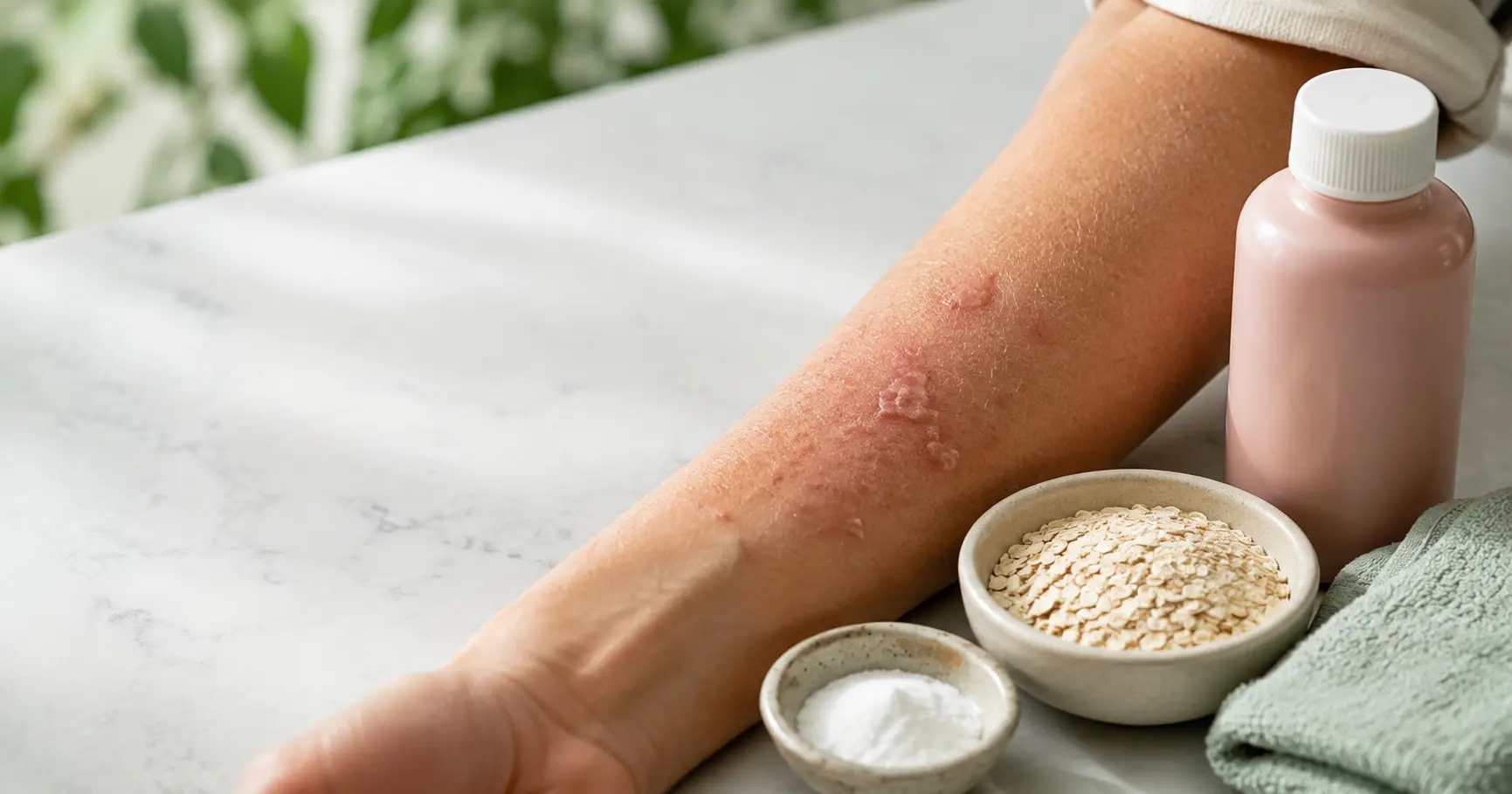
One innocent hike, gardening session, or backyard cleanup can leave you with an intensely itchy rash that lasts for days—or even weeks.
Poison ivy can be difficult to avoid, especially because the plant’s appearance changes with the seasons and its irritating oil can remain on clothing, tools, shoes, and pet fur.
Fortunately, most mild poison ivy rashes can be managed at home. The key is knowing which remedies can safely soothe your skin and which viral “cures” may make the irritation worse.
Poison ivy rash is caused by an allergic reaction to urushiol, a sticky oil found in the leaves, stems, and roots of poison ivy, poison oak, and poison sumac.
Home remedies do not remove the allergic reaction once it has started, but they can reduce itching, calm inflammation, protect damaged skin, and make the healing process more comfortable.
Important: Seek medical care promptly if the rash is severe, widespread, infected, or affecting the eyes, face, mouth, or genitals. Difficulty breathing, trouble swallowing, or major facial or throat swelling requires emergency care.
What Should You Do Immediately After Touching Poison Ivy?
The most effective action happens before the rash fully develops: remove as much urushiol from your skin and belongings as possible.
Wash the Exposed Skin as Soon as Possible
Rinse the exposed area promptly with plenty of water and soap.
A degreasing soap or cleanser designed for poisonous plant exposure can help lift the oily resin from the skin.
Wash carefully around the wrists, ankles, between the fingers, and underneath the fingernails.
Do not scrub aggressively.
Harsh scrubbing can irritate the skin and may spread remaining oil across a larger area before it is rinsed away.
The Centers for Disease Control and Prevention advises immediately rinsing exposed skin with plenty of water and an appropriate cleanser.
The sooner urushiol is removed, the better the chance of limiting the reaction.
Clean Everything That May Carry Urushiol
Urushiol is sticky and can remain on objects long after the plant itself is gone.
Wash or clean anything that may have touched poison ivy, including:
- Clothing and jackets
- Shoes and shoelaces
- Gardening gloves
- Hand tools
- Camping equipment
- Sports gear
- Backpacks
- Pet fur
Wear disposable gloves while handling potentially contaminated belongings, then wash your hands thoroughly afterward.
A poison ivy rash may appear to return when the real cause is a second exposure from contaminated clothing, equipment, or an animal’s coat.
Urushiol can transfer from these surfaces until it has been properly removed.
First rule of poison ivy: Treat the oil, not just the rash. Wash your skin, clothes, tools, shoes, and anything else that touched the plant.
9 Natural and At-Home Remedies for Poison Ivy Relief
Once the rash develops, treatment focuses on relieving itching, protecting the skin, and preventing complications.
1. Apply a Cool, Wet Compress
A cool compress is one of the simplest ways to calm hot, itchy, or swollen skin.
Run a clean washcloth under cool water, wring out the excess, and place it over the rash for approximately 10 to 20 minutes.
Repeat the process several times throughout the day using a clean cloth each time.
The cool temperature can temporarily reduce itching and discomfort without exposing the skin to additional ingredients. Dermatology and poison-control guidance includes cool wet compresses among the standard self-care measures for poison ivy.
Avoid placing ice directly against the skin. Direct ice exposure may damage already irritated tissue.
2. Take a Colloidal Oatmeal Bath
A colloidal oatmeal bath can provide relief when the rash covers several areas of the body.
Colloidal oatmeal is made from oats that have been processed into a fine powder that disperses throughout bathwater. It is different from ordinary rolled oats or instant oatmeal.
Add the product to cool or lukewarm bathwater according to the package instructions. Soak for the recommended amount of time, then gently pat the skin dry with a soft towel. Do not rub the rash.
Colloidal oatmeal helps coat and soothe irritated skin and is commonly recommended for temporary relief from itching.
Use caution when getting out of the bathtub because colloidal oatmeal can make the surface slippery.
3. Try a Baking-Soda Bath
Baking soda is another inexpensive bath additive that may temporarily soothe itching and irritation.
Add approximately one cup of baking soda to a bathtub filled with cool or lukewarm water. Soak briefly, rinse if needed, and pat the skin dry.
Some people also apply a baking-soda-and-water paste to small areas.
However, a paste may be too drying or abrasive for sensitive, broken, or blistered skin. Stop using it immediately if it causes stinging, burning, increasing redness, or discomfort.
Baking soda does not neutralize urushiol after the allergic reaction has begun. Its role is limited to temporary symptom relief.
4. Apply Calamine Lotion
Calamine lotion is not technically a homemade remedy, but it is a widely available mineral-based skin protectant frequently used for poison ivy.
Apply a thin layer according to the product label and allow it to dry. Calamine may help relieve itching and dry wet or oozing areas of the rash.
It can become excessively drying if used too frequently, so reduce or stop application if the skin becomes cracked, tight, or increasingly irritated.
Calamine is included in poison ivy self-care recommendations from dermatology, public-health, and poison-control organizations.
5. Take Short, Cool or Lukewarm Showers
A short cool shower can temporarily relieve itching and rinse away sweat, dirt, or remaining irritants.
Avoid long, hot showers. Heat increases blood flow near the surface of the skin and may intensify itching.
Hot water can also strip natural oils from the skin, leaving the rash drier and more uncomfortable.
Use a mild, fragrance-free cleanser and apply it gently with your hands. Avoid exfoliating gloves, body scrubs, rough washcloths, and fragranced body washes.
Poison Control specifically recommends cool showers or short lukewarm baths and warns that hot water can worsen itching.
6. Keep the Rash Cool and Reduce Friction
Heat, sweating, and repeated rubbing can make a poison ivy rash feel significantly worse.
Wear loose, breathable clothing and avoid tight sleeves, socks, waistbands, or athletic gear that rubs against affected skin. When possible, keep the area cool and exposed to clean air.
A rash does not always need to be covered. However, a loose, sterile, nonstick dressing may be helpful if the area is weeping, exposed to dirt, or constantly rubbing against clothing.
Replace dressings regularly and avoid adhesive products directly on irritated skin unless they are designed for sensitive skin.
7. Protect Your Skin From Scratching
Scratching may provide a few seconds of relief, but it can tear the skin, break blisters, delay healing, and increase the risk of bacterial infection.
To reduce nighttime scratching:
- Keep your fingernails short and clean.
- Wear soft cotton gloves while sleeping.
- Apply a cool compress before bed.
- Choose loose, lightweight sleepwear.
- Keep the bedroom comfortably cool.
The fluid inside poison ivy blisters does not contain urushiol and does not spread the rash.
However, urushiol that remains underneath the fingernails could cause additional exposure before it is washed away.
If a blister opens naturally, wash the area gently and protect it with a clean nonstick dressing when necessary.
8. Use a Fragrance-Free Moisturizer After Oozing Stops
During the later stages of healing, the skin may become dry, flaky, or tight.
Once active oozing has stopped, a plain fragrance-free moisturizer can help support the skin barrier.
Choose a simple cream or ointment without perfume, essential oils, dyes, or multiple botanical extracts. Patch-test the product on a small area before using it more widely.
Do not apply thick cosmetic products over actively weeping or infected skin without medical guidance.
A moisturizer will not cure poison ivy, but it can reduce dryness and discomfort as the skin recovers.
9. Rest, Stay Hydrated, and Avoid Overheating
Poison ivy can interfere with sleep, exercise, outdoor work, and everyday concentration.
Rest does not eliminate urushiol or directly shorten the allergic reaction, but adequate sleep supports normal recovery and can make the symptoms easier to tolerate.
Stay reasonably hydrated, especially if the exposure occurred during hot outdoor activity. More importantly, avoid overheating.
Excessive sweating can increase itching and friction, particularly beneath tight clothing or protective gear.
Choose light indoor activities until severe itching and inflammation begin to settle.
Popular “Natural” Poison Ivy Remedies to Approach Carefully
The internet is full of poison ivy cures involving pantry ingredients, essential oils, cleaning products, and homemade chemical mixtures.
Natural-sounding does not necessarily mean safe, and stronger is not always better.
Apple Cider Vinegar
Apple cider vinegar is frequently promoted as a way to dry poison ivy blisters. However, there is limited reliable evidence that it improves the underlying rash.
Vinegar is acidic and may sting, irritate, or damage inflamed and broken skin. Concentrated or prolonged exposure to apple cider vinegar has also been associated with chemical burns.
Safer options include cool compresses, colloidal oatmeal, and properly labeled over-the-counter products.
Essential Oils
Tea tree, peppermint, eucalyptus, lavender, and other essential oils are sometimes promoted for itching. They can also cause irritation or allergic contact dermatitis, particularly when applied undiluted.
An existing poison ivy rash means the skin barrier is already inflamed and vulnerable.
Applying highly concentrated fragrance compounds may create a second skin reaction on top of the first.
Dermatologists caution that essential oils can be too strong for direct skin application and may cause irritation or allergy.
Do not apply undiluted essential oils to blistered, open, or weeping skin.
Household Bleach
Never apply household bleach to a poison ivy rash.
Bleach is a cleaning chemical, not a skin treatment. It can irritate tissue, worsen inflammation, and cause chemical burns. Applying it to broken skin creates additional risks without safely treating the allergic reaction.
Do not combine bleach with vinegar, ammonia, or other household chemicals. Mixing cleaning products can release dangerous gases.
Rubbing Alcohol After the Rash Has Developed
Rubbing alcohol can be useful for cleaning certain tools or helping remove urushiol from intact skin shortly after exposure.
It is less suitable as a repeated treatment for an established rash.
Alcohol can severely dry and irritate inflamed skin. Once the urushiol has been removed and the allergic reaction is underway, repeatedly applying alcohol is unlikely to provide meaningful relief.
Dermatologists identify rubbing alcohol as an ingredient that can dry and irritate skin.
Popping the Blisters
Do not intentionally pop poison ivy blisters.
The blister roof helps protect the tissue underneath from bacteria and friction. Opening it unnecessarily increases the risk of infection and may slow healing.
Blister fluid does not contain urushiol, so an intact or naturally broken blister does not spread poison ivy to other parts of the body.
Eating Poison Ivy to Build Immunity
Never eat poison ivy, poison oak, or poison sumac.
Ingesting these plants does not provide a safe or predictable form of immunity. It may cause a serious reaction involving the lips, mouth, throat, digestive system, or airway.
Do not experiment with teas, capsules, tinctures, or homemade preparations containing poisonous plants.
Can Poison Ivy Spread From Person to Person?
A poison ivy rash is generally not contagious.
You cannot usually catch the rash by touching someone’s blisters, and the fluid inside those blisters does not contain urushiol.
Once the plant oil has been thoroughly removed from the skin, casual contact with the affected person does not spread the reaction.
However, another person can be exposed if urushiol is still present on:
- Unwashed skin
- Clothing
- Shoes
- Gloves
- Tools
- Sporting equipment
- Furniture
- Pet fur
The rash may also appear in stages.
Areas exposed to a larger amount of urushiol may react sooner, while areas with lighter exposure may develop symptoms later.
This delayed appearance can create the impression that the rash is spreading from the blisters when it is actually the original allergic reaction developing at different speeds.
The blister fluid does not spread poison ivy—but urushiol hiding on shoes, clothing, tools, and pet fur can.
How Long Does Poison Ivy Last?
A poison ivy rash often clears without medical treatment within approximately two to three weeks, although the duration varies according to the severity of the reaction and the amount of skin involved.
Mild reactions may improve sooner. More severe cases involving extensive blistering or swelling may last longer and require prescription treatment.
Home remedies mainly reduce discomfort. They do not instantly stop the immune response or guarantee faster healing.
If new areas continue appearing, check for overlooked sources of urushiol. Rewash potentially contaminated jackets, bedding, shoes, tools, backpacks, and pet accessories.
When Should You See a Doctor for Poison Ivy?
Many mild cases can be treated at home, but medical care is appropriate when the reaction is extensive, unusually painful, or affecting sensitive parts of the body.
Contact a healthcare professional if:
- The rash covers a large area.
- The itching is severe enough to prevent sleep.
- Numerous or very large blisters develop.
- Swelling is significant.
- The rash involves the face, eyes, mouth, or genitals.
- Symptoms continue to worsen rather than gradually improve.
- The rash does not begin resolving within the expected period.
- A young child has a substantial reaction.
- You have a condition or take medication that affects immunity or wound healing.
A clinician may prescribe an oral corticosteroid when the rash is widespread or causes extensive blistering and swelling.
Antibiotics may be required if damaged skin develops a bacterial infection.
Watch for signs of infection, including:
- Increasing pain or tenderness
- Pus or cloudy drainage
- Spreading redness
- Increasing warmth
- Fever
- Red streaks extending from the rash
Seek emergency care immediately for difficulty breathing, trouble swallowing, severe facial or throat swelling, or symptoms following exposure to smoke from burning poison ivy.
How to Prevent Poison Ivy Next Time
The most reliable remedy is preventing urushiol from reaching the skin in the first place.
Learn to Recognize Poisonous Plants
“Leaves of three, let it be” remains a useful reminder for identifying poison ivy, but it is not a complete identification system.
Poison ivy can grow as a low plant, shrub, or climbing vine. Its leaf shape, size, texture, and color may change according to the season and region.
Poison oak and poison sumac have different growth patterns.
Learn which poisonous plants are common in your area before hiking, camping, landscaping, or clearing vegetation.
Wear Protective Clothing
When working or walking in areas where poison ivy may grow, wear:
- Long sleeves
- Long pants
- Closed shoes or boots
- Socks that cover the ankles
- Protective gloves
Be careful when removing contaminated clothing. Turning garments inside out as they are removed may reduce direct contact with the exterior surface.
Wash clothing separately according to its care instructions.
Clean Outdoor Gear Promptly
After possible exposure, clean tools, shoes, gloves, trekking poles, camping equipment, and other outdoor items.
Urushiol is sticky and can remain on untreated surfaces. Use soap and plenty of water or an appropriate cleaning product, and wear disposable gloves while cleaning.
Check and Wash Pets
Dogs and other animals usually do not develop the same rash beneath their fur, but urushiol can remain on their coat and transfer to people.
If a pet has walked through poison ivy, avoid touching the fur with bare hands. Wear gloves and wash the animal using a pet-safe shampoo.
Consider asking a veterinarian or professional groomer for guidance when the exposure is substantial.
Never Burn Poison Ivy
Never burn poison ivy, poison oak, or poison sumac.
Burning these plants can release allergenic material into the air. Inhaling the smoke may irritate the lungs and cause a serious respiratory reaction.
Public-health guidance specifically warns that smoke from burning poisonous plants can cause lung irritation.
Final Takeaway
The safest natural remedies for poison ivy are usually the simplest: wash exposed skin promptly, clean contaminated belongings, apply cool compresses, take colloidal oatmeal baths, keep the skin cool, and avoid scratching.
Calamine lotion and other properly labeled over-the-counter treatments can also help control itching and oozing.
However, strong DIY treatments such as bleach, concentrated vinegar, rubbing alcohol, and undiluted essential oils may irritate the skin and make the situation worse.
Most mild poison ivy rashes gradually resolve with careful home treatment.
The best approach is a combination of fast cleanup, gentle symptom relief, protection from further exposure, and prompt medical attention when the reaction becomes severe.