Medical disclaimer: This article is for general information only and isn’t a substitute for advice from a doctor or other qualified healthcare provider. Always talk to a healthcare professional about your specific symptoms before starting any new treatment.
There’s a specific kind of misery that comes with a sinus infection. The pressure sits behind your eyes and across your forehead like a low, dull weight.
Your nose is either completely blocked or running nonstop, and somehow both feel worse at 3 am. If you’re reading this mid-flare-up, you probably don’t need a lecture on anatomy.
You need to know what actually helps.
So here’s the honest version: most sinus infections are caused by a virus, not bacteria, and they clear up on their own within seven to ten days.
Antibiotics won’t touch a viral infection, which means home care isn’t a consolation prize while you wait for “real” treatment; for the vast majority of cases, it is the treatment.
Below are the remedies with the strongest track record, plus a few that get recommended constantly but have weaker evidence behind them than you’d think.
What’s Actually Happening in Your Sinuses
Your sinuses are hollow air-filled spaces around your nose, cheeks, and forehead.
When the tissue lining them gets inflamed or swollen, usually from a cold virus, sometimes from allergies, they can’t drain properly.
Mucus backs up, and that trapped mucus is exactly where bacteria like to grow. That’s sinusitis.
One myth worth killing early: yellow or green mucus does not automatically mean you have a bacterial infection. Ordinary cold viruses produce that same colored discharge.
Doctors look at the full picture: how long you’ve been sick, how severe it is, and whether you’re getting better or suddenly worse, not just mucus color.
The Remedies Worth Trying
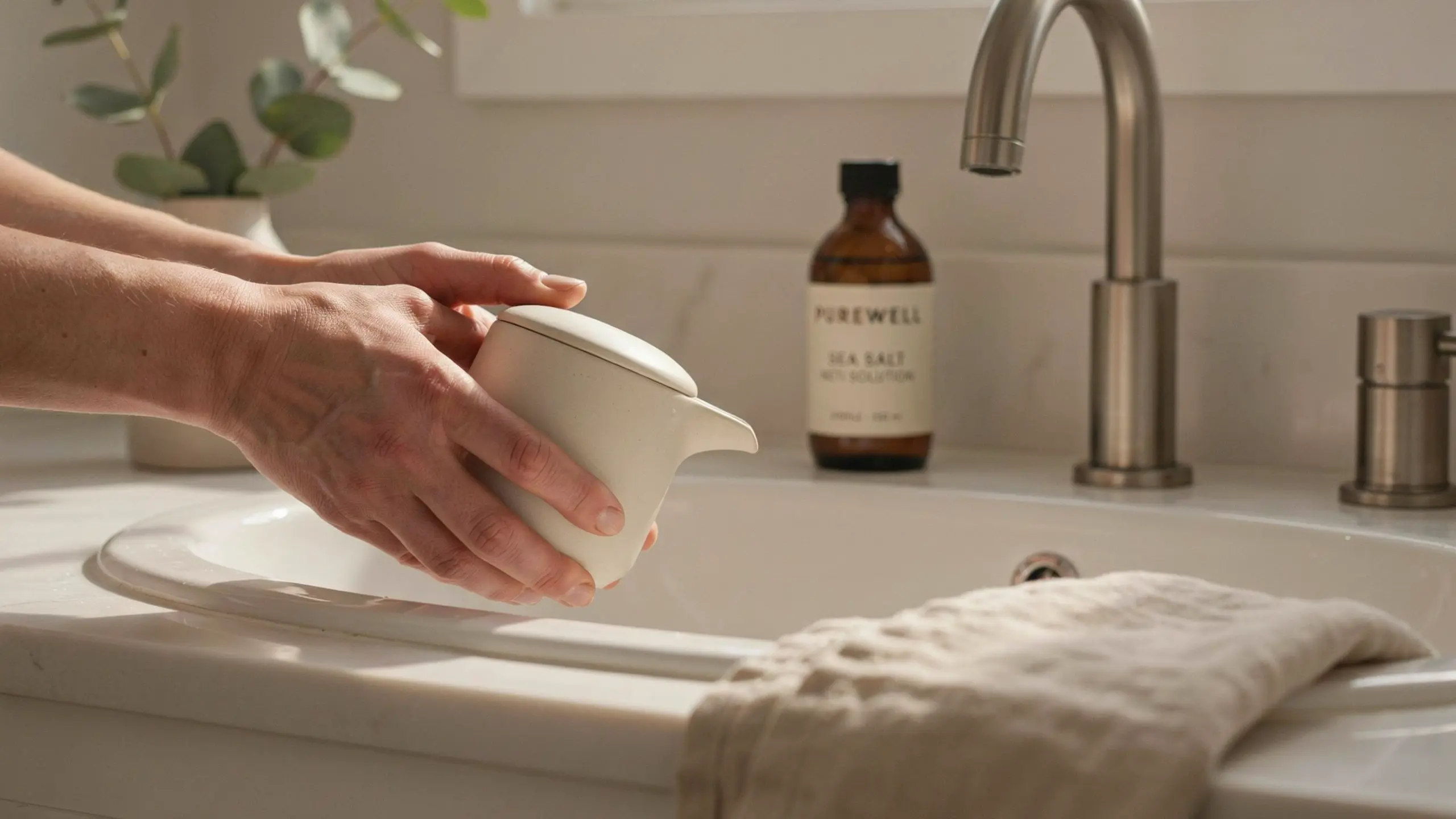
1. Saline Nasal Rinse
This is the one with the most research behind it.
A Cochrane systematic review found that saline nasal irrigation offers real symptom relief for chronic sinusitis with minimal side effects, and a separate Cochrane review on acute upper respiratory infections reached a similarly encouraging, if more cautious, conclusion: saline “probably” helps reduce the severity of some symptoms.
If you use a neti pot or squeeze bottle, the water matters as much as the technique. Use distilled, sterile, or previously boiled and cooled water, never straight from the tap.
It sounds like overkill until you learn that tap water can contain organisms that are usually harmless to swallow but risky when flushed directly into your sinuses.
2. Staying Hydrated
Water thins mucus, which makes it easier for your body to drain on its own. It’s not glamorous advice, but it’s consistently repeated by health systems for a reason.
Skip the extra coffee and alcohol while you’re sick; both are dehydrating and work against you here.
3. Warm Compress
A warm, damp towel across your face, over the forehead, cheeks, and nose, can ease the ache of sinus pressure.
It’s low-effort, low-risk, and genuinely comforting even if the science behind it is more “makes sense physiologically” than “proven in a clinical trial”.
4. Humidifier or Vaporizer
Dry air irritates already-swollen sinus tissue. Running a humidifier, especially overnight, adds moisture back into the air and can make breathing easier while you sleep.
Clean it regularly; a dirty humidifier can grow mold and make things worse, not better.
5. Elevating Your Head at Night
Lying completely flat lets mucus pool and pressure build. Prop yourself up with an extra pillow, or slightly raise the head of your bed.
Small change, noticeably better sleep for a lot of people.
6. Rest
Your immune system does its best work when you’re not also dragging yourself through a full workday.
This is the remedy people skip most often and probably regret the most.
7. Steam Inhalation, With a Caveat
Steam is the classic sinus remedy: lean over a bowl of hot water with a towel over your head, or just take a hot shower.
Plenty of people swear by it, and it may provide short-term subjective relief.
Here’s the honest caveat, though.
A Cochrane review looking specifically at heated, humidified air for the common cold found no clear evidence of benefit, and one detail worth knowing is that longer steam sessions (around 30 minutes) were actually associated with increased nasal resistance, not less.
So steam isn’t harmful in short bursts and plenty of people find it soothing, but don’t expect it to shorten your infection, and don’t overdo the duration.
Skip it entirely if you have sensitive skin or any risk of burns; hot water and delicate sinus tissue are not a forgiving combination.
8. Avoiding Known Irritants
Smoke, strong pollutants, sudden temperature swings, and blowing your nose too hard can all aggravate inflamed sinuses.
None of this cures an infection, but avoiding it removes friction while your body recovers.
9. Over-the-Counter Pain Relief (When Appropriate)
Acetaminophen or ibuprofen can take the edge off facial pain and headache.
Stick to labeled doses; acetaminophen in particular is easy to overdose on accidentally if you’re also taking a combination cold medicine that contains it too.
If you have liver, kidney, or stomach issues, check with a pharmacist or doctor before adding an NSAID into the mix.
10. Decongestants, Short-Term Only
Oral decongestants like pseudoephedrine, or nasal sprays like oxymetazoline, can reduce swelling and open up drainage fast.
The catch: nasal decongestant sprays should not be used for more than three days.
Beyond that window, they can cause rebound congestion, where your nose gets more blocked once the medication wears off, not less.
What to Skip or Use With Caution
- Nasal decongestant sprays for more than 3 days
- Very hot water for steam inhalation (burn risk)
- Tap water in a neti pot or nasal rinse
- Antihistamines, unless your sinus symptoms are allergy-related; they can actually thicken mucus and make drainage harder in a purely viral infection
- Pushing through a full workout or flight when you’re in the middle of a bad flare (pressure changes from flying or diving can be genuinely painful with blocked sinuses)
When Home Remedies Aren’t Enough, See a Doctor If:
- Symptoms last more than 10 days without any improvement
- You have a fever above 101–102°F, especially alongside facial pain
- You feel like you were getting better and then suddenly got worse again (doctors call this “double worsening,” and it’s a common sign of a secondary bacterial infection)
- You have severe facial pain, swelling around your eyes, or vision changes
- You get a severe headache combined with a stiff neck or confusion; rare, but it needs immediate attention
If you get sinus infections repeatedly, it’s worth asking your doctor about a referral to an ENT (ear, nose, and throat specialist) to check for underlying structural or allergy-related causes.
FAQs
How long do home remedies take to work? Most people notice some improvement within a few days, with full recovery from a viral sinus infection typically taking seven to ten days.
Is a sinus infection contagious? The infection itself generally isn’t, but the underlying virus that triggered it (like a cold) often is.
Do honey, ginger tea, or other natural drinks help? They’re unlikely to shorten the infection, but warm fluids can be soothing for a sore throat and help with hydration; no harm in adding them alongside the remedies above.
Do I need antibiotics? Only if a doctor determines your infection is bacterial, which usually means symptoms lasting 10+ days without improvement, or that “double worsening” pattern. Most cases are viral, and antibiotics won’t help at all in that case; they’ll just add side effects and contribute to antibiotic resistance.
The Bottom Line
Saline rinses and hydration have the best evidence behind them.
Rest, warm compresses, a humidifier, and head elevation are low-risk and genuinely help most people feel more comfortable.
Steam inhalation feels good but shouldn’t be relied on as your main strategy. And decongestant sprays are a short-term tool, not a daily habit.
Save this for the next time your sinuses decide to ruin your week.
References
- Singh M, Singh M, Jaiswal N, Chauhan A. Heated, humidified air for the common cold. Cochrane Database of Systematic Reviews. 2017;8(8):CD001728.
- King D, Mitchell B, Williams CP, Spurling GKP. Saline nasal irrigation for acute upper respiratory tract infections. Cochrane Database of Systematic Reviews. 2015;(4):CD006821.
- Harvey R, Hannan SA, Badia L, Scadding G. Nasal saline irrigations for the symptoms of chronic rhinosinusitis. Cochrane Database of Systematic Reviews. 2007;(3):CD006394.
- Chong LY, Head K, Hopkins C, et al. Saline irrigation for chronic rhinosinusitis. Cochrane Database of Systematic Reviews. 2016;(4):CD011995.
- Harvard Health Publishing. What to do about sinusitis. Harvard Medical School; 2026.
- UnityPoint Health. 5 Best Ways to Treat a Sinus Infection. 2026.
- Allina Health. Ten Home Remedies to Relieve Sinus Pressure and Pain. Healthy Set Go.
- CLS Health. How to Relieve Sinus Pressure: Home Remedies & Treatment. 2026.
- WebMD. Remedies for Sinus Infection Pain: What to Do and When to See a Doctor. 2025.
- MedHelp Clinics. When to Treat a Sinus Infection and When to Wait. 2026.