That raw, razor-blade feeling every time you swallow. The fatigue that hits before you even notice the fever. If you’re searching for strep throat relief, you already know how miserable it feels.
Here’s the most important thing to know first: strep throat is a bacterial infection, and these home remedies ease the pain — they don’t cure the infection.
Only antibiotics, prescribed after a positive strep test, can clear the bacteria and prevent complications.
Think of everything below as comfort care to use alongside medical treatment, not instead of it.
Below you’ll find how to tell strep apart from a regular sore throat, when actually to worry, and 15 doctor-informed ways to soothe your throat while you recover.
Is It Strep Throat or Just a Sore Throat?
Not every scratchy throat is strep.
According to the CDC and the Infectious Diseases Society of America (IDSA), strep throat tends to come on suddenly and typically includes:
- Sudden, severe throat pain
- Fever (often above 101°F)
- Red, swollen tonsils, sometimes with white patches or pus
- Small red spots on the roof of the mouth
- Swollen, tender lymph nodes in the neck
- Headache, stomach pain, or nausea (especially in kids)
A key clue pointing away from strep: if you also have a cough, runny nose, or hoarseness, it’s more likely a viral sore throat, since strep usually doesn’t come with those symptoms.
The only way to know for sure is a rapid strep test or throat culture done by a healthcare provider — home remedies and symptom-checking can’t replace that diagnosis.
Why You Still Need to See a Doctor
It’s tempting to try to wait strep out at home, especially when a doctor’s visit means time off work or an insurance headache.
But strep throat is different from most sore throats because it’s caused by group A Streptococcus bacteria — and left untreated, it can lead to serious complications, including:
- Rheumatic fever, which can permanently damage heart valves
- Post-streptococcal glomerulonephritis, a kidney inflammation
- Peritonsillar abscess, a painful pocket of infection near the tonsils
- Spread of the infection to the sinuses, ears, or bloodstream
Antibiotics also shorten how long you’re contagious — people can generally return to school or work about 12 hours after starting appropriate antibiotics, once they’re feeling better, per the American Academy of Pediatrics.
So: get tested. Then use the remedies below to feel human again while the antibiotics do their job (they usually start easing symptoms within 24–48 hours).
15 Home Remedies to Soothe Strep Throat Symptoms
1. Warm Salt Water Gargle
Dissolve ½ teaspoon of salt in 8 ounces of warm water and gargle for 30 seconds, several times a day.
Clinical studies on post-surgical sore throat and non-bacterial pharyngitis have found warm saline gargles meaningfully reduce pain, swelling, and difficulty swallowing.
It’s one of the best-supported remedies on this list.
2. Honey (for adults and kids over 1 year old)
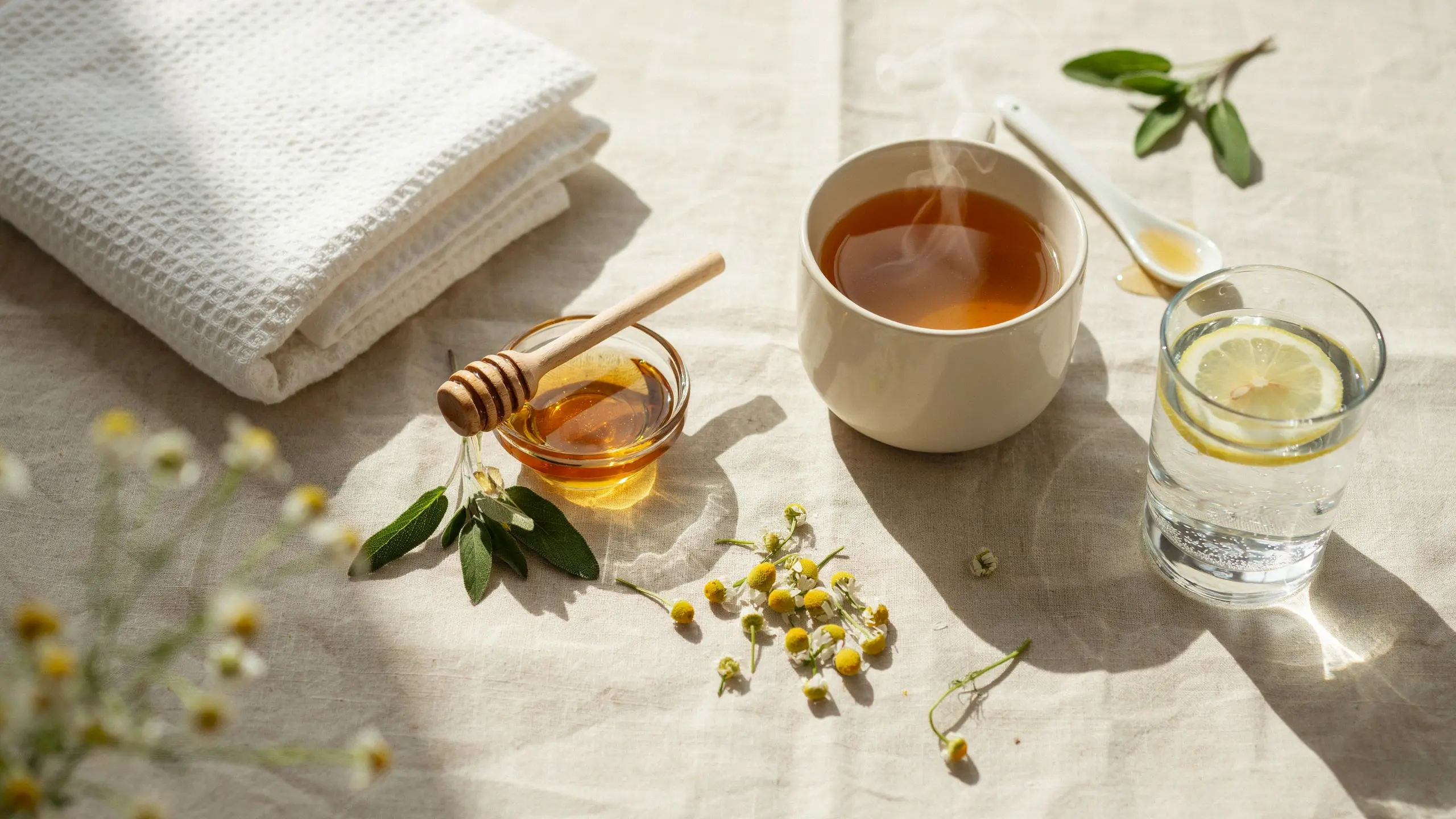
A spoonful of honey, or honey stirred into warm tea, can coat and soothe an irritated throat.
Important safety note: never give honey to babies under 12 months old — it carries a real risk of infant botulism, a rare but serious illness.
This isn’t a minor caution; it’s a firm rule from the CDC, AAP, and poison control centers.
3. Warm Herbal Teas
Chamomile, ginger, or licorice root tea (unsweetened or with honey) can soothe inflamed tissue and keep you hydrated.
Ginger in particular has mild anti-inflammatory properties.
Avoid licorice root tea if you’re pregnant or have high blood pressure, and check with a doctor before giving herbal teas to young children.
4. Humidifier or Steam Inhalation
Dry air makes throat pain worse.
Running a cool-mist humidifier in your bedroom, or breathing in steam from a hot shower, adds moisture back to irritated airways and can ease coughing and throat scratchiness overnight.
5. Cold Foods and Drinks
Popsicles, ice chips, and cold smoothies numb throat pain and are often easier to get down than solid food when swallowing hurts.
This is especially helpful for kids who are refusing to eat or drink.
6. Marshmallow Root or Slippery Elm Lozenges
Both herbs contain mucilage, a gel-like substance that coats and soothes mucous membranes.
They’re available as lozenges or teas at most health food stores.
Not recommended for children under 6 due to choking risk with lozenges.
7. Diluted Apple Cider Vinegar Gargle
Some people find relief mixing 1 tablespoon of apple cider vinegar into a cup of warm water and gargling briefly.
Evidence here is mostly anecdotal rather than clinical, and undiluted vinegar can irritate or even burn already-inflamed tissue; always dilute it, and skip this one if your throat is severely raw.
8. Staying Hydrated
Dehydration thickens mucus and dries out the throat lining, making pain worse.
Water, broth, and electrolyte drinks all count.
Aim for small, frequent sips rather than forcing large amounts at once if swallowing is painful.
9. Over-the-Counter Pain Relievers
Acetaminophen (Tylenol) or ibuprofen (Advil, Motrin) can reduce both pain and fever while antibiotics take effect.
Follow dosing instructions for age and weight, and check with a pediatrician before giving any fever reducer to infants under 3 months.
10. Rest and Voice Rest
Talking, and especially yelling or singing, strains already-inflamed throat tissue.
Extra sleep also supports your immune system while it fights the infection.
11. Diluted Essential Oils (Diffused, Not Ingested)
Eucalyptus or peppermint oil in a diffuser can make breathing feel easier and add a cooling sensation.
Never apply essential oils directly to the throat or swallow them, and avoid diffusing around infants, young children, or pets without checking safety guidance first.
12. Soft, Bland Foods
Mashed potatoes, oatmeal, scrambled eggs, and broths are gentle on a sore throat. Skip acidic (citrus, tomato), spicy, or crunchy foods until swallowing feels more normal.
13. Throat-Coating Lozenges
Simple over-the-counter lozenges (menthol, pectin, or honey-based) stimulate saliva production, which naturally soothes and lubricates the throat.
Not appropriate for children under 4 due to choking risk.
14. Elevating Your Head While Sleeping
Propping yourself up with an extra pillow can reduce postnasal drip pooling in the throat overnight, which often makes morning throat pain worse.
15. A Cool-Mist Room, Not a Hot, Dry One
Beyond a humidifier, simply avoiding forced hot air (like blasting the heater) and keeping bedroom air cool and slightly moist helps prevent the throat from drying out further during sleep.
What to Avoid While You Recover
- Don’t share cups, utensils, or toothbrushes with anyone in the house
- Skip alcohol-based mouthwash, which can sting inflamed tissue
- Avoid smoking or vaping, which irritates the throat further
- Don’t rely on home remedies alone for more than a day or two if symptoms are severe — get tested
When to Seek Emergency Care
Call a doctor right away — or go to urgent care/the ER — if you or your child has:
- Difficulty breathing or swallowing
- Drooling (a sign of severe swelling, especially in kids)
- A fever above 103°F that isn’t responding to medication
- Signs of dehydration (no urination, extreme dizziness)
- A rash with a sandpaper-like texture (possible scarlet fever)
- Severe neck stiffness or swelling
These aren’t “wait and see” symptoms — they need prompt medical attention.
Preventing Strep Throat From Spreading
Strep is highly contagious through respiratory droplets, especially in households and schools.
To lower the risk of spreading it (or catching it again):
- Wash hands frequently, especially after coughing or sneezing
- Replace your toothbrush after starting antibiotics
- Avoid sharing drinks, utensils, or towels
- Cover coughs and sneezes with an elbow, not hands
- Stay home until you’ve been on antibiotics for at least 12–24 hours and are fever-free
The Bottom Line
Home remedies can make strep throat genuinely more bearable — the salt water gargle and staying hydrated in particular are backed by real clinical evidence.
But they work with antibiotics, not instead of them. If your symptoms match strep throat, see a healthcare provider for testing.
References
- Centers for Disease Control and Prevention. About Strep Throat. Group A Strep. Updated February 2026. https://www.cdc.gov/group-a-strep/about/strep-throat.html
- Centers for Disease Control and Prevention. Clinical Guidance for Group A Streptococcal Pharyngitis. Group A Strep. Updated November 2025. https://www.cdc.gov/group-a-strep/hcp/clinical-guidance/strep-throat.html
- Centers for Disease Control and Prevention. Testing for Strep Throat or Scarlet Fever. Group A Strep. Updated August 2025. https://www.cdc.gov/group-a-strep/testing/index.html
- Centers for Disease Control and Prevention. Clinical Guidance for Acute Rheumatic Fever. Group A Strep. Updated August 2025. https://www.cdc.gov/group-a-strep/hcp/clinical-guidance/acute-rheumatic-fever.html
- Centers for Disease Control and Prevention. Clinical Guidance for Scarlet Fever. Group A Strep. Updated February 2026. https://www.cdc.gov/group-a-strep/hcp/clinical-guidance/scarlet-fever.html
- Infectious Diseases Society of America. 2025 Clinical Practice Guideline Update on Group A Streptococcal (GAS) Pharyngitis: Risk Assessment Using Clinical Scoring Systems in Children and Adults. Clinical Infectious Diseases, 2025 (epub ahead of print).
- Infectious Diseases Society of America. IDSA Releases New Guidelines for Diagnosing Strep Throat. October 2025. https://www.idsociety.org/news–publications-new/articles/2025/idsa-releases-new-guidelines-for-diagnosing-strep-throat/
- American Academy of Pediatrics. Red Book: Group A Streptococcal Infections, 2024–2027 edition.
- Al-Ghamdi, S., et al. Streptococcal Pharyngitis. StatPearls, National Center for Biotechnology Information (NIH). Updated February 2025. https://www.ncbi.nlm.nih.gov/books/NBK525997/
- Infant Botulism Treatment and Prevention Program, California Department of Public Health. Prevention of Infant Botulism. Updated December 2025. https://www.infantbotulism.org/parent/prevention
- Poison Control (National Capital Poison Center). Botulism and Honey: What’s the Connection? https://www.poison.org/articles/dont-feed-honey-to-infants
- Nemours KidsHealth. Why Should Babies Not Have Honey? https://kidshealth.org/en/parents/honey-botulism.html
- GoodRx Health. Does Gargling With Salt Water Really Help a Sore Throat? Updated November 2025. https://www.goodrx.com/health-topic/throat/salt-water-gargle-for-sore-throat
- Spinks, A., Glasziou, P.P., Del Mar, C.B. Antibiotics for Sore Throat. Cochrane Database of Systematic Reviews, 2013.
- Shulman, S.T., et al. Clinical Practice Guideline for the Diagnosis and Management of Group A Streptococcal Pharyngitis: 2012 Update by the Infectious Diseases Society of America. Clinical Infectious Diseases, 2012.
This article is for general informational purposes and is not a substitute for professional medical advice, diagnosis, or treatment. Always consult a qualified healthcare provider regarding a sore throat, fever, or suspected strep infection — especially for young children.