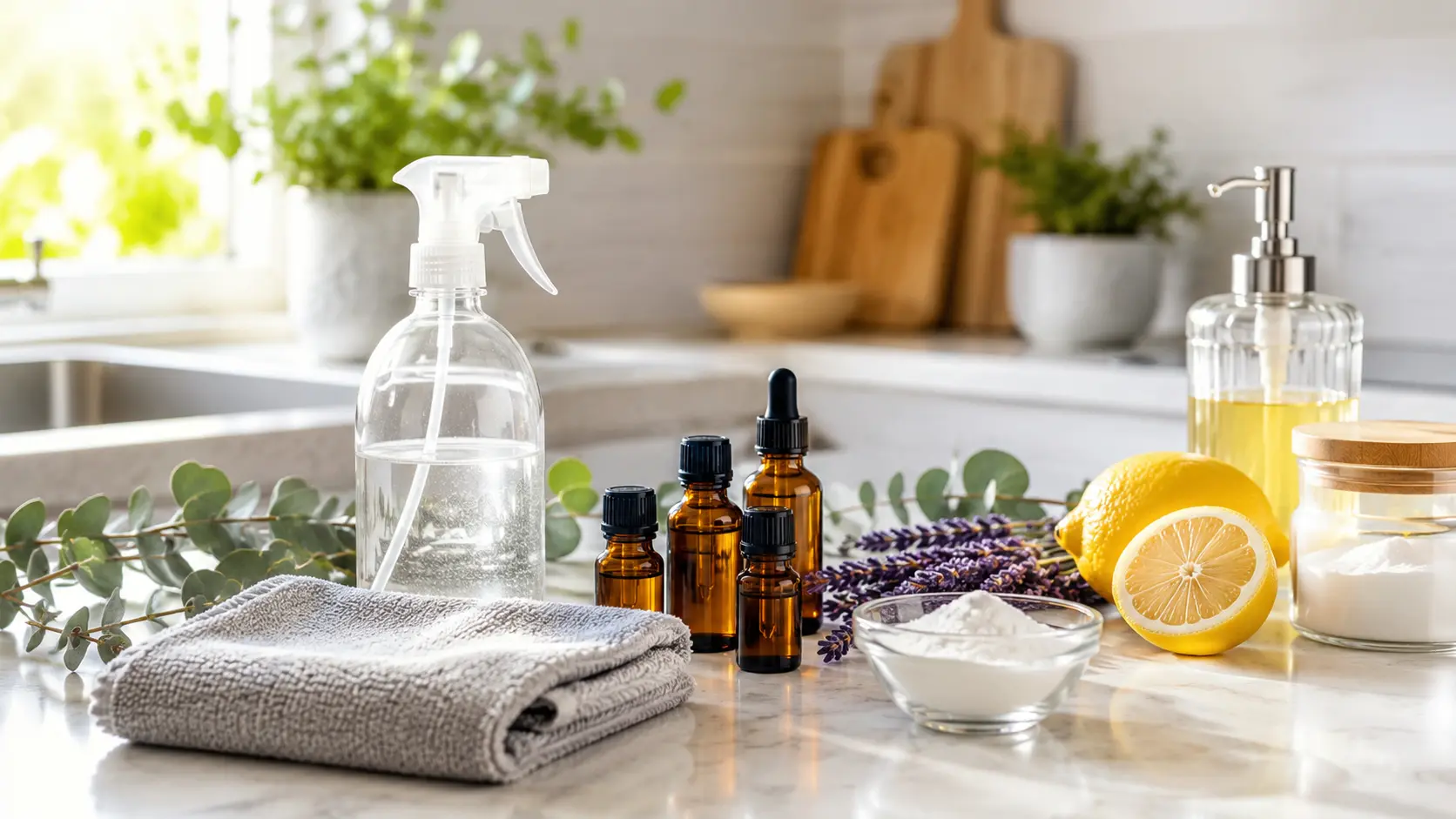
A clean home should not only look good—it should feel fresh, comfortable, and inviting. That is one reason essential oils have become popular additions to homemade household cleaners.
A few drops of lemon, lavender, eucalyptus, or peppermint oil can transform an ordinary cleaning routine into a more pleasant experience.
Essential oils can add fragrance, help control unwanted odors, and complement ingredients such as dish soap, baking soda, and water.
However, essential oils are highly concentrated plant extracts, not miracle cleaning products.
Although some oils have demonstrated antimicrobial activity under laboratory conditions, a homemade essential oil spray should not automatically be considered a disinfectant.
For everyday dust, spills, grease, and odors, essential oil cleaning recipes can be practical and enjoyable.
When you need to kill disease-causing germs, especially after illness or contact with raw meat or bodily fluids, use an EPA-registered disinfectant according to its label.
The EPA maintains lists of registered disinfectant products that have undergone efficacy review for specific pathogens.
This guide explains the best essential oils for cleaning, how to use them around the home, easy recipes to try, and the safety rules you should never overlook.
Can You Really Clean With Essential Oils?
Yes, but it is important to understand what essential oils actually contribute to a cleaning formula.
Most of the physical cleaning in a homemade spray comes from water, soap, detergent, alcohol, or another suitable cleaning agent.
These ingredients loosen dirt, grease, and residue so they can be wiped away. Essential oils primarily add fragrance and may help neutralize unpleasant odors.
Some essential oils contain compounds that show antibacterial, antifungal, or antiviral effects in controlled laboratory research.
However, laboratory activity does not mean that an improvised household mixture will produce the same result on a kitchen counter, bathroom fixture, or doorknob.
The oil concentration, application method, contact time, surface type, microorganism, and overall formulation can all affect performance.
Cleaning, sanitizing, and disinfecting are not the same
These terms are often used interchangeably, but they describe different processes:
- Cleaning removes dirt, grease, food residue, and some germs from a surface using water, soap, detergent, and physical action.
- Sanitizing reduces the number of germs to a level considered acceptable under public health standards.
- Disinfecting uses a tested chemical product to kill specified germs on a surface.
The Centers for Disease Control and Prevention explains that cleaning involves water, soap, and scrubbing, while disinfecting uses chemicals to kill germs that remain on a surface.
An essential oil cleaner can be useful for routine cleaning, but a fresh scent is not proof that a surface has been disinfected.
The Best Essential Oils for Cleaning
Different essential oils bring different aromas and practical qualities to homemade cleaners.
The following options are among the most popular.
1. Lemon Essential Oil
Lemon essential oil has a bright, clean scent that works especially well in kitchens. It is commonly added to degreasing sprays, cabinet cleaners, and adhesive-removal blends.
Because citrus oils can interact with certain plastics, paints, and finishes, test the mixture in a hidden area first.
Best for:
- Greasy kitchen residue
- Cabinet exteriors
- Trash-can odors
- Sticky labels and adhesive marks
- Fresh-smelling all-purpose sprays
2. Tea Tree Essential Oil
Tea tree oil has a strong medicinal and herbal aroma. It is often included in bathroom, trash-can, and musty-area cleaning blends.
Tea tree oil is highly concentrated and can be harmful if swallowed. Store it securely away from children and never use it in or around the mouth.
Best for:
- Bathroom cleaning blends
- Musty-smelling spaces
- Garbage cans
- Shower-area maintenance
- Deodorizing sprays
3. Lavender Essential Oil
Lavender is one of the most versatile options for household fragrance. Its soft floral aroma works well in bedrooms, closets, linen sprays, and general surface cleaners.
It pairs especially well with lemon, eucalyptus, rosemary, and tea tree oil.
Best for:
- Bedrooms
- Closets
- Linen sprays
- Carpet refreshers
- General household cleaning
4. Eucalyptus Essential Oil
Eucalyptus oil produces a crisp, spa-like scent that is especially popular in bathroom and floor-cleaning blends.
Because concentrated eucalyptus oil can present risks to children and animals, use only a small amount and keep the bottle securely stored.
Best for:
- Bathrooms
- Shower areas
- Floor-cleaning solutions
- Trash cans
- Musty odors
5. Peppermint Essential Oil
Peppermint oil has a sharp, cooling scent that can make kitchens, entryways, and utility areas smell noticeably fresher.
A small amount is usually enough. Too much can make a cleaner smell overpowering and may irritate people who are sensitive to strong fragrances.
Best for:
- Entryways
- Kitchens
- Garbage areas
- Utility rooms
- Odor-control blends
6. Sweet Orange Essential Oil
Sweet orange oil has a warm citrus scent that pairs well with lemon, cinnamon leaf, cedarwood, and rosemary.
Like other citrus oils, it is commonly added to cleaners intended for greasy surfaces. Always test it before using it on plastic, finished wood, or painted materials.
Best for:
- Kitchen cleaning
- Greasy residue
- Furniture-cleaning blends
- General deodorizing
- Citrus-scented sprays
7. Rosemary Essential Oil
Rosemary oil adds a fresh herbal note without smelling as sweet as many floral or citrus oils. It blends well with lemon, peppermint, lavender, and eucalyptus.
Best for:
- Kitchen sprays
- Bathroom cleaners
- Floor-cleaning blends
- General surface cleaning
- Herbal scent combinations
8. Pine Essential Oil
Pine oil creates the familiar forest-fresh scent associated with many traditional household cleaners.
It works particularly well in bathrooms, entryways, and floor-cleaning solutions.
Do not assume it is safe for every floor or finish. Check the manufacturer’s care instructions before adding oil to a flooring product.
Best for:
- Floors
- Bathrooms
- Mudrooms
- Entryways
- Trash cans
Essential Oil Cleaning Supplies to Keep on Hand
You do not need a complicated collection of supplies to make simple household cleaners.
A basic kit may include:
- Reusable glass spray bottles
- Microfiber cleaning cloths
- Measuring cups and spoons
- Distilled water
- Unscented liquid dish soap
- Baking soda
- White vinegar
- Rubbing alcohol
- Protective gloves
- Waterproof labels
Glass bottles are often preferred for oil-based mixtures because some concentrated essential oils may affect certain plastics over time.
Every homemade cleaner should be labeled with its ingredients, intended use, and preparation date. Never store a cleaning product in a food or beverage container.
10 Easy Essential Oil Cleaning Recipes
These recipes are intended for routine household cleaning and deodorizing. They are not substitutes for registered disinfectants.
Always patch-test a new mixture before applying it to a visible area.
1. Everyday Essential Oil Cleaning Spray
This simple spray is suitable for routine wipe-downs on many sealed, washable surfaces.
You will need:
- 2 cups distilled water
- 1 teaspoon unscented liquid dish soap
- 10 drops lemon essential oil
- 5 drops lavender essential oil
Add the ingredients to a spray bottle and shake gently. Spray the cleaner onto a cloth or surface, then wipe away dirt and residue.
Avoid using it on unsealed wood, natural stone, electronics, or any surface that should not be exposed to water.
2. Citrus Kitchen Degreasing Spray
Dish soap does most of the grease-cutting work in this recipe, while citrus oil provides a bright fragrance.
You will need:
- 2 cups warm water
- 1 tablespoon unscented dish soap
- 8 drops lemon essential oil
- 5 drops sweet orange essential oil
Combine the ingredients in a spray bottle. Apply lightly to greasy stovetops, backsplashes, or cabinet exteriors. Allow it to sit briefly, then wipe with a damp cloth.
Do not spray directly into burners, electrical components, vents, or appliance controls.
3. Bathroom Sink and Tub Cleaning Paste
Baking soda creates mild abrasion, while dish soap helps loosen soap residue.
You will need:
- ½ cup baking soda
- 1 to 2 tablespoons liquid dish soap
- 3 drops eucalyptus essential oil
- 2 drops tea tree essential oil
Mix the ingredients in a small bowl until they form a spreadable paste. Apply with a damp cloth or non-scratch sponge, scrub gently, and rinse thoroughly.
Do not use abrasive pastes on delicate stone, acrylic, specialty coatings, or surfaces that can scratch.
4. Fresh-Scented Floor Cleaner
The safest floor cleaner is always one approved by the flooring manufacturer.
For compatible flooring, prepare the recommended amount of floor-cleaning solution and add no more than three to five drops of lavender, lemon, or pine oil to the full bucket.
Do not use essential oil mixtures on unfinished wood, waxed floors, or specialty finishes unless the manufacturer confirms that it is safe.
5. Low-Oil Glass and Mirror Spray
Using too much essential oil on glass can leave streaks, so this formula contains only a minimal amount.
You will need:
- 1½ cups distilled water
- ½ cup rubbing alcohol
- 1 drop lemon essential oil
Add the ingredients to a spray bottle and shake before use. Spray onto a microfiber cloth rather than directly onto the glass, then wipe the surface.
Keep the mixture away from flames and heat because rubbing alcohol is flammable. Do not use it on device screens or specialty-coated glass.
6. Garbage Can Cleaning Spray
A fragrance spray cannot fix a dirty garbage can.
Wash the bin first, then use this mixture for a fresher finish.
You will need:
- 2 cups warm water
- 1 teaspoon dish soap
- 5 drops lemon essential oil
- 3 drops peppermint essential oil
Remove debris from the bin, wash it with the solution, rinse it if necessary, and allow it to dry fully before replacing the liner.
7. Baking Soda Carpet Refresher
This mixture can help absorb odors, but it should be used carefully around children and animals.
You will need:
- 1 cup baking soda
- 5 drops lavender essential oil
Place the baking soda in a jar, add the oil, close the lid, and shake well. Let the mixture sit before use so the oil can distribute through the powder.
Test a small section of carpet first. Apply only a light amount, keep children and pets away, and vacuum it up thoroughly.
Avoid using powdered refreshers on rugs or carpets when the manufacturer advises against them.
8. Lavender Laundry Scent Booster
Never pour undiluted essential oil directly onto clothing.
Concentrated oil can stain fabric, and oily residue may create a fire hazard when exposed to dryer heat.
Instead, add one or two drops to a full dose of unscented liquid laundry detergent immediately before starting the wash, provided the detergent and appliance manufacturer allow fragrance additives.
For a safer and more predictable option, use a commercially formulated laundry product designed to contain essential oils.
9. Refrigerator Interior Cleaner
For refrigerator interiors, a mild, low-residue formula is usually best.
You will need:
- 2 cups warm water
- 1 teaspoon unscented dish soap
- 1 drop lemon essential oil
Dip a clean cloth into the solution and wring it out well. Wipe refrigerator shelves and walls, then wipe again with a clean damp cloth to remove residue.
Do not allow essential oil residue to remain on surfaces that directly contact uncovered food.
10. Toilet-Bowl Deodorizing Powder
This mixture can refresh a toilet bowl between deeper cleanings, but it is not a disinfectant.
You will need:
- ½ cup baking soda
- 5 drops eucalyptus or lemon essential oil
Mix the ingredients, sprinkle the powder into the toilet bowl, and allow it to sit briefly. Scrub with a toilet brush and flush.
Never combine this mixture with bleach, toilet cleaner, drain cleaner, or another chemical product.
How to Use Essential Oils in Every Room
In the kitchen
Lemon, orange, peppermint, and rosemary oils work well in kitchen cleaning blends. Use them for:
- Cabinet exteriors
- Backsplashes
- Trash cans
- Sealed countertops
- Refrigerator interiors
- Greasy appliance exteriors
Avoid leaving oily residue on cutting boards, food-preparation surfaces, dishes, or utensils.
In the bathroom
Eucalyptus, tea tree, lemon, and lavender are popular choices for bathrooms.
Use them in routine cleaners for:
- Sinks
- Shower walls
- Toilet exteriors
- Bathroom cabinets
- Trash cans
- Washable floors
Essential oils will not solve structural mold or extensive fungal growth.
Persistent mold should be addressed by controlling moisture, repairing leaks, improving ventilation, and using an appropriate remediation method.
In the living room
Lavender, cedarwood, orange, and lemon can add a pleasant fragrance to living-room cleaning products.
Possible applications include:
- Dusting sprays
- Carpet refreshers
- Washable furniture surfaces
- Baseboards
- Window frames
- General deodorizing
Before using a recipe on upholstery, leather, polished furniture, or antique pieces, check the manufacturer’s instructions and test an inconspicuous area.
In the bedroom
Lavender is a natural fit for bedroom cleaning because of its soft floral fragrance.
It can be used in:
- Linen sprays
- Closet refreshers
- Mattress-deodorizing powders
- Nightstand cleaners
- General dusting solutions
Do not soak mattresses, pillows, or upholstered headboards.
Excess moisture can become trapped inside the material and encourage unwanted odor or microbial growth.
In the laundry room
Essential oils may be used sparingly to scent laundry products or refresh hampers, but they should never be poured directly onto fabric.
You can also use essential oil cleaning sprays for:
- Washer exteriors
- Shelving
- Utility sinks
- Detergent spills
- Trash cans
- Washable hampers
Always follow the washer and dryer manufacturer’s care instructions.
Essential Oil Cleaning Blends That Smell Amazing
The key to a pleasant cleaning blend is restraint.
Start with fewer drops and increase only when necessary.
Fresh and Bright
- 5 drops lemon
- 2 drops peppermint
- 2 drops rosemary
This blend works well in kitchens and entryways.
Calm and Clean
- 5 drops lavender
- 3 drops lemon
- 2 drops eucalyptus
Use it for bedrooms, closets, and general surface sprays.
Citrus Grove
- 4 drops sweet orange
- 4 drops lemon
- 2 drops grapefruit
This combination creates a bright fragrance for kitchens and living areas.
Spa-Inspired
- 4 drops eucalyptus
- 3 drops lavender
- 2 drops tea tree
Try it in bathroom-cleaning blends, using extra caution around children and pets.
Forest Fresh
- 5 drops pine
- 3 drops cedarwood
- 2 drops lemon
This scent works well for floors, mudrooms, and entryways.
These quantities are intended for a full spray bottle containing approximately two cups of cleaning solution—not for direct application.
Essential Oil Cleaning Safety Rules
Essential oils may come from plants, but “natural” does not automatically mean harmless.
Always dilute essential oils
Essential oils are concentrated substances. Undiluted oil can damage surfaces, stain fabrics, irritate skin, or create an overwhelming concentration of fragrance.
Measure drops carefully and avoid the temptation to add more simply because the cleaner does not smell strong enough.
Keep them away from children
Essential oil bottles should be stored securely, preferably in a locked cabinet. Poison Control advises keeping them out of the sight and reach of children and pets because misuse or ingestion can cause poisoning.
Do not place homemade cleaning products in unlabeled bottles or containers that resemble drinks.
Use extreme caution around pets
Dogs and cats can be exposed by swallowing oil, inhaling concentrated vapor, walking through residue, or getting oil on their fur.
The ASPCA warns that concentrated essential oils can present a danger to pets and recommends preventing direct exposure.
Cats may be especially sensitive to some essential oil compounds. Birds and animals with respiratory conditions may also react to strong airborne fragrances.
When pets live in the home:
- Use the smallest practical amount.
- Ventilate the room.
- Keep animals away while cleaning.
- Do not apply oils to pet bedding, bowls, toys, or fur.
- Allow cleaned surfaces to dry fully.
- Consult a veterinarian before using oils in areas pets frequently occupy.
Patch-test every recipe
Apply a small amount to an inconspicuous area and wait before cleaning the full surface.
Patch testing is especially important for:
- Painted surfaces
- Wood finishes
- Plastic
- Upholstery
- Leather
- Natural stone
- Specialty flooring
- Antique furniture
Never mix incompatible cleaning chemicals
Do not treat homemade cleaning like an uncontrolled chemistry experiment.
Never mix:
- Bleach and vinegar
- Bleach and ammonia
- Bleach and rubbing alcohol
- Bleach and toilet-bowl cleaner
- Different commercial cleaners unless the labels specifically permit it
Mixing bleach with vinegar or ammonia can produce dangerous gases capable of causing severe respiratory injury.
The safest rule is simple: use one cleaning product at a time and follow the manufacturer’s directions.
Ventilate the room
Open a window, use an exhaust fan, or increase airflow when working with strong fragrances or cleaning products.
Stop using a mixture if it causes coughing, wheezing, headache, nausea, eye irritation, dizziness, or breathing discomfort.
Label every homemade cleaner
A good label should include:
- Product name
- Full ingredient list
- Intended surfaces
- Preparation date
- Relevant warnings
Keep homemade products separate from food, medication, and personal-care items.
Surfaces You Should Not Clean With Essential Oils
Essential oil cleaners are not appropriate for every material.
Avoid using them without manufacturer approval on:
- Unsealed marble, granite, or other natural stone
- Unfinished wood
- Waxed furniture
- Delicate plastics
- Electronic screens
- Specialty-coated glass
- Antique furniture
- Musical instruments
- Leather
- Pet bowls and pet toys
- Surfaces that directly contact food
Citrus oils can behave like solvents and may soften, discolor, or damage certain coatings and plastic materials.
Vinegar-based recipes should also be avoided on natural stone because acid can etch the surface.
Do Essential Oils Disinfect Surfaces?
Some essential oils contain biologically active compounds, and researchers have examined their effects on bacteria, fungi, and viruses.
A limited number of professionally formulated botanical products are registered as disinfectants.
That does not mean every homemade recipe containing tea tree, eucalyptus, lemon, or another essential oil has been proven to disinfect.
A registered disinfectant has a specific formulation, approved label, tested concentration, required contact time, and defined list of target organisms.
Adding essential oil to water or vinegar does not reproduce that process.
Use an EPA-registered disinfectant when cleaning after:
- Raw poultry or meat contamination
- Vomit, blood, or other bodily fluids
- Contagious illness
- A confirmed bacterial or viral exposure
- Floodwater or sewage contamination
- High-risk exposure involving a medically vulnerable person
Follow the label carefully.
A disinfectant must usually remain visibly wet on the surface for a specified contact time to work as intended.
The CDC emphasizes following the stated contact time rather than immediately wiping the product away.
Common Essential Oil Cleaning Mistakes
Even simple homemade cleaners can cause problems when used incorrectly.
Using too much oil
More oil does not necessarily produce a cleaner surface. It may leave a sticky film, create streaks, damage materials, or trigger fragrance sensitivity.
Applying oil directly to a surface
Undiluted essential oil can stain fabric, affect paint, soften plastic, or damage a finish.
Assuming a strong scent means the surface is clean
Fragrance can mask odors temporarily. It does not remove dirt, grease, mold, or germs.
Using vinegar on natural stone
Vinegar is acidic and can etch marble, limestone, travertine, and some other stone surfaces.
Combining oil and water without shaking
Essential oils do not dissolve evenly in plain water. Shake the bottle before each use and recognize that the mixture may separate again quickly.
Storing water-based recipes indefinitely
A homemade water-based cleaner is not automatically preserved just because it contains essential oil.
Prepare small batches and discard any mixture that develops an unusual smell, color, cloudiness, gas, or visible growth.
Ignoring manufacturer instructions
A homemade recipe should never override the care directions for flooring, furniture, appliances, stone, electronics, or textiles.
How to Make Homemade Cleaners Last Longer
Homemade cleaning products do not undergo the same stability and microbial testing as commercial formulas.
To reduce contamination and waste:
- Use clean bottles and measuring tools.
- Choose distilled water rather than tap water.
- Prepare small batches.
- Store products away from sunlight and heat.
- Keep bottle openings clean.
- Avoid touching the inside of caps or spray tubes.
- Write the preparation date on every bottle.
- Discard the product when its appearance or odor changes.
Essential oils should not be treated as reliable preservatives for homemade water-based cleaners.
Are Essential Oil Cleaners Worth It?
Essential oil cleaners can be worthwhile when they are used for the right purpose.
Potential advantages
They allow you to:
- Customize the fragrance of your home
- Make small batches for specific cleaning tasks
- Reduce reliance on heavily perfumed products
- Combine simple ingredients for routine cleaning
- Create pleasant cleaning rituals
Important limitations
They may also:
- Damage delicate surfaces
- Trigger skin or respiratory irritation
- Present risks to children and pets
- Leave oily residue
- Have a short or uncertain shelf life
- Provide no verified disinfection
Consumers who prefer commercially formulated cleaning products can also look for products carrying credible environmental certifications.
The EPA’s Safer Choice program identifies products that meet its performance and ingredient-safety criteria.
Final Thoughts
Essential oils can make routine cleaning smell fresher and feel more enjoyable.
Lemon can brighten a kitchen spray, lavender can soften a bedroom fragrance, and eucalyptus can give a bathroom a crisp, spa-inspired finish.
The most effective approach is to use essential oils as supporting ingredients—not as substitutes for soap, detergent, proper scrubbing, or registered disinfectants.
Use small amounts, dilute them correctly, check surface-care instructions, ventilate the room, and keep every bottle away from children and pets.
When real disinfection is required, choose a tested product and follow its label exactly.
A clean home should not only smell good. It should also be cleaned with methods that are appropriate, effective, and safe for everyone who lives there.
Save this guide for your next cleaning day—and share it with someone who loves a fresh-smelling home.