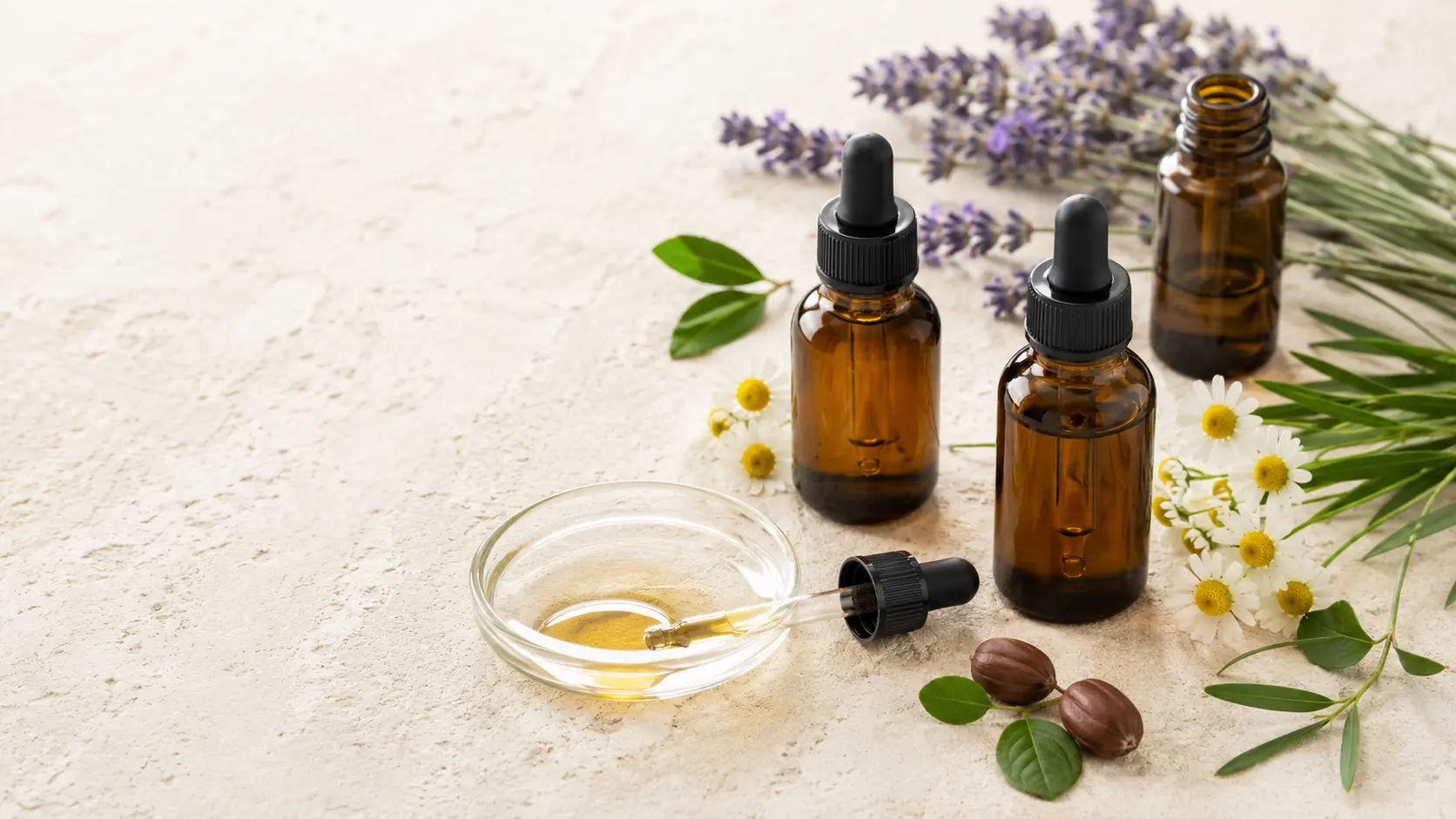
Essential oils are everywhere in modern skin care. You can find them in facial serums, cleansers, moisturizers, masks, and spot treatments—often accompanied by promises of clearer, calmer, or younger-looking skin.
But “natural” does not automatically mean gentle, effective, or suitable for every skin type.
Essential oils are highly concentrated plant extracts. Although certain oils contain compounds with potentially useful antimicrobial, antioxidant, or soothing properties, they can also cause irritation and allergic reactions.
Whether an essential oil works well for your skin depends on the oil itself, its concentration, the complete product formulation, and your individual sensitivity.
Before adding one to your routine, it helps to understand what essential oils can realistically do, how they differ from other facial oils, and how to use them without compromising your skin barrier.
What Are Essential Oils?
Essential oils are concentrated aromatic compounds extracted from flowers, leaves, bark, roots, seeds, fruit peels, and other plant materials.
Steam distillation is one of the most common extraction methods, although some oils—particularly citrus oils—may be obtained through mechanical pressing.
The word “oil” can be misleading. Essential oils are not the same as the fatty plant oils commonly used to moisturize and soften the skin.
Essential Oils vs. Carrier Oils vs. Face Oils
Understanding the difference between these three categories can prevent one of the most common skin-care mistakes: treating every oil as if it can be applied directly to the face.
| Oil type | Common examples | Primary role | Usually applied directly? |
|---|---|---|---|
| Essential oils | Tea tree, lavender, chamomile, and frankincense | Aromatic or targeted formulation ingredient | Generally no |
| Carrier oils | Jojoba, sweet almond, grapeseed, and sunflower seed oil | Dilution base and emollient | Often, depending on the oil and skin type |
| Face oils | Single plant oils or formulated blends | Skin conditioning and moisture support | Follow the product directions |
Carrier oils contain fatty acids and other lipids that can soften the skin or reduce moisture loss. Essential oils, by contrast, are highly concentrated and typically used in much smaller amounts.
Rose essential oil and rosehip seed oil are a useful example.
Rose essential oil is an aromatic extract commonly used for fragrance, while rosehip seed oil is a lipid-rich carrier oil pressed from the seeds or fruit of certain rose plants.
They are different ingredients with different properties and safety considerations.
Do Essential Oils Actually Benefit the Skin?
The honest answer is that some essential oils may offer benefits when used in an appropriate formulation, but the strength of the evidence varies widely.
Laboratory studies have found that compounds in certain essential oils can demonstrate antimicrobial, anti-inflammatory, or antioxidant activity.
However, a result observed in a laboratory does not necessarily mean that the same oil will treat acne, eczema, wrinkles, hyperpigmentation, or another skin concern when applied at home.
The concentration required to produce a laboratory effect may be too irritating for routine cosmetic use.
A finished product also contains numerous ingredients that can affect stability, absorption, tolerability, and overall performance.
Potential roles for essential oils in skin care include:
- Adding fragrance and creating a pleasant sensory experience
- Supporting formulas intended for oily or blemish-prone skin
- Providing antioxidant or antimicrobial activity within certain formulations
- Complementing ingredients designed to temporarily soothe the skin
- Enhancing the experience of facial oils, cleansers, or body-care products
These possible benefits should be considered alongside the limitations.
Human clinical evidence is limited for many essential oils, and individual reactions can be unpredictable.
Essential oils should not replace established treatments for acne, eczema, rosacea, fungal infections, wounds, or other medical conditions.
Popular Essential Oils Used in Skin Care
Different oils have different chemical profiles.
An oil that works for one person may irritate another, even if both people appear to have the same skin type.
Tea Tree Oil
Tea tree oil is one of the most widely studied essential oils in skin care. It is commonly included in cleansers, gels, and spot products made for oily or acne-prone skin.
According to the National Center for Complementary and Integrative Health, a small amount of evidence suggests that topical tea tree oil may be helpful for acne, but additional research is needed before firm conclusions can be made.
Tea tree oil can also cause redness, dryness, stinging, or irritation, especially when it has oxidized after exposure to heat, light, or air. It should never be swallowed. NCCIH
For facial use, a professionally formulated product is generally a more predictable choice than applying tea tree essential oil directly or making a highly concentrated DIY mixture.
Lavender Oil
Lavender oil is often added to skin-care products for its floral scent and calming sensory appeal. You may see it in facial oils, night creams, bath products, and masks.
Although lavender is frequently promoted online as a remedy for acne, redness, or damaged skin, these claims often extend beyond the available clinical evidence. Topical lavender products can also cause allergic skin reactions in some individuals. NCCIH
If your skin is sensitive to fragrance, lavender oil may be more irritating than soothing.
Chamomile Oil
Chamomile essential oil is commonly marketed as a soothing ingredient. Different chamomile species and extraction methods can produce oils with different compositions, so products labeled simply as “chamomile oil” are not necessarily identical.
People with known allergies to plants in the daisy or ragweed family should approach chamomile-containing products carefully. While topical chamomile may be tolerated by many people, “botanical” does not mean allergy-free.
Geranium Oil
Geranium oil is frequently used in fragranced facial and body products. Brands sometimes market it as a “balancing” or “toning” ingredient, particularly for combination or mature-looking skin.
These descriptions are common in cosmetic marketing, but strong clinical evidence for geranium oil as a treatment for oil production, enlarged pores, or skin aging remains limited. Its most established role in many products is fragrance.
Frankincense Oil
Frankincense oil is often promoted as an anti-aging ingredient capable of smoothing wrinkles, fading dark spots, or rejuvenating the complexion.
While frankincense has a long history of traditional and aromatic use, historical use does not establish that it can reverse visible aging. Products containing frankincense may provide a pleasant scent and skin-conditioning experience, but they should not replace broad-spectrum sunscreen or evidence-based anti-aging ingredients.
Rose Essential Oil
Rose essential oil is valued primarily for its fragrance and is often used in luxury skin-care products. It may contribute to an enjoyable product experience, but it should not be confused with rosehip seed oil.
Because rose essential oil contains aromatic compounds, it can still irritate fragrance-sensitive skin. A high price or premium label does not guarantee better tolerance.
Rosemary Oil
Rosemary oil has become increasingly visible in beauty content, particularly in discussions about scalp and hair care. Its popularity in hair products does not automatically demonstrate that it offers meaningful benefits when applied to facial skin.
Some skin-care products use rosemary oil or rosemary-derived ingredients for fragrance or antioxidant support.
However, facial use should still be evaluated according to the complete formulation and the user’s sensitivity. Pregnant or breastfeeding consumers should consult a qualified healthcare professional before using concentrated essential-oil preparations.
Choosing an Essential-Oil Product for Your Skin Type
Skin type should guide the product you choose, but it cannot guarantee that an essential oil will be well tolerated.
Oily or Acne-Prone Skin
People with oily skin often turn to essential oils in an attempt to “dry out” breakouts. This can backfire. Overly harsh products may irritate the skin and make a routine more difficult to tolerate.
Look for finished products labeled oil-free or noncomedogenic. If you want to try tea tree oil, choose a clearly labeled product made specifically for facial use. Introduce it gradually and avoid adding several new acne products at once.
Essential oils should not replace established acne ingredients such as benzoyl peroxide, salicylic acid, adapalene, or azelaic acid when those treatments are appropriate.
Dry Skin
Essential oils are not automatically moisturizing. Unlike carrier oils, they do not provide the same concentration of skin-softening fatty acids.
Dry skin usually benefits more directly from fragrance-free creams or ointments containing ingredients such as glycerin, hyaluronic acid, ceramides, petrolatum, or suitable plant oils.
The American Academy of Dermatology recommends gentle, fragrance-free products for dry, sensitive skin. AAD
If you enjoy essential oils, use them only as optional components of a well-formulated product—not as a substitute for an effective moisturizer.
Sensitive Skin
Sensitive, reactive, or allergy-prone skin may not tolerate essential oils at all. Fragrance compounds are a common source of cosmetic reactions, and an ingredient can become an allergen even after previous use without problems.
People with eczema, rosacea, or an impaired skin barrier should be particularly cautious. During an active flare, keeping the routine simple and fragrance-free is usually the safer approach.
Combination Skin
Combination skin may respond differently across the face. A product that feels comfortable on an oily forehead could irritate dry cheeks.
Instead of applying an essential-oil product everywhere, consider testing it on the area where it is actually needed. Lightweight, noncomedogenic formulas are generally preferable to heavy DIY oil blends.
Mature-Looking Skin
Essential oils are often marketed as natural alternatives to proven anti-aging ingredients. However, no essential oil can replace daily sun protection, which remains one of the most important steps for preventing premature visible aging.
A routine for mature-looking skin should prioritize a gentle cleanser, a suitable moisturizer, broad-spectrum SPF 30 or higher, and evidence-supported ingredients chosen according to individual needs.
An essential-oil product may add fragrance or enjoyment, but it should remain optional.
How to Use Essential Oils on Your Skin Safely
A safe approach begins with recognizing that essential oils are concentrated substances—not harmless scented water.
Choose a Properly Formulated Product
For beginners, a finished cosmetic product is usually easier to use consistently than a homemade blend. Reputable manufacturers formulate products with concentration, stability, preservation, packaging, and intended use in mind.
Check whether the product is meant for the face or body. A bath, diffuser, or household essential oil is not automatically suitable for facial application.
Do Not Apply Undiluted Essential Oils
Applying an essential oil directly from the bottle is sometimes called using it “neat.” This approach can increase the likelihood of burning, irritation, or sensitization.
Adding essential oil to water does not properly dilute it because oil and water separate. A carrier oil can disperse an essential oil, but creating a safe and stable facial product involves more than counting drops. Drop sizes, oil composition, intended application area, age, and skin condition can all influence safety.
When using a commercial product, follow its instructions rather than creating a stronger mixture.
Patch-Test New Products
Patch testing cannot predict every future reaction, but it can help identify an immediate problem before a product is applied widely.
The American Academy of Dermatology recommends testing a skin-care product on a small area repeatedly for several days before using it normally. If redness, itching, swelling, or burning develops, wash the product off and stop using it. AAD
Do not patch-test on already irritated or broken skin.
Protect Vulnerable Areas
Avoid applying essential oils on or near:
- Eyes and eyelids
- Inside the nose or mouth
- Lips, unless the product is specifically made for lip use
- Open cuts, blisters, or wounds
- Freshly shaved or exfoliated skin
- Sunburned skin
- Active eczema or rosacea flares
- Areas affected by an undiagnosed rash or infection
If a product gets into your eyes, rinse carefully and seek professional advice if pain or irritation persists.
Never Swallow Essential Oils
A product being plant-derived does not make it safe to consume.
Some essential oils can be toxic when swallowed.
Keep concentrated oils out of reach of children and pets, and contact the appropriate poison-control service if accidental ingestion occurs.
Essential Oils That Require Extra Caution
Any essential oil can potentially cause a reaction, but certain categories deserve additional care.
Citrus Oils and Sun Exposure
Some citrus oils contain compounds that can trigger a phototoxic reaction when the treated skin is exposed to ultraviolet light. This may result in redness, burning, blistering, or changes in pigmentation.
Risk can vary according to the citrus species, extraction method, concentration, and formulation. Expressed lime oil, for example, has been associated with both allergic and phototoxic contact reactions. PubMed
Check the manufacturer’s instructions and do not assume every citrus oil is interchangeable. If a product warns against sun exposure after use, follow that warning carefully.
Peppermint and High-Menthol Oils
A cooling or tingling feeling is not proof that a product is working. Peppermint and other menthol-rich oils may cause burning, redness, or irritation, especially around the face.
Peppermint oil should not be applied to the face of infants or young children because inhaled menthol can cause serious adverse effects. NCCIH
Cinnamon, Clove, Oregano, and Lemongrass Oils
These strong aromatic oils are frequently used in DIY recipes, but they can be highly irritating. They are generally poor choices for beginners experimenting with facial skin care.
Do not use a burning sensation as a measure of potency or effectiveness. Pain, intense warmth, and persistent tingling are warning signs—not desirable results.
Pregnancy, Breastfeeding, Children, and Medical Conditions
Safety information cannot be generalized across every essential oil or every stage of pregnancy and childhood.
Concentration, route of exposure, frequency of use, and medical history all matter.
Pregnant or breastfeeding individuals, children, and people with allergies, asthma, seizure disorders, or chronic skin conditions should discuss concentrated essential-oil use with an appropriately qualified healthcare professional.
How to Read an Essential-Oil Skin-Care Label
A beautiful bottle and botanical imagery reveal little about how a product will perform. Before buying, examine the label for:
- A complete ingredient list
- The botanical or INCI name of the oil
- Directions for the intended area of use
- Warnings about sun exposure or sensitive areas
- An expiration date or period-after-opening symbol
- Packaging that limits exposure to excessive heat, air, and light
- “Noncomedogenic” labeling if you are acne-prone
- “Fragrance-free” labeling if you are sensitive to fragrance
The terms “fragrance-free” and “unscented” do not always mean the same thing.
An unscented product may contain ingredients that mask another odor, while a fragrance-free product is intended to contain no added fragrance ingredients.
For sensitive skin, fragrance-free is generally the more useful label.
Remember that “clean,” “pure,” “therapeutic grade,” and “all natural” do not guarantee that a product is effective, nonirritating, or appropriate for facial use.
10 Common Essential-Oil Skin-Care Mistakes
- Applying essential oils directly to the face. Concentrated oils can irritate or sensitize the skin.
- Assuming natural means hypoallergenic. Plants contain biologically active compounds that can cause allergic reactions.
- Confusing essential oils with carrier oils. They have different compositions, purposes, and application requirements.
- Using citrus oils before sun exposure. Certain citrus oils can produce phototoxic reactions.
- Adding essential oils to sunscreen. Altering sunscreen may interfere with its uniform application and tested performance.
- Trying to treat a medical condition with a DIY blend. Acne, eczema, infections, and persistent rashes may require professional diagnosis and treatment.
- Introducing several active products at once. If irritation develops, it becomes difficult to identify the cause.
- Continuing despite burning or redness. Discomfort is not evidence that a product is detoxifying or working.
- Using old or poorly stored oils. Exposure to heat, light, and air can change an oil’s composition and may increase its irritation potential.
- Following viral recipes without checking the source. Popularity and personal testimonials are not substitutes for safety data or clinical evidence.
A Simple Routine for Beginners
Essential oils do not need to be the foundation of a skin-care routine. If you want to try them, begin with a simple routine that makes it easier to identify how your skin responds.
Morning
- Wash with a gentle cleanser.
- Apply a fragrance-free moisturizer suitable for your skin type.
- Finish with broad-spectrum sunscreen rated SPF 30 or higher.
Evening
- Remove makeup and cleanse gently.
- Apply one properly formulated essential-oil product, if desired.
- Follow with a suitable moisturizer.
Use the essential-oil product according to its directions and avoid combining it immediately with multiple exfoliating acids, retinoids, or other potentially irritating ingredients.
When to Stop Using a Product
Stop using an essential-oil product if you develop:
- Persistent burning or stinging
- Increasing redness
- Intense itching
- Hives
- Swelling
- Blistering
- Cracking or peeling
- A worsening rash
- More irritation each time the product is applied
Gently wash off the product and avoid using it again.
Seek medical care if the reaction is severe, affects the eyes or breathing, spreads rapidly, or does not improve.
A board-certified dermatologist can also perform formal patch testing when the source of a recurring reaction is unclear.
The Bottom Line
Essential oils can add fragrance, sensory appeal, and potentially useful plant compounds to skin-care products. However, their benefits are often presented online with more certainty than the evidence supports.
Tea tree oil has limited evidence for acne-related use, while many other essential oils are supported primarily by laboratory research, traditional use, or cosmetic marketing.
Any essential oil can cause irritation or allergic contact dermatitis, particularly when it is concentrated, oxidized, or applied to already sensitive skin.
The safest approach is to choose a properly formulated product, follow its directions, patch-test before wider use, and stop immediately if your skin reacts.
People with eczema, rosacea, fragrance allergies, or highly reactive skin may be better served by a simple fragrance-free routine.
Essential oils are optional. Gentle cleansing, effective moisturizing, daily sun protection, and evidence-based treatment remain the real essentials of healthy skin care.