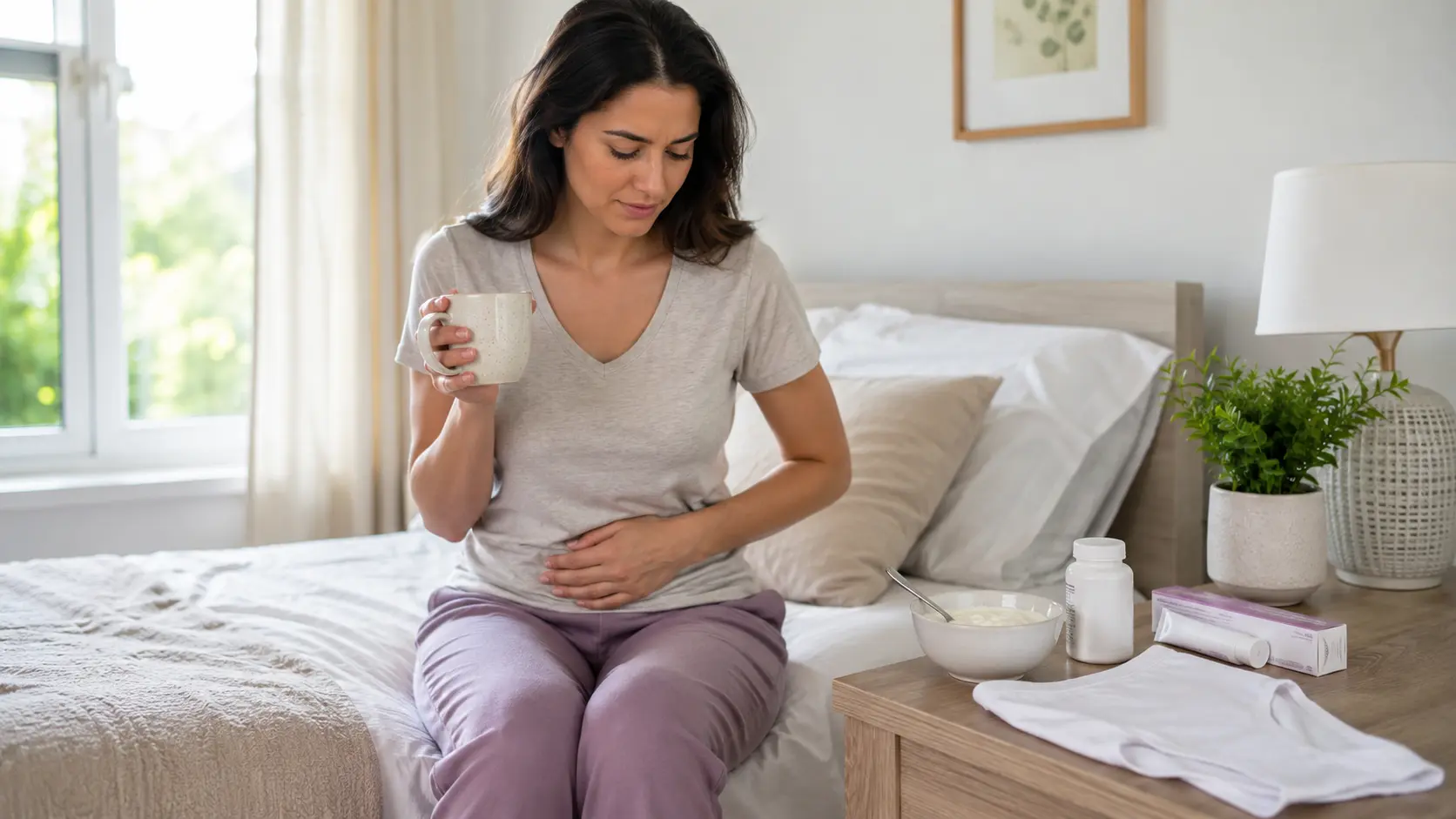
The itching, burning, and irritation caused by a vaginal yeast infection can make you want relief immediately.
It is understandable that many people search for a natural treatment for yeast infection before considering medication.
Social media, wellness blogs, and online forums often recommend remedies such as yogurt, garlic, coconut oil, apple cider vinegar, and essential oils.
Some of these suggestions sound harmless because they involve familiar household ingredients. However, natural does not automatically mean safe, effective, or appropriate for sensitive vaginal tissue.
The most important fact to understand is this: supportive home care may reduce discomfort, but there is no well-established natural remedy that reliably eliminates an active vaginal yeast infection. Proven treatment generally involves an antifungal medication.
It is also easy to mistake another vaginal condition for a yeast infection.
Bacterial vaginosis, sexually transmitted infections, allergic reactions, and vulvar skin disorders can produce similar symptoms. Treating the wrong condition may prolong discomfort and delay appropriate medical care.
This article focuses on vaginal yeast infections, also called vulvovaginal candidiasis. It explains which natural approaches may provide comfort, which popular remedies should be avoided, and when professional care is necessary.
Medical note: This article is for general educational purposes and is not a substitute for diagnosis or treatment from a qualified healthcare professional.
What Is a Vaginal Yeast Infection?
A vaginal yeast infection develops when yeast from the genus Candida grows excessively in or around the vagina. Small amounts of Candida may normally be present without causing any problems. Symptoms begin when changes in the vaginal environment allow the yeast to multiply.
The condition may also be called vaginal candidiasis, candidal vaginitis, or vulvovaginal candidiasis.
A vaginal yeast infection is different from oral thrush, candidiasis in skin folds, or invasive candidiasis. Those conditions affect different areas of the body and may require different forms of treatment.
Common symptoms of a vaginal yeast infection
Symptoms can range from mild to severe and may include:
- Intense vaginal or vulvar itching
- Burning, especially during urination or sexual activity
- Redness or swelling around the vulva
- Vaginal soreness
- Thick, white discharge that may resemble cottage cheese
- Discharge that usually has little or no noticeable odor
- Small cracks, irritation, or tenderness around the vulva
These symptoms are not unique to yeast infections. The CDC notes that common signs such as itching, soreness, pain during sex, external burning with urination, and abnormal discharge are not specific enough to confirm vulvovaginal candidiasis without considering other possible causes.
Can a Yeast Infection Go Away Naturally?
A very mild episode may occasionally improve without treatment. However, waiting for symptoms to disappear is not considered a dependable treatment plan.
An untreated infection may continue to cause itching, inflammation, pain, and skin irritation. Scratching irritated tissue may also create small breaks in the skin, making the area even more uncomfortable.
The greater concern is misdiagnosis. Many people assume that vaginal itching automatically means yeast. In reality, similar symptoms may come from:
- Bacterial vaginosis
- Trichomoniasis
- Genital herpes
- Contact dermatitis
- Allergic reactions
- Hormonal changes
- Vulvar skin disorders
- Other bacterial or sexually transmitted infections
Using an over-the-counter yeast treatment or a home remedy when yeast is not the cause may delay the correct diagnosis.
Natural care is therefore best viewed as supportive care.
It may make the area feel less irritated while you seek an accurate diagnosis or use an appropriate antifungal treatment, but it should not be treated as a guaranteed cure.
Natural Ways to Relieve Yeast Infection Discomfort
The following strategies do not kill Candida or replace antifungal medication.
They may, however, reduce moisture, friction, and irritation while the area heals.
1. Keep the vulvar area clean and dry
Wash the external genital area gently with lukewarm water. The vulva is the external tissue surrounding the vaginal opening; it is not necessary to clean inside the vagina.
Avoid scrubbing. After bathing, pat the area dry with a clean, soft towel rather than rubbing it.
Change out of wet swimsuits, damp underwear, and sweaty exercise clothing as soon as reasonably possible. A warm, moist environment may increase discomfort and encourage yeast growth.
Avoid repeated washing throughout the day, as excessive cleaning can make already irritated skin feel worse.
2. Wear breathable underwear and loose clothing
Choose underwear with a cotton crotch and avoid tight clothing while symptoms are active. Cotton allows more airflow and generally traps less moisture than many synthetic materials.
The CDC includes cotton underwear among the measures that may help prevent vaginal candidiasis. The US Office on Women’s Health also advises avoiding tight underwear and clothing that increase warmth and moisture around the genital area.
Loose sleepwear may also feel more comfortable when the vulvar area is irritated.
3. Try a cool compress for external itching
A clean, cool compress may temporarily reduce external itching, swelling, and burning.
Wrap the compress in a soft cloth and place it against the external vulvar area for several minutes. Do not apply ice directly to the skin, and do not insert the compress inside the vagina.
This approach provides temporary comfort only. It does not treat the underlying infection.
4. Avoid scented or irritating products
Fragranced products may worsen inflammation and make it difficult to determine whether symptoms come from infection or chemical irritation.
During an active episode, avoid:
- Scented soaps
- Bubble baths
- Feminine sprays
- Vaginal deodorants
- Fragranced wipes
- Scented pads or tampons
- Harsh laundry detergents
- Intimate washes
- Douches
Douching is particularly problematic because it changes the vaginal environment and removes some of the normal bacteria that help maintain its natural balance.
The Office on Women’s Health advises against douching and scented feminine products for this reason.
The vagina cleans itself naturally. Only the external vulvar area needs gentle washing.
5. Pause activities that increase friction
Penetrative sex may increase burning, swelling, and soreness during an active infection.
Consider waiting until symptoms have resolved and treatment is complete.
Some vaginal antifungal creams and suppositories contain oils that can weaken latex condoms or diaphragms. Read the product label carefully and use an alternative method of protection when instructed.
Avoid scratching whenever possible. A cool compress and loose clothing may help reduce the urge to scratch.
6. Support healthy blood sugar management
People with poorly controlled diabetes may experience yeast infections more frequently or have more difficulty clearing them.
This does not mean that avoiding dessert for a few days will cure an active infection.
Claims that yeast infections can be “starved” through an extremely low-sugar diet are not supported as a substitute for antifungal treatment.
However, long-term blood glucose management is an important part of reducing infection risk for people with diabetes. Recurrent infections may be a reason to discuss blood sugar control with a healthcare professional.
7. Review recent antibiotic use
Antibiotics can reduce bacteria that normally help keep vaginal yeast under control.
This is one reason some people develop a yeast infection during or shortly after antibiotic treatment.
Do not stop a prescribed antibiotic without speaking to the prescriber. Take antibiotics and corticosteroids exactly as directed. The CDC identifies appropriate use of these medications as part of candidiasis prevention.
People who repeatedly develop symptoms after taking antibiotics should discuss the pattern with their healthcare provider.
Popular Natural Yeast Infection Remedies
Several widely shared home remedies have laboratory findings, personal testimonials, or traditional use behind them.
However, laboratory activity and personal experience do not prove that a substance will safely and consistently treat a vaginal infection.
Sensitive vulvar and vaginal tissue can react strongly to products that seem harmless on other parts of the body.
Yogurt
Yogurt is frequently recommended because some varieties contain live bacterial cultures. The theory is that these bacteria might help restore a healthy vaginal microbial balance.
Eating plain yogurt as part of a balanced diet is generally different from inserting it into the vagina. Research has not established intravaginal yogurt as a dependable replacement for antifungal medication.
Commercial yogurt may also contain sugar, flavoring, preservatives, or other ingredients that were not designed for vaginal use. Introducing food into the vagina can cause irritation and make symptoms harder to assess.
Evidence check: Yogurt may be part of a normal diet, but it should not be considered a proven cure for an active vaginal yeast infection.
Probiotics
Probiotic supplements are promoted for digestive and vaginal health.
Certain strains of beneficial bacteria may influence the vaginal microbiome, but probiotic products vary widely in their organisms, doses, quality, and manufacturing standards.
Current evidence does not support using probiotics alone as a reliable treatment for an active yeast infection. The CDC states that substantial evidence is not available to support probiotics as a treatment for vulvovaginal candidiasis.
A probiotic may have a role in broader wellness for some people, but it should not delay proven therapy or medical evaluation.
Evidence check: Probiotics are not an established substitute for antifungal medication.
Coconut oil
Coconut oil has demonstrated antifungal activity in some laboratory settings
However, a substance acting against yeast in a laboratory does not establish that applying it to vaginal tissue is safe or clinically effective.
Coconut oil may cause irritation, trap moisture, or alter the local environment. Oil-based products can also weaken latex condoms and diaphragms.
Evidence check: Coconut oil is not a proven vaginal yeast infection treatment and should not be inserted into the vagina.
Tea tree oil and other essential oils
Tea tree oil is often promoted as a natural antifungal. Unfortunately, concentrated essential oils can burn or severely irritate vulvar and vaginal tissue.
Home dilution is difficult to control. Even a diluted product may trigger allergic contact dermatitis or worsen inflammation.
Products sold as essential-oil suppositories are not automatically proven safe simply because they are commercially packaged.
Evidence check: Do not apply or insert tea tree oil or other essential oils into the vagina unless a qualified healthcare professional has specifically recommended an appropriately formulated medical product.
Garlic
Garlic is another popular suggestion because some of its compounds show antimicrobial activity in laboratory studies.
Inserting raw garlic or a garlic preparation into the vagina is not a safe or evidence-based treatment. Raw garlic may irritate tissue and cause significant burning or contact injury. A clove may also be difficult to remove or leave fragments behind.
Eating garlic as food is not equivalent to treating a vaginal infection.
Evidence check: Do not insert garlic into the vagina.
Apple cider vinegar
Apple cider vinegar is sometimes recommended in baths, rinses, or homemade douches. Vinegar is acidic, but that does not make it an appropriate vaginal medicine.
Applying vinegar to inflamed tissue may cause stinging, burning, or additional irritation. Douching may also disturb protective vaginal bacteria and increase the risk of other vaginal problems.
Evidence check: Apple cider vinegar has not been proven to cure a vaginal yeast infection. Avoid inserting it or using it as a douche.
Baking soda
Baking soda appears in online discussions about vaginal itching and pH balance. However, vaginal conditions do not all respond to the same change in pH.
Baking soda is not a standard treatment for a typical Candida infection. Using it without knowing the cause of symptoms may irritate the tissue or delay a correct diagnosis.
Evidence check: Do not use baking soda as a self-directed vaginal treatment.
Boric acid
Boric acid requires a different level of caution than ordinary household remedies.
Clinicians may recommend specially manufactured vaginal boric acid capsules in selected cases, particularly when certain non-albicans Candida species are involved or when standard treatments have not worked.
The CDC includes a vaginal boric acid regimen as an option for some recurrent non-albicans infections.
However, boric acid is toxic if swallowed. It should never be taken orally, placed on broken skin, or left where children or pets could reach it. It should also not be treated as a general-purpose remedy for anyone with vaginal itching.
Pregnant people should not self-treat with boric acid. Anyone considering it should first obtain a confirmed diagnosis and specific instructions from a healthcare professional.
Evidence check: Boric acid is a specialized treatment option, not a casual home remedy.
What Actually Treats a Vaginal Yeast Infection?
A confirmed vaginal yeast infection is generally treated with antifungal medication.
For an uncomplicated infection, options may include vaginal creams, ointments, tablets, or suppositories containing an azole antifungal. Several are sold over the counter in the United States. Treatment courses vary from single-dose products to regimens lasting several days.
According to the CDC, short-course topical treatments effectively treat uncomplicated vulvovaginal candidiasis, and azole therapy produces symptom relief and negative cultures in approximately 80% to 90% of people who complete treatment.
Prescription oral fluconazole may be appropriate for some nonpregnant patients. However, oral medication is not suitable for everyone and may interact with other medicines. A healthcare professional or pharmacist should review potential contraindications and interactions.
The CDC recommends testing before treatment when possible, particularly because symptoms can have several causes. People whose symptoms continue, worsen, or return after treatment may need a different regimen or additional testing.
Do not assume that a stronger or longer treatment is always better. Severe, recurrent, or complicated infections may involve a different Candida species, antifungal resistance, or another diagnosis altogether.
Treatment during pregnancy
Pregnant people should speak with their obstetric healthcare professional before starting treatment, even when an over-the-counter product is available.
Topical vaginal antifungal creams or suppositories are generally preferred during pregnancy. Mayo Clinic advises confirming that symptoms are truly caused by yeast before treatment and notes that vaginal antifungal products can be used during pregnancy.
Oral fluconazole should not be taken during pregnancy unless a qualified healthcare professional has determined that it is appropriate for a specific medical reason. Do not rely on advice intended for nonpregnant patients.
How to Know Whether It Is Really a Yeast Infection
Symptoms alone cannot always distinguish yeast from other common vaginal conditions.
Yeast infection versus bacterial vaginosis
A yeast infection commonly causes intense itching, redness, burning, and thick white discharge with little noticeable odor.
Bacterial vaginosis, or BV, is more likely to cause thin white or gray discharge and a noticeable fishy odor. Itching may occur, but it is often less prominent than with a yeast infection.
BV is caused by an imbalance of vaginal bacteria, not by yeast. Antifungal creams will not treat it.
Yeast infection versus a sexually transmitted infection
Trichomoniasis, genital herpes, chlamydia, gonorrhea, and other sexually transmitted infections may produce burning, irritation, discharge, pain, or sores.
Testing is particularly important when symptoms follow a new sexual exposure or include:
- Green, yellow, or frothy discharge
- Strong or unusual odor
- Genital sores or blisters
- Pelvic pain
- Bleeding between periods
- Pain during sex
- Painful urination that feels internal rather than external
A yeast infection is not generally classified as a sexually transmitted infection, although sexual activity may contribute to irritation or changes in symptoms.
Yeast infection versus contact irritation
New products are a common but overlooked cause of vulvar discomfort. Irritation may follow the use of:
- Scented soap
- Laundry detergent
- Fabric softener
- Pads or liners
- Lubricants
- Condoms
- Spermicides
- Hair-removal products
- Intimate wipes
- Tight clothing
Contact irritation may cause burning, redness, dryness, or itching without the typical discharge associated with a yeast infection.
Persistent external symptoms may also be caused by eczema, psoriasis, lichen sclerosus, or another vulvar skin condition.
When Should You See a Doctor?
Medical evaluation is especially important when:
- This is your first suspected yeast infection.
- You are uncertain whether yeast is causing the symptoms.
- Symptoms are severe or rapidly worsening.
- You have fever, chills, pelvic pain, sores, bleeding, or foul-smelling discharge.
- You are pregnant or may be pregnant.
- Symptoms do not improve after completing an appropriate over-the-counter treatment.
- Symptoms return within two months of treatment.
- You experience repeated infections.
- You have diabetes that is not well controlled.
- You have HIV, take immunosuppressive medication, or have another condition that affects immunity.
- Symptoms began after a new sexual exposure.
- The patient is a child or adolescent.
- A treatment causes increased burning, swelling, rash, or pain.
Seek urgent medical attention for severe pelvic or abdominal pain, high fever, fainting, significant bleeding, confusion, or signs of a serious allergic reaction.
Why Do Yeast Infections Keep Coming Back?
Repeated symptoms do not always mean repeated yeast infections.
Possible explanations include:
- The original condition was not caused by yeast.
- The infection was not completely treated.
- The treatment did not target the specific Candida species involved.
- Symptoms are caused by bacterial vaginosis, an STI, or a skin condition.
- Recent antibiotics disrupted the vaginal microbial balance.
- Blood sugar is poorly controlled.
- Pregnancy or hormonal changes increased susceptibility.
- An immune-system condition is present.
- The yeast is less sensitive to commonly used antifungal medication.
- Fragranced or irritating products are repeatedly causing inflammation.
The CDC defines recurrent vulvovaginal candidiasis as three or more symptomatic episodes within a year. Recurrent cases may require testing to identify the organism and a longer treatment or maintenance plan.
Repeatedly buying the same over-the-counter product without confirming the diagnosis may prolong the problem. A clinician may collect a vaginal sample to identify yeast, bacteria, or another cause.
How to Reduce the Risk of Future Yeast Infections
No prevention method can guarantee that a yeast infection will never return.
However, practical habits may help reduce moisture, irritation, and disruption of the vaginal environment.
Consider the following measures:
- Wear breathable underwear with a cotton crotch.
- Avoid underwear and clothing that fit excessively tightly.
- Change out of wet swimsuits and sweaty clothing promptly.
- Avoid douching.
- Limit scented products around the vulva.
- Wash only the external area with water or a gentle, fragrance-free cleanser.
- Take antibiotics only when prescribed and follow the directions.
- Manage diabetes with professional medical support.
- Complete the recommended antifungal treatment.
- Do not routinely insert foods, oils, herbs, cleansers, or supplements into the vagina.
- Seek testing instead of repeatedly self-treating recurrent symptoms.
The goal is not to make the vagina sterile. Healthy vaginal tissue naturally contains microorganisms. Prevention focuses on avoiding unnecessary disruption, not eliminating every bacterium or yeast cell.
The Bottom Line
Natural comfort measures can play a supportive role during a vaginal yeast infection.
Keeping the external area dry, wearing breathable clothing, using a cool compress, and avoiding fragrances may reduce irritation while the infection is properly evaluated and treated.
However, popular remedies such as garlic, apple cider vinegar, essential oils, coconut oil, baking soda, and vaginally inserted yogurt have not been shown to reliably cure an active infection. Several can make sensitive tissue more inflamed.
Probiotics may be useful in certain areas of health, but they are not a proven replacement for antifungal treatment.
Boric acid may be prescribed for selected recurrent or nonstandard infections, but it requires professional guidance and can be dangerous when used incorrectly.
The safest approach is simple:
Use gentle external care, avoid untested substances, confirm the cause of your symptoms, and choose evidence-based treatment when a yeast infection is present.
First-time, severe, persistent, recurrent, or pregnancy-related symptoms should be assessed by a qualified healthcare professional.