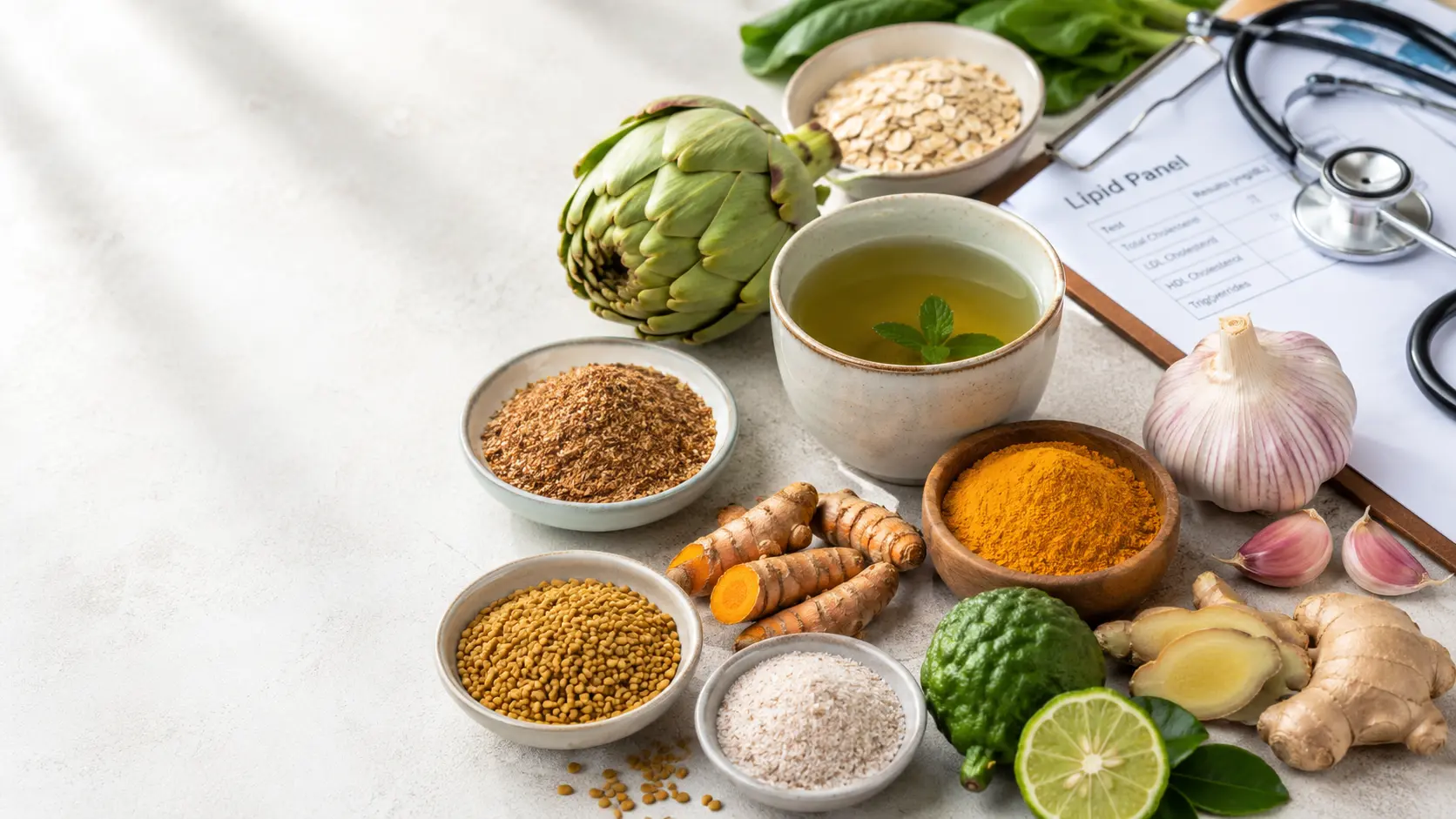
Your spice cabinet may contain ingredients associated with better heart health—but that does not mean every “natural cholesterol remedy” works as advertised.
Garlic, turmeric, green tea, flaxseed, and other plant-based products are frequently promoted as alternatives to cholesterol medication.
Some have shown modest benefits in research, while others remain unproven or carry risks that are easy to overlook.
The most important distinction is between adding herbs to an overall heart-healthy lifestyle and using concentrated supplements as medical treatment.
The American Heart Association does not recommend dietary supplements as a primary method of cholesterol management.
It advises people who use supplements to discuss them with their health care team because some products can interfere with prescription medicines.
Here is what the current evidence says about 10 popular herbs and plant-derived products for high cholesterol.
Medical disclaimer: This article is for general education and is not a substitute for medical diagnosis or treatment. Do not stop or change a prescribed cholesterol medication without consulting a qualified health care professional.
What Does High Cholesterol Mean?
Cholesterol is a waxy, fat-like substance that the body uses to build cells, produce hormones, and perform other essential functions.
The body makes the cholesterol it needs, while additional cholesterol can come from animal-based foods.
Cholesterol becomes a health concern when certain blood lipid levels remain outside a healthy range.
Too much cholesterol in the blood—particularly low-density lipoprotein cholesterol—can contribute to plaque buildup in the arteries and increase the risk of heart disease and stroke.
A standard lipid panel commonly measures:
- LDL cholesterol: Often called “bad” cholesterol because elevated levels can contribute to plaque buildup.
- HDL cholesterol: Often called “good” cholesterol because it helps transport cholesterol back to the liver.
- Triglycerides: A type of fat in the blood that can also influence cardiovascular risk.
- Total cholesterol: A combined measurement that includes several cholesterol components.
High cholesterol usually does not produce obvious symptoms. A blood test is therefore the only reliable way to know your numbers.
Those numbers also need context. A clinician may consider your age, blood pressure, smoking status, diabetes, family history, and previous cardiovascular events before recommending treatment.
Can Herbs Really Lower Cholesterol?
Some plant-based products may influence cholesterol absorption, bile-acid metabolism, inflammation, or cholesterol production in the liver.
Others help mainly because they provide soluble fiber or replace less healthy foods in the diet.
However, three important limitations apply.
First, a statistically measurable change may still be relatively small. A supplement that lowers LDL by a few points is not necessarily comparable to a medication prescribed for someone at high cardiovascular risk.
Second, study results often apply to a specific extract, formulation, or dosage. They may not apply to a tea, spice, capsule, tincture, or powder sold under the same plant name.
Third, lowering a laboratory value is not automatically the same as preventing heart attacks, strokes, or cardiovascular death. Long-term clinical outcomes matter more than a short-term change in a cholesterol test.
For these reasons, herbs are best viewed as possible additions to a medically appropriate plan—not replacements for prescribed treatment.
The National Center for Complementary and Integrative Health, or NCCIH, emphasizes that the effects of most cholesterol supplements are modest compared with cholesterol-lowering medicines.
1. Garlic
Garlic is one of the most widely used natural products for cardiovascular health. It contains sulfur-based compounds, including compounds formed when fresh garlic is chopped or crushed.
Researchers have studied garlic supplements for their possible effects on LDL cholesterol, total cholesterol, blood pressure, and other cardiovascular risk factors.
What the evidence shows
Garlic supplements may produce a small reduction in total cholesterol and LDL cholesterol in some people with high cholesterol.
However, the results are inconsistent, and the expected effect is much smaller than the effect of standard cholesterol medication.
A randomized study reported by the American Heart Association also found that a tested garlic supplement did not lower LDL more effectively than placebo over 28 days, while a low-dose statin produced a substantially greater reduction.
That study does not prove that every garlic product is ineffective, but it illustrates why garlic should not be treated as equivalent to medication.
How to use garlic
Garlic can be added to:
- Roasted vegetables
- Beans and lentils
- Soups and stews
- Tomato-based sauces
- Fish or lean poultry
- Homemade salad dressings
Using garlic to flavor food may also make it easier to reduce excess salt, butter, or heavily processed sauces.
Safety considerations
Garlic can cause bad breath, body odor, heartburn, nausea, or digestive discomfort.
Concentrated garlic supplements may also increase bleeding risk, particularly when combined with anticoagulant or antiplatelet medication.
People taking blood thinners, preparing for surgery, or using multiple cardiovascular medications should consult a clinician or pharmacist before taking garlic supplements.
2. Flaxseed
Flaxseed is rich in fiber, lignans, and alpha-linolenic acid, a plant-based omega-3 fatty acid.
It is one of the more practical food-based options for people trying to improve the overall quality of their diet.
What the evidence shows
Research suggests that whole flaxseed and flaxseed lignans may help lower cholesterol in some people. Flaxseed oil has not shown the same benefit because it does not contain the fiber found in the seed.
Ground flaxseed is generally more useful than whole flaxseed because whole seeds may pass through the digestive tract without being fully broken down.
How to use flaxseed
Ground flaxseed can be:
- Stirred into oatmeal
- Mixed into plain yogurt
- Blended into smoothies
- Added to whole-grain pancake batter
- Sprinkled over cereal
- Incorporated into homemade bread or muffins
Because flaxseed contains fiber, introduce it gradually and drink adequate fluids.
Safety considerations
Flaxseed can cause bloating, fullness, gas, or changes in bowel habits, especially when intake increases suddenly. Fiber-rich products may also alter how quickly certain oral medicines are absorbed.
Anyone taking prescription medication should ask a clinician or pharmacist whether flaxseed should be separated from medication by several hours.
3. Green Tea
Green tea contains plant compounds called catechins, including epigallocatechin gallate, commonly abbreviated as EGCG.
These compounds have attracted interest for their possible effects on cholesterol metabolism and cardiovascular health.
What the evidence shows
Limited evidence suggests that green tea may produce a modest cholesterol-lowering effect.
However, the evidence is not strong enough to position green tea as a substitute for established cholesterol treatment.
Brewed tea and concentrated green tea extract should not be treated as interchangeable. A cup of tea contains a different amount and combination of compounds than a high-dose extract.
How to use green tea
Unsweetened brewed green tea can replace:
- Sugar-sweetened soda
- Sweet tea
- High-calorie coffee drinks
- Energy drinks
That substitution may be more beneficial than expecting green tea itself to produce a major reduction in LDL.
Safety considerations
Most green tea contains caffeine unless it is specifically labeled decaffeinated. Caffeine may worsen insomnia, anxiety, heart palpitations, or acid reflux in sensitive individuals.
Concentrated green tea supplements can also interact with medicines.
NCCIH notes that concentrated green tea products may reduce blood levels of medications such as atorvastatin and the beta-blocker nadolol.
Some concentrated extracts have also been associated with liver problems.
Seek medical attention if a supplement is followed by jaundice, dark urine, unusual fatigue, or persistent abdominal pain.
4. Turmeric
Turmeric is a yellow-orange spice widely used in cooking. Its best-known active component is curcumin, although turmeric contains numerous other compounds.
Curcumin has been studied for its antioxidant and anti-inflammatory activity, leading to claims that it may improve cholesterol and general cardiovascular health.
What the evidence shows
Research has examined turmeric and curcumin for high cholesterol and other lipid disorders, but findings are not consistent enough to establish turmeric supplements as a standard cholesterol treatment.
The amount of turmeric used in food is also much lower than the amount contained in many supplements.
Products may include additional ingredients designed to increase absorption, which can change both their effects and their risks.
How to use turmeric
Turmeric can be added to:
- Lentil dishes
- Vegetable soups
- Brown rice
- Roasted cauliflower
- Curries
- Scrambled eggs
- Bean-based meals
Using turmeric in cooking is different from taking a high-dose curcumin extract.
Safety considerations
Oral turmeric products can cause nausea, vomiting, acid reflux, stomach upset, diarrhea, or constipation. Concentrated products may interact with medication, and emerging safety concerns have linked some turmeric supplements to liver injury in susceptible individuals.
People with liver disease, gallbladder problems, bleeding disorders, or complex medication regimens should obtain medical advice before taking concentrated turmeric or curcumin.
5. Ginger
Ginger is commonly used as both a culinary spice and a traditional remedy.
Its bioactive compounds have been studied for possible effects on inflammation, blood sugar, blood pressure, and lipid metabolism.
What the evidence shows
Some small studies have reported favorable changes in cholesterol or triglycerides, but the evidence is not strong or consistent enough to recommend ginger supplements as a proven cholesterol-lowering treatment.
Many studies also use concentrated doses that are far higher than the amount normally consumed in food.
A positive finding from a supplement trial cannot automatically be applied to ginger tea or culinary ginger.
How to use ginger
Fresh or powdered ginger can be added to:
- Vegetable stir-fries
- Soups
- Oatmeal
- Smoothies
- Unsweetened tea
- Homemade marinades
Ginger may be useful as part of a flavorful, minimally processed diet, even when its direct cholesterol effect is uncertain.
Safety considerations
Oral ginger has been used safely in many studies, but it can cause heartburn, abdominal discomfort, or mouth irritation.
Concerns have also been raised about possible interactions with anticoagulants, although the clinical evidence is not definitive.
People who take blood-thinning medication should not assume that concentrated ginger supplements are harmless.
6. Fenugreek
Fenugreek is an herb whose seeds are used in cooking and traditional health practices.
The seeds contain soluble fiber and several plant compounds that have been investigated for their metabolic effects.
What the evidence shows
Fenugreek has been studied more extensively for blood sugar than for cholesterol.
Although some studies have reported changes in lipid levels, NCCIH concludes that evidence for health conditions other than a limited number of studied uses remains too limited for firm conclusions.
Fenugreek should therefore be described as an experimental or insufficiently proven cholesterol option—not an established remedy.
How to use fenugreek
Small culinary amounts may be used in:
- Curries
- Lentil dishes
- Vegetable dishes
- Spice blends
- Homemade flatbreads
Culinary use should not be confused with concentrated extracts or large medicinal doses.
Safety considerations
Fenugreek may cause diarrhea, nausea, and other digestive symptoms. Large doses may lower blood sugar excessively and can cause allergic reactions.
Amounts greater than those normally found in food are not considered safe during pregnancy and have been linked to an increased risk of birth defects.
People using insulin, diabetes medication, anticoagulants, or other prescription drugs should consult a health professional before taking fenugreek supplements.
7. Artichoke Leaf Extract
Artichokes are nutritious vegetables that provide fiber and other plant compounds.
Artichoke leaf extract, however, is a concentrated supplement produced from the leaves rather than the edible portion commonly served as food.
The extract is promoted for supporting bile production, digestion, liver function, and cholesterol management.
What the evidence shows
Artichoke extract has been studied for high cholesterol, but current evidence has not established it as an effective cholesterol-lowering treatment.
NCCIH includes artichoke extract among products that have been investigated but have not been found effective for cholesterol management.
Eating artichokes as a fiber-rich vegetable may still support a heart-healthy eating pattern. That benefit should not be used to validate claims about concentrated leaf supplements.
Safety considerations
Artichoke leaf products can cause digestive symptoms and may not be appropriate for people with bile duct obstruction, gallstones, or certain gallbladder conditions.
People who are allergic to plants in the daisy family may also be more likely to react to artichoke products.
8. Psyllium Husk
Psyllium is not technically a culinary herb. It is a fiber derived from the husks of seeds from plants in the Plantago genus.
However, it frequently appears in searches for natural cholesterol remedies because it has a clearer mechanism than many herbal supplements.
How psyllium may help
Psyllium contains soluble fiber. When mixed with water, soluble fiber forms a gel in the digestive tract.
This can influence digestion and help reduce the absorption or reabsorption of cholesterol-related compounds.
Soluble fiber is associated with lower cholesterol and may help reduce heart disease risk. Psyllium may also be prescribed or recommended for people with high cholesterol.
How to use psyllium safely
Follow the product directions or instructions provided by a clinician.
Psyllium powder should be mixed thoroughly with an adequate amount of water and consumed promptly before it becomes too thick.
Begin with a smaller amount if you are not accustomed to a high-fiber diet.
Safety considerations
Taking psyllium without enough fluid can create a choking or blockage risk. It can also cause temporary gas, bloating, or changes in bowel movements.
Because psyllium may affect medication absorption, it may need to be taken separately from prescription drugs. A pharmacist can recommend appropriate timing.
People with swallowing difficulties, bowel obstruction, unexplained abdominal pain, or significant gastrointestinal disease should not begin psyllium without medical guidance.
9. Bergamot
Bergamot is a citrus fruit best known for giving Earl Grey tea its distinctive aroma. Concentrated bergamot polyphenol supplements are marketed for cholesterol and metabolic health.
What the evidence shows
Several small studies have reported potentially favorable cholesterol changes, but the evidence remains limited.
Studies have used different extracts, dosages, durations, and participant populations, making the results difficult to compare.
NCCIH characterizes the evidence for bergamot as limited and insufficient to determine whether it provides a reliable cholesterol-lowering benefit.
There is also little evidence showing that bergamot supplements prevent heart attacks, strokes, or other long-term cardiovascular outcomes.
Safety considerations
Bergamot juice, tea flavoring, dietary supplements, and essential oil are different products.
Bergamot essential oil should not be swallowed unless specifically formulated and medically supervised for oral use.
Supplement quality and active-compound concentrations may vary. People taking statins or other cardiovascular medication should ask a pharmacist about possible interactions before using bergamot extracts.
10. Red Yeast Rice
Red yeast rice is one of the most controversial natural products marketed for cholesterol.
It is produced by fermenting rice with a type of yeast. Some red yeast rice products contain monacolin K, a substance chemically identical to lovastatin, a prescription statin.
Why red yeast rice can lower cholesterol
Products containing substantial amounts of monacolin K may reduce total cholesterol and LDL because they act through the same mechanism as lovastatin.
That does not make red yeast rice a gentler or safer alternative. It means certain products can expose the user to an unstandardized statin-like compound.
The US regulatory concern
The FDA has determined that red yeast rice products containing more than trace amounts of monacolin K are unapproved new drugs and cannot legally be marketed in the United States as dietary supplements.
Products containing little or no monacolin K may have little or no cholesterol-lowering effect. Consumers generally cannot determine the active amount simply by looking at the front of the bottle.
Safety considerations
Red yeast rice containing monacolin K can produce the same types of adverse effects and drug interactions as lovastatin, including muscle problems and liver injury.
Some products may also be contaminated with citrinin, a toxin that can damage the kidneys.
Red yeast rice should never be combined casually with a statin or used as a self-directed replacement for prescribed treatment.
Popular Natural Remedies That Are Often Overhyped
The internet contains countless claims about cinnamon, apple cider vinegar, cilantro, rosemary, milk thistle, dandelion tea, and “cholesterol detox” blends.
These products may contain nutrients or plant compounds worth studying. That is not the same as having evidence that they produce a clinically meaningful reduction in LDL cholesterol.
Cinnamon and turmeric supplements, for example, did not outperform placebo for lowering LDL in the short randomized study reported by the American Heart Association.
Several warning signs can help identify exaggerated claims:
- The product promises to “clean” or “detox” the arteries.
- It claims to replace statins without side effects.
- Testimonials are presented instead of clinical evidence.
- The label uses phrases such as “proprietary blend” without listing individual amounts.
- The advertisement guarantees rapid cholesterol reduction.
- The seller discourages medical testing or professional treatment.
- One laboratory result is used to claim prevention of heart attacks and strokes.
Traditional use, animal research, cell studies, and small uncontrolled human studies may generate useful hypotheses. They do not establish that a product is an effective cardiovascular treatment.
Which Natural Options Have the Strongest Evidence?
Among the products discussed, soluble-fiber sources such as psyllium have a more established physiological basis for supporting cholesterol management.
Ground flaxseed may also be a reasonable food-based addition because it provides fiber, lignans, and beneficial fats. Whole flaxseed and flaxseed lignans appear more promising than flaxseed oil for cholesterol reduction.
Garlic and green tea may produce small effects in some individuals, but neither should be expected to match prescription medication.
Evidence for turmeric, ginger, fenugreek, bergamot, and artichoke leaf extract is limited, mixed, or insufficient for routine cholesterol treatment.
Red yeast rice may lower LDL when it contains substantial monacolin K, but its statin-like effects, variable potency, contamination risk, and regulatory status make it unsuitable as a casual over-the-counter solution.
A practical evidence-based ranking would be:
- Soluble fiber from psyllium or food
- Ground flaxseed as part of a healthy diet
- Garlic or unsweetened green tea, with modest expectations
- Other concentrated herbal extracts, where evidence remains limited
- Red yeast rice only under informed medical supervision—not as a do-it-yourself statin replacement
How to Use Herbs and Supplements Safely
The safest approach begins with a complete list of everything you take, including:
- Prescription medication
- Over-the-counter drugs
- Vitamins
- Herbal supplements
- Powders
- Teas
- Gummies
- Energy products
Bring that list to a physician, nurse practitioner, or pharmacist. Include the brand, dose, and how frequently each product is used.
Medication-supplement interactions can be clinically serious. Herbal products may change how a drug is absorbed, broken down, or removed from the body. Some may also increase bleeding, lower blood sugar, affect blood pressure, or add to the effects of another treatment.
Additional safety practices include:
- Do not stop a statin independently.
- Prefer food-based use when appropriate.
- Avoid starting several new supplements at the same time.
- Choose products that disclose exact ingredient amounts.
- Look for credible independent quality testing.
- Avoid products that guarantee treatment or cure.
- Record any new symptoms after starting a supplement.
- Repeat cholesterol testing according to your clinician’s plan.
- Tell your surgical team about supplements before a procedure.
- Stop the product and seek advice if serious symptoms develop.
Unlike prescription medicines, dietary supplements are not reviewed and approved by the FDA for effectiveness before reaching the market. Product quality, purity, and concentration may vary. NCCIH also warns about contamination, undisclosed ingredients, and potentially harmful supplement-drug interactions.
Who Should Be Especially Cautious?
Medical guidance is particularly important for people who:
- Take statins or other cholesterol medication
- Use warfarin or another blood thinner
- Take antiplatelet medication
- Use blood-pressure or diabetes medicine
- Have liver or kidney disease
- Have gallbladder or bile duct disease
- Are pregnant, trying to become pregnant, or breastfeeding
- Are preparing for surgery
- Have previously experienced a heart attack or stroke
- Have multiple cardiovascular risk factors
- Have very high LDL cholesterol
- May have familial hypercholesterolemia
People with established cardiovascular disease or inherited high cholesterol may need substantial LDL reduction. Relying only on herbs in these situations could delay effective treatment.
Lifestyle Changes That Matter More Than Any Single Herb
No individual herb can compensate for an overall eating pattern high in saturated fat, tobacco use, physical inactivity, or untreated medical risk factors.
A stronger cholesterol-management plan focuses on several behaviors at the same time.
Replace saturated fats with unsaturated fats
Reduce frequent intake of butter, fatty processed meats, and high-fat dairy products. Choose more unsaturated-fat sources such as:
- Olive oil
- Nuts
- Seeds
- Avocado
- Fish
- Nut butters
Replacing saturated fat matters more than simply adding a supplement to an unchanged diet.
Eat more soluble fiber
Soluble fiber is found in:
- Oats
- Barley
- Beans
- Lentils
- Peas
- Apples
- Citrus fruit
- Ground flaxseed
- Psyllium
Soluble fiber attracts water and forms a gel during digestion. Research supports its role in lowering cholesterol and contributing to cardiovascular health.
Build meals around minimally processed foods
A heart-supportive pattern generally emphasizes:
- Vegetables
- Fruits
- Whole grains
- Legumes
- Nuts
- Seeds
- Fish
- Lean or plant-based protein sources
The American Heart Association recommends meals centered on vegetables, fruits, whole grains, beans, and nuts while replacing saturated fats with healthier fats.
Exercise consistently
Regular physical activity can support weight management, cardiovascular fitness, blood pressure, blood sugar, triglycerides, and HDL cholesterol.
The best program is one that is medically appropriate and sustainable. People with significant health conditions or prolonged inactivity should consult a clinician before beginning vigorous exercise.
Avoid tobacco and nicotine
Smoking lowers HDL cholesterol and substantially increases cardiovascular risk. Quitting tobacco is more important for heart health than adding any single herb or supplement.
Take prescribed medication correctly
When lifestyle changes are not sufficient—or when cardiovascular risk is already high—medication may be necessary.
Statins reduce cholesterol production in the liver and are often the first medication recommended for lowering LDL. Other options include ezetimibe, which reduces intestinal cholesterol absorption, and PCSK9 inhibitors, which help the liver remove more LDL from the blood.
The appropriate treatment depends on the individual’s LDL level, medical history, overall risk, tolerance, and response to previous therapies.
When to Talk to a Doctor
Schedule a medical evaluation when:
- You have never had a cholesterol test.
- Your LDL remains high despite lifestyle changes.
- Your total cholesterol or triglycerides are significantly elevated.
- A close relative developed heart disease at a young age.
- Several family members have very high cholesterol.
- You have diabetes, high blood pressure, or kidney disease.
- You previously had a heart attack, stroke, or artery procedure.
- You are considering replacing medication with a supplement.
- You experience side effects from prescribed cholesterol medicine.
- You are taking multiple herbs, supplements, or medications.
Seek prompt medical attention if a supplement is followed by:
- Severe muscle pain or weakness
- Dark-colored urine
- Yellowing of the skin or eyes
- Persistent upper abdominal pain
- Facial swelling
- Difficulty breathing
- Severe allergic symptoms
- Unusual bruising or bleeding
- Fainting or severe dizziness
A clinician can help determine whether the symptom is related to the supplement, a medication interaction, an underlying condition, or another cause.
The Bottom Line
Some herbs and plant-derived products may support cholesterol management, but their effects are usually modest, inconsistent, or dependent on a particular formulation.
Psyllium and other soluble-fiber sources have one of the strongest practical roles. Ground flaxseed may also be useful as part of a balanced diet. Garlic and green tea may provide small benefits, although they should not be expected to perform like prescription medication.
Evidence for turmeric, ginger, fenugreek, bergamot, and artichoke leaf extract remains limited or mixed. Red yeast rice deserves special caution because products containing monacolin K can act like lovastatin while carrying similar side effects, interactions, quality concerns, and US regulatory restrictions.
The most effective strategy is not to search for a miracle herb. It is to combine a heart-healthy diet, regular physical activity, tobacco avoidance, appropriate medical testing, and treatment based on your individual cardiovascular risk.