Menstrual cramps are one of the most common reasons people search for natural relief before reaching for medication.
If you’ve ever curled up with a heating pad wondering whether there’s anything else that actually works, you’re not alone — cramps affect most people who menstruate at some point, and for some they’re mild and forgettable, while for others they disrupt work, school, or sleep every month.
This guide walks through which home remedies have real support behind them, which are more traditional than proven, and which symptoms mean it’s time to talk to a doctor instead of trying another tea.
What Causes Menstrual Cramps?
Cramps happen because the uterus contracts to shed its lining. Those contractions are triggered by hormone-like compounds called prostaglandins — the higher the prostaglandin level, the stronger the cramping tends to be.
Doctors generally split cramps into two categories:
- Primary dysmenorrhea — cramping with no underlying condition, usually starting a year or two after periods begin.
- Secondary dysmenorrhea — cramping caused by an underlying condition such as endometriosis, adenomyosis, or fibroids, which often shows up later in life and can come with heavier bleeding or pain outside the usual cramping window.
Common symptoms include lower abdominal pain, lower back ache, nausea, fatigue, and sometimes headaches.
Why some people get worse cramps than others isn’t fully settled, but higher prostaglandin levels, family history, and certain underlying conditions are commonly cited factors.
Can Home Remedies Really Help?
Some can meaningfully take the edge off.
None of them cure the underlying cause of cramps, and results vary a lot from person to person — what works well for a friend might do nothing for you.
Consistency also matters: a single cup of tea during a bad cramp probably won’t do much, but habits practiced across your cycle (regular movement, consistent sleep, a heating routine) tend to help more.
If your cramps are severe, worsening, or not responding to the remedies below, that’s a signal for a medical evaluation, not a reason to try harder home remedies.
See the warning signs section near the end.
Remedies With Real Support
1. Heat Therapy — Well-supported
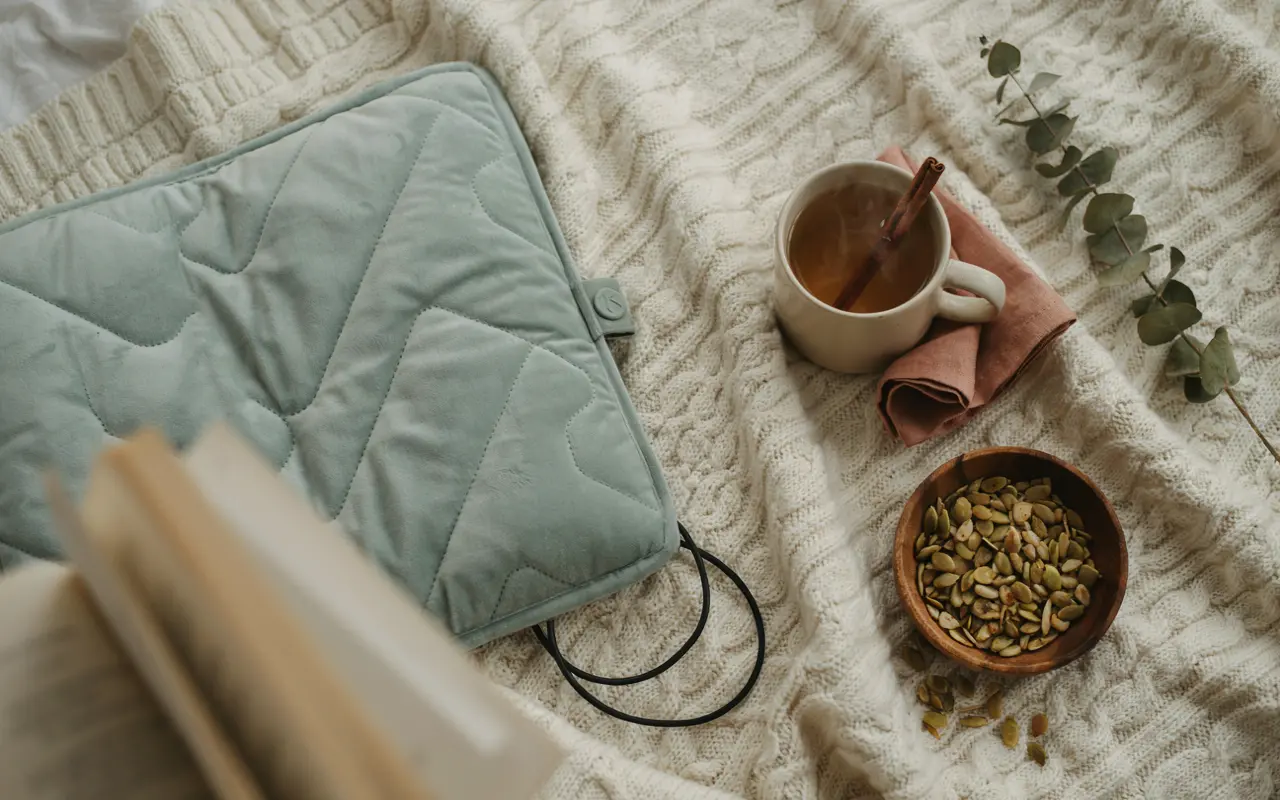
A heating pad, hot water bottle, or warm bath is one of the most consistently effective home remedies for cramps.
Heat relaxes the uterine muscle and improves blood flow to the area, which can ease pain about as well as some over-the-counter pain relievers for mild-to-moderate cramps.
How to use it safely: Apply low-to-medium heat to your lower abdomen or lower back for 15–20 minutes at a time. Avoid falling asleep on a heating pad, and never apply heat directly to bare skin for extended periods — a cloth barrier prevents burns.
2. Movement — Some supporting evidence
Walking, gentle yoga, stretching, and light cycling are commonly recommended, partly because movement is thought to boost endorphins (your body’s natural pain-dampening chemicals) and improve circulation.
Evidence for exercise specifically reducing period pain is mixed and study quality varies, but it’s low-risk and has broader health benefits regardless.
Practical tip: You don’t need a hard workout. A 20–30 minute walk or a short yoga sequence focused on gentle hip and lower-back stretches is a reasonable starting point.
3. Hydration, Warm Beverages, and Herbal Teas — Some supporting evidence / Traditional use
Staying hydrated can help reduce bloating, which sometimes makes cramping feel worse.
Warm beverages in particular may add a mild soothing effect similar to heat therapy.
- Ginger tea — Some small trials suggest ginger may reduce period pain, possibly through anti-inflammatory effects. Ginger can interact with blood-thinning medication, so check with a doctor if you’re on one.
- Chamomile tea — Traditionally used for relaxation and mild cramping relief; evidence specific to menstrual cramps is limited.
- Peppermint tea — May help with digestive discomfort that sometimes accompanies cramps; not well studied for cramps directly.
- Cinnamon tea — Traditional use for period pain; evidence is limited.
- Fennel tea — Some evidence is promising but studies are small and not conclusive.
Safety note: Herbal teas are generally low-risk in normal amounts, but if you’re pregnant, nursing, or on medication, check with a healthcare provider first — several of these herbs are advised against in pregnancy specifically.
4. Diet Patterns — Some supporting evidence
No single food eliminates cramps, but certain nutrient patterns are associated with modestly better outcomes in some studies:
- Magnesium-rich foods (spinach, pumpkin seeds, almonds, black beans, avocado) — magnesium may help relax muscle tissue, including the uterus.
- Omega-3 foods (salmon, sardines, walnuts, flaxseed, chia seeds) — omega-3s have anti-inflammatory properties that may help lower prostaglandin-driven pain.
- Anti-inflammatory foods generally (berries, leafy greens, olive oil, tomatoes) — associated with lower inflammation markers in general nutrition research, though direct cramp-specific evidence is thinner.
5. Sleep and Stress Management — Some supporting evidence
Poor sleep and high stress are both linked to worse pain perception generally, and hormonal balance can be affected by chronic stress.
Prioritizing consistent sleep and using stress-reduction techniques — meditation, deep breathing, progressive muscle relaxation — may not eliminate cramps but can make them more manageable.
6. Gentle Massage and Topical Use — Traditional use, limited evidence
Gentle circular massage over the lower abdomen may offer some relief by improving blood flow and providing a distraction from pain.
Some people add diluted essential oils such as lavender or peppermint to a carrier oil for abdominal massage.
Safety note: Essential oils should always be diluted in a carrier oil (never applied directly to skin) and patch-tested on a small area first to check for irritation. Peppermint oil in particular should be used sparingly and kept away from broken skin or sensitive areas.
Remedies With Insufficient Evidence
A few remedies show up often in home-remedy lists but don’t currently have strong research behind them for menstrual cramps specifically: apple cider vinegar, turmeric supplements, castor oil packs, and raspberry leaf tea.
These aren’t necessarily harmful in normal amounts, but claims about their effectiveness for cramps are based mostly on tradition or very limited studies rather than solid evidence.
Foods That May Help During Your Period
| Food | Why It May Help | Best Way to Eat It | Evidence Label |
|---|---|---|---|
| Spinach | High in magnesium | Sautéed or in smoothies | Some evidence |
| Pumpkin seeds | Magnesium and zinc | Roasted as a snack | Some evidence |
| Salmon | Omega-3 fatty acids | Baked or grilled | Some evidence |
| Walnuts | Omega-3s | Handful as a snack | Some evidence |
| Flaxseed | Omega-3s and fiber | Ground, added to oatmeal | Some evidence |
| Ginger | Anti-inflammatory compounds | Fresh in tea or cooking | Some evidence |
| Berries | Antioxidants, anti-inflammatory | Fresh, in yogurt | Limited evidence |
| Dark leafy greens | Magnesium, iron | Sautéed or in salads | Some evidence |
| Bananas | Potassium, may ease bloating | Fresh, as a snack | Limited evidence |
| Water-rich vegetables (cucumber, celery) | Hydration, may reduce bloating | Raw, in salads | Limited evidence |
| Greek yogurt | Calcium, may support muscle function | Plain, with fruit | Limited evidence |
| Avocado | Magnesium, healthy fats | Sliced, in salads | Some evidence |
| Black beans | Magnesium, fiber | In soups or bowls | Some evidence |
| Chia seeds | Omega-3s, fiber | Soaked in liquid, puddings | Some evidence |
| Whole grains (oats, brown rice) | Steady energy, fiber | As a base for meals | Limited evidence |
Foods That May Worsen Symptoms for Some People
This varies by individual, and none of these need to be eliminated entirely:
- Highly processed foods — associated with higher inflammation markers in general nutrition research.
- Excess sodium — may worsen bloating and fluid retention for some people.
- Excess sugar — can contribute to energy crashes and, for some, worse mood symptoms around the period.
- Excessive alcohol — can worsen dehydration and disrupt sleep.
- High caffeine intake — evidence is mixed; some people report worse cramping with heavy caffeine intake, others notice no difference. If you’re sensitive, consider reducing intake gradually during your period rather than cutting it entirely.
Lifestyle Habits That May Reduce Future Cramps
- Regular exercise across your cycle, not just during your period
- Consistent sleep schedule
- A generally balanced diet rich in whole foods
- Adequate hydration
- Ongoing stress management practices
- Maintaining a weight that’s healthy for your body
- Not smoking — smoking has been associated with worse menstrual pain in some research
[VERIFY before publishing]
When Home Remedies Are Not Enough
Home remedies are for manageable, typical menstrual pain — not a substitute for medical care when something’s off.
Seek medical evaluation if you experience:
- Sudden, severe pain that’s different from your usual cramps
- Fever alongside pelvic pain
- Heavy bleeding (soaking through a pad or tampon every hour for several hours)
- Bleeding between periods
- Fainting or severe dizziness
- Persistent vomiting
- Pain that lasts well beyond your period or is getting worse over time
These can be signs of conditions such as endometriosis, adenomyosis, or uterine fibroids, which need a proper diagnosis and treatment plan — not more tea.
Medical disclaimer: This article is for general informational purposes only and is not a substitute for professional medical advice, diagnosis, or treatment. Always consult a qualified healthcare provider about persistent or severe menstrual pain.