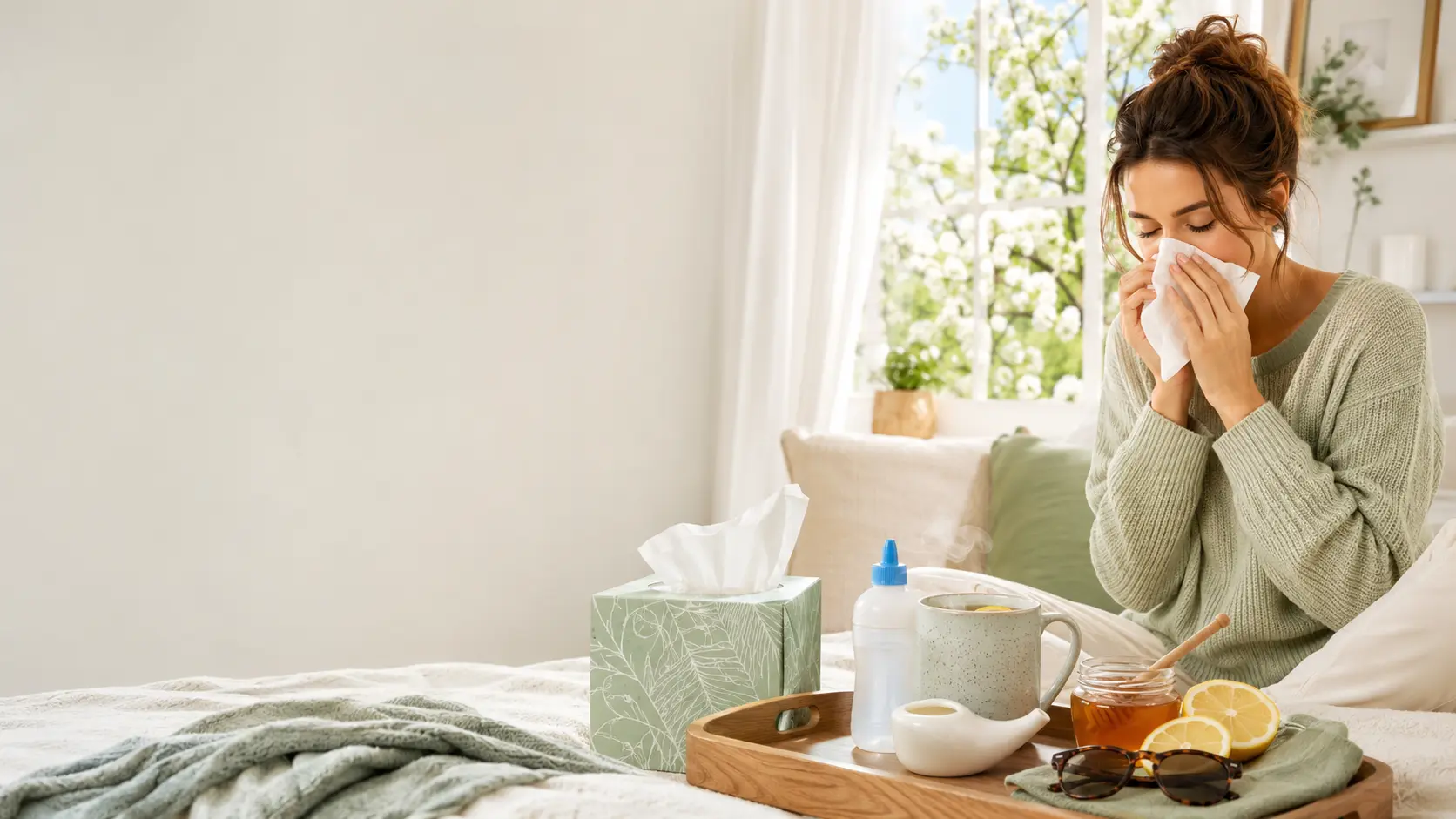
If your nose starts running the second the trees bud out, you already know the drill: tissues in every room, itchy eyes by noon, and that foggy, can’t-quite-breathe feeling that follows you around for weeks.
Seasonal allergies are miserable in a low-grade, grinding way — nothing sends you to the ER, but nothing feels normal either.
There’s no magic fix here.
What follows is a set of home-based habits that can lower how much pollen you’re exposed to and make symptoms more manageable day to day.
Some have decent research behind them (saline rinses, for one). Others are more “worth trying, low risk” than proven.
Your mileage may vary depending on what you’re allergic to, how bad your season is, and what else is going on with your health — so treat this as a toolkit, not a prescription.
What Are Seasonal Allergies?
Seasonal allergies, or allergic rhinitis, happen when your immune system overreacts to something in the air that’s usually harmless — tree pollen in spring, grass pollen in summer, ragweed in fall.
Your body treats the pollen like an invader and releases histamine to fight it off. That histamine is what causes the sneezing, swelling, and itching.
Some people only deal with this for a few weeks a year. Others feel it from March through October, depending on where they live and what’s blooming.
Common Seasonal Allergy Symptoms
- Sneezing, often in fits
- Runny or stuffy nose
- Itchy, watery, or red eyes
- Postnasal drip and scratchy throat
- Fatigue (allergies are surprisingly tiring)
- Mild headache or facial pressure
If your symptoms include wheezing, chest tightness, or trouble breathing, that’s outside the scope of home remedies — talk to a doctor.
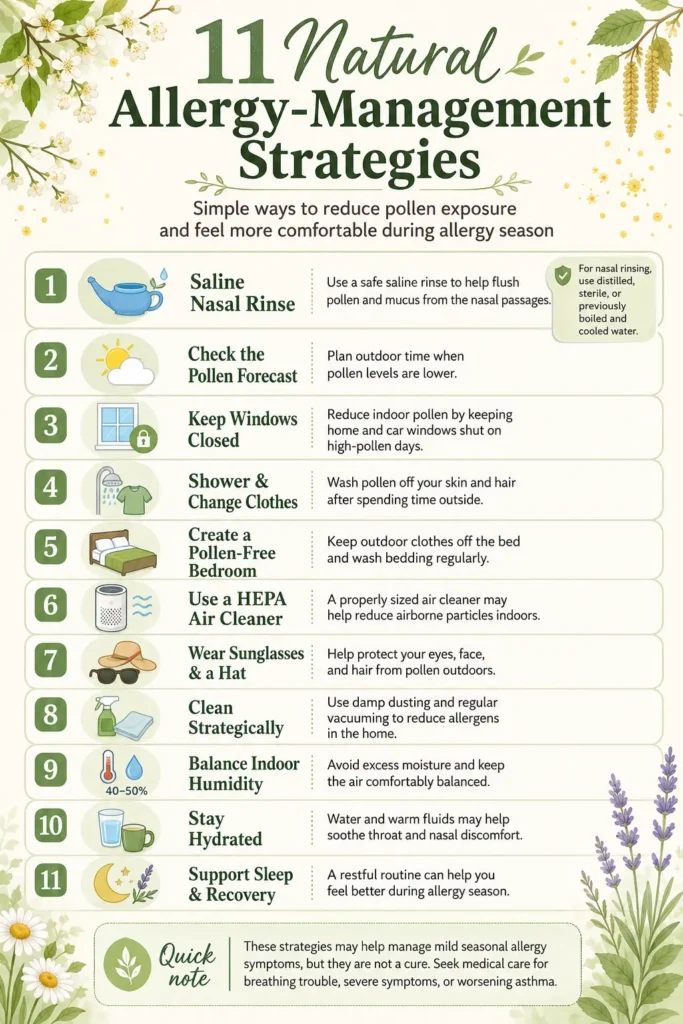
11 Natural Remedies for Seasonal Allergies
1. Rinse Your Nasal Passages With Saline
A saline rinse — using a neti pot, squeeze bottle, or nasal spray — physically flushes pollen, dust, and mucus out of your nasal passages.
This is one of the better-supported remedies on this list; several studies have found saline irrigation can ease congestion and reduce reliance on medication in people with allergic rhinitis.
A few notes on doing it safely: use distilled, sterile, or previously boiled and cooled water — never straight tap water, since in rare cases it can carry organisms that cause serious infection. Clean your device after each use and let it air dry.
2. Check the Pollen Forecast Before Going Outside
Pollen counts aren’t random. Many areas hit their peak between 5 a.m. and 10 a.m., and again around dusk.
Checking a local pollen forecast app or weather site lets you plan runs, dog walks, or yard work for lower-count windows — often midday or right after rain, since rain temporarily clears pollen from the air.
3. Keep Windows Closed When Pollen Is High
It’s tempting to throw the windows open on a nice spring day, but that’s exactly how pollen ends up on your couch, curtains, and pillowcases.
During your allergy season, keep windows shut and rely on air conditioning (with a clean filter) to circulate air instead.
4. Shower and Change Clothes After Outdoor Time
Pollen clings to hair, skin, and clothing all day if you let it.
A quick shower after spending real time outside — gardening, a walk, a kid’s soccer practice — rinses it off before it has a chance to transfer to your couch or, worse, your pillow.
Changing out of outdoor clothes does the same job for fabric.
5. Create a Pollen-Free Bedroom Routine
Your bedroom should be the one place pollen doesn’t follow you.
That means: no drying laundry outside on a clothesline during peak season (pollen sticks to damp fabric), keeping pets off the bed if they’ve been outdoors, and washing sheets and pillowcases weekly in hot water.
6. Use a HEPA Air Cleaner Correctly
A HEPA air purifier can trap airborne pollen particles, but only if it’s sized right for the room and running consistently — not just switched on when symptoms flare.
Look for a unit rated for your room’s square footage, place it away from walls so air can circulate, and replace filters on schedule.
Combining it with a HEPA vacuum filter for floors and upholstery helps too.
7. Wear Sunglasses and a Hat Outdoors
This one sounds almost too simple, but it works on a basic physical level: wraparound sunglasses keep pollen out of your eyes, and a hat keeps it out of your hair (where it would otherwise ride home with you and land on your pillow later).
8. Clean Strategically Instead of Stirring Up Allergens
Regular dusting and vacuuming matter during allergy season, but the how matters too.
Dry-dusting can just push particles into the air instead of removing them — a damp cloth traps dust rather than scattering it.
If you’re the one with allergies, consider wearing a mask while vacuuming or cleaning, or ask someone else to handle it when your symptoms are already bad.
9. Maintain Comfortable Indoor Humidity
Very dry indoor air can irritate already-inflamed nasal passages, while air that’s too humid encourages mold and dust mites — allergy triggers of their own.
Aiming for indoor humidity somewhere around 30–50% with a hygrometer and a humidifier or dehumidifier as needed tends to strike a reasonable balance.
10. Stay Hydrated and Use Warm Fluids for Comfort
Warm tea, broth, or just plain water won’t stop an allergic reaction, but staying hydrated helps thin mucus and keeps your throat from feeling as raw.
A warm drink with a little honey can also just feel soothing when your throat’s scratchy from postnasal drip — comfort matters, even if it’s not treating the root cause.
11. Support Sleep and Recovery During Allergy Season
Allergies disrupt sleep more than people expect — congestion makes it hard to breathe lying down, and antihistamines (if you take them) can leave you groggy the next day.
Elevating your head slightly with an extra pillow, running a HEPA purifier in the bedroom, and keeping a consistent bedtime can help your body recover from a rough symptom day instead of stacking a bad night on top of it.
Popular Natural Allergy Remedies — What Does the Evidence Say?
You’ll see a handful of remedies mentioned constantly in allergy forums and home-remedy roundups.
Here’s a more honest look at what’s actually been studied.
Local Honey
The idea is that eating local honey exposes you to small amounts of local pollen, building tolerance over time.
It’s a nice theory, but most of the pollen that triggers hay fever is windborne (tree, grass, weed pollen), while bees mostly collect flower pollen — a different category entirely.
Research hasn’t shown honey to meaningfully reduce allergy symptoms.
It’s not harmful to try, and plenty of people enjoy it as a comfort food, but don’t count on it as your main strategy.
Butterbur
Some studies suggest butterbur extract may ease symptoms comparably to certain antihistamines.
The catch: raw, unprocessed butterbur contains compounds called pyrrolizidine alkaloids that can harm the liver, so only “PA-free” processed extracts should ever be used — and even then, people with ragweed allergies, pregnant or breastfeeding people, and those with liver conditions should avoid it.
Talk to a doctor before trying it.
Probiotics
Research on probiotics and allergic rhinitis is mixed. Some studies show modest improvement in quality-of-life scores; others show no real difference.
It’s a low-risk thing to try as part of general gut health, but it’s not a stand-in for more established approaches.
Quercetin, Stinging Nettle, and Herbal Blends
These show up often in supplement aisles marketed for allergies. Quercetin is a plant compound with antihistamine-like effects in lab studies, but human trial data is limited.
Stinging nettle has a little more anecdotal and small-study support, though nothing conclusive.
As with any supplement, quality and dosing vary a lot by brand, and they can interact with medications — so it’s worth a conversation with a pharmacist or doctor before adding one to your routine.
Essential Oils
Diffusing eucalyptus or peppermint oil might feel clearing in the moment, but there’s little solid evidence they reduce actual allergy symptoms, and essential oils can irritate the airways in some people — which is counterproductive if congestion is already the problem.
Use with caution, and never apply undiluted oil near the nose or eyes.
Apple Cider Vinegar
This is a popular home remedy for almost everything, allergies included, but there’s no real scientific evidence it affects histamine levels or allergy symptoms specifically.
It’s generally safe in small, diluted amounts in food or drinks, though undiluted vinegar can damage tooth enamel and irritate the throat.
A Simple Daily Routine for Natural Allergy Relief
Morning Routine
Check the pollen forecast, do a saline rinse if congestion is present, and keep windows closed if counts are high.
After-Outdoor Routine
Shower, wash your hair if you can, and change out of the clothes you wore outside.
Evening Routine
Run your HEPA purifier, wash bedding weekly, and avoid opening windows overnight even if it’s tempting.
How to Reduce Pollen Around Your Home
Entryway
Keep a mat by the door and consider a “shoes off” policy during peak pollen weeks.
A basket for jackets right at the entrance keeps outdoor pollen from migrating through the house.
Bedroom
This is worth protecting the most, since you spend 7-plus hours a night here. Keep windows shut, wash linens weekly, and keep pets off the bed if they’ve been outside.
Living Room
Vacuum with a HEPA-filter vacuum regularly, and damp-dust surfaces rather than dry-dusting.
If you have curtains, wash or vacuum them periodically — fabric holds onto pollen.
Bathroom
Keep humidity in check here since bathrooms are naturally damp; a vent fan run during and after showers helps prevent mold, which is its own allergy trigger.
Car
Pollen collects on car seats and carpets fast. Keep windows up while driving during high-pollen periods, and set the AC to recirculate rather than pulling in outside air.
When to Talk to a Doctor or Allergist
Home strategies help a lot of people manage mild-to-moderate symptoms, but it’s worth checking in with a doctor if:
- Symptoms last more than a few weeks or keep coming back every year
- Over-the-counter antihistamines aren’t cutting it
- Allergies are disrupting sleep or daily function
- You’re not sure whether it’s allergies or something else, like a sinus infection
- You want to explore prescription options or allergy testing to pinpoint your specific triggers
An allergist can also discuss immunotherapy (allergy shots or tablets), which is the closest thing to a long-term fix currently available — something no home remedy can replicate.
Seek Urgent Medical Help for These Symptoms
Most seasonal allergy symptoms are uncomfortable but not dangerous.
Seek emergency care if you experience:
- Difficulty breathing or wheezing
- Swelling of the face, lips, tongue, or throat
- Chest tightness
- Dizziness or fainting
These can signal a severe allergic reaction or another condition that needs immediate attention, not just seasonal allergies.
The Bottom Line
There’s no single remedy on this list that will erase seasonal allergies for good, and anyone promising an “instant cure” is overselling it.
What actually helps, for most people, is a combination of reducing pollen exposure and managing symptoms as they come up — saline rinses, smart timing around outdoor activities, a clean bedroom environment, and patience with your own body on the days it just doesn’t cooperate.
Start with one or two changes rather than overhauling everything at once.
If your symptoms are still getting in the way of daily life after giving these a real try, that’s your cue to loop in a doctor — natural remedies work best as a complement to medical care, not a replacement for it.
Medical disclaimer: This article is for general educational purposes and is not a substitute for individualized medical advice, diagnosis, or treatment. Natural products and supplements may cause side effects or interact with medications. Consult a qualified healthcare professional before changing your allergy treatment, particularly if you are pregnant, breastfeeding, managing asthma, treating a child, or living with a chronic medical condition.